Project description
All life is dependent upon water and is connected to it in entangled, profound ways. But this relationship changes as climate breakdown impacts water and landscapes through unprecedented droughts and flooding, lacking rainfall, heavier rainfall, dwindling water sources, poorer water quality, displacement, dependencies, and mounting insecurities. Community Water Systems seeks to understand how local and Indigenous knowledges can be at the forefront of addressing such water related challenges. Local and Indigenous water knowledges are often rooted in traditions, accumulated experiences, and practices developed over time where local conditions have continually been exposed to change. These are knowledges where flexibility and adaptability are key. Mainstream efforts to combat the unpredictability of climate breakdown often rely on technical solutions and regulatory frameworks to safeguard water and provide for communities. Such initiatives to tackle water related climate upheavals can be vital, but often overwrite local and Indigenous ways of living with and knowing water and change. We thus need to find ways to include local voices, their inputs, and knowledges; building platforms where local and Indigenous knowledges and a technical apparatus can come together to address local needs in meaningful and impactful ways. The communities and sites we work with are different. They represent local conditions and cultures that are unique, but at the same time share histories of colonisation, being seen as marginal and peripheral, and are experiencing forcefully the impacts of climate change:
In Várnjárga/Varenkinniem/Varangerhalvøya in Sápmi changes to snow, rain, and ice are affecting life-giving river valleys in ways that challenge both local practices and national directives. Here we work together with grass and sheep farmers, reindeer herders and ecologists to understand how the rivers feed grasslands and grazing pastures – and what is the relationship between water, grazing and the increasing problem with overgrowth. As historical and regenerative landscape practices have ceased, we are experimenting with new forms of practice such as prescribed fire, but also seeking to inspire new alliance between farmers, municipal bodies and research, to explore ways of stewarding grazing areas that are under pressure from a changing climate and uncertain water cycles.
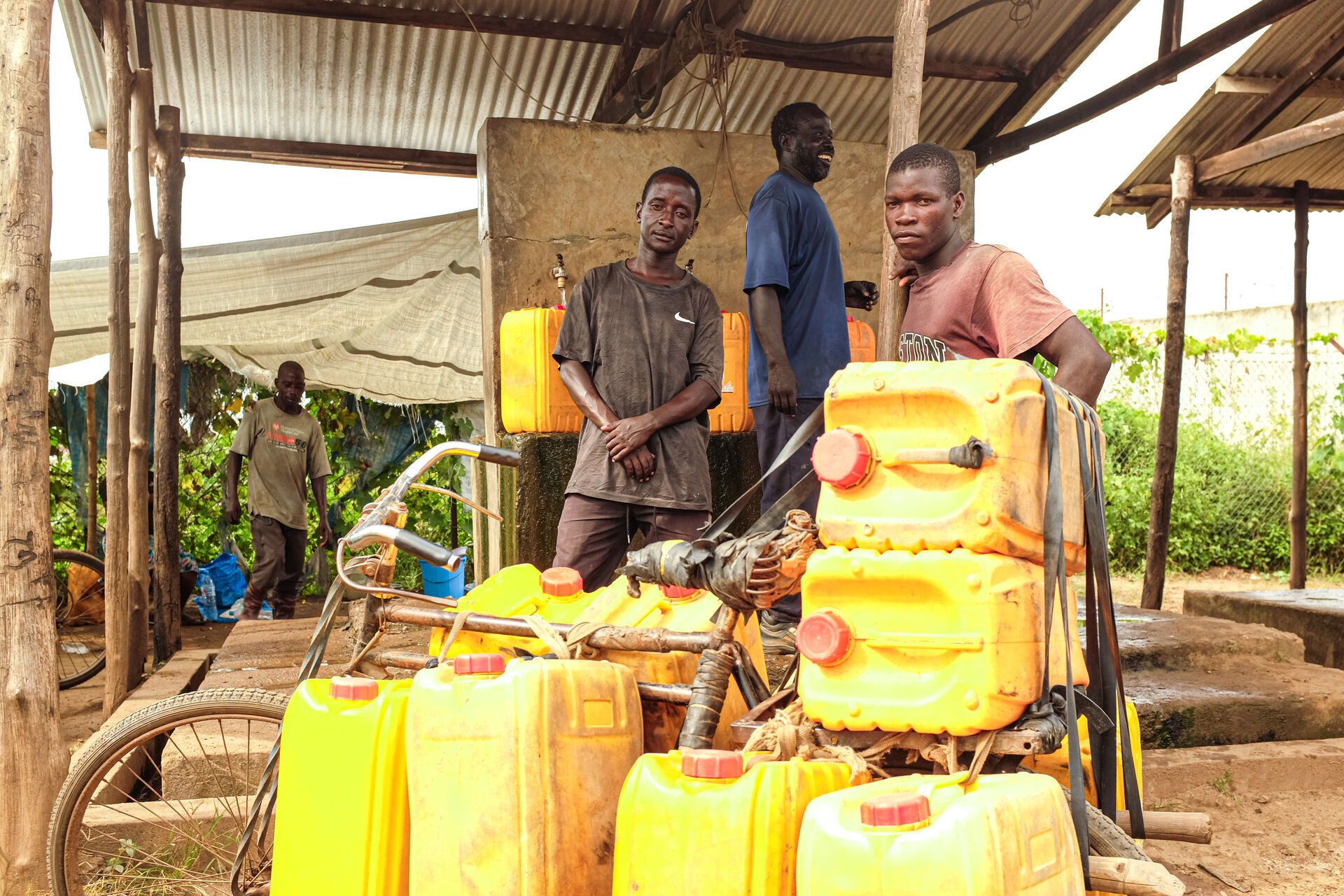
In Gumbo and Rejaf outside of Juba, challenges of climate displacement and war impact water security and local practices along the Bahr al Jabal (Nile). IDPs in South Sudan have moved here to protect themselves, while the local poor are further marginalized. Together, they have access to the river and depend on it, but with an influx of people, conflict, and reliance on humanitarian systems, local knowledge about the water is disappearing. Through surveys, walking interviews, and community group discussions we are looking for ways to include a variety of perspectives and needs. We aim to understand how the river contributes to livelihoods, and how water pump stations can best be implemented and managed in these communities. Together with our local partners we are developing working methods that align with their humanitarian efforts while fostering local capacities.
In Turkana in Northern Kenya, accessing water in an extremely dry and increasingly unpredictable climate is a matter of life and death. The traditional pastoral practices of the nomadic Turkana people account for this unpredictability through practices of mobility, but increasingly water access is provided by stationary and often permanent water infrastructures such as boreholes. This study deploys traditional as well as sensory (film, photography, sound recordings) ethnographic methods to make visible the contested territories of water. It will engage pastoralist community members, government officials, development actors and local researchers to better understand its entanglements with land, mobility, and spatial planning paradigms.
Our network partners work together with the Lytton First Nation in Fraser Canyon in British Columbia combating droughts, the onslaught of wildfires, and securing water governance in the rivers.
In the project, these local community knowledges and the challenges facing the sites meet different practice based and academic fields. The University of British Columbia (UBC), the University of Colorado Boulder (UCB), Millenium Water Alliance (MWA), and Oxfam provide technical expertise through water engineering and WASH. The Oslo School of Architecture and Design (AHO) and UBC provide landscape, urbanism, and futures studies insights. Urban-A, Oxfam, and MWA provide governance, response, and humanitarian competence. Through a comparison and conceptualisation of future change in these sites we are – together with local partners and affected groups – developing a global toolkit for community water systems, founded on the local and Indigenous knowledges in these places.