
Supervisor:
Giambattista Zaccariotto
Set between Alness and Invergordon, in the Scottish Highlands, the project rejects post-extractive abandonment and imagines its slow transformation into a wetland territorial park and a community space, allowing its cultural meaning and ecological potential to re-emerge. The title holds the two forces of the project together: the land holding water as it adapts to various flooding levels, and the strength of local people in holding ground, demanding a role in shaping their own territory.
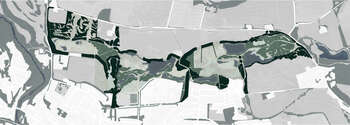
The large-scale landscape design is based on the idea that landscapes are constantly evolving. It responds to the ongoing extraction process, changing water levels, seasonal cycles, and climate change through a multi-phase strategy of site-specific interventions focused on wet habitats. By connecting existing community-led reclaimed areas with safe and accessible spaces, the proposal supports a gradual process of reclamation driven by both people and nature: the former through activism and collective activities, and the latter through water level fluctuations and long-term flood management.

Community engagement is the main driver of the project: the aim is to answer the inhabitants’ demand to regain agency over their territory and to refuse another cycle of post-extractive abandonment, as already experienced in the region after the decline of the oil industry.

The maintenance of the park becomes an opportunity for a local stewardship model, creating green jobs rooted in the territory so that inhabitants are not forced to leave their home towns. At the same time, it creates a sustainable management system for the site, that represent the shift from seeing the landscape only through its economic significance to recognizing its emotional and cultural value.
Afterness and Landscape After: exploration of loss in exploited landscapes






Contact

Alessia Motta