
Supervisor:
Luis Rodrigo Callejas Mujica
The Threshold to Mineral Displacement and Heliocentric Experience at the Beach.
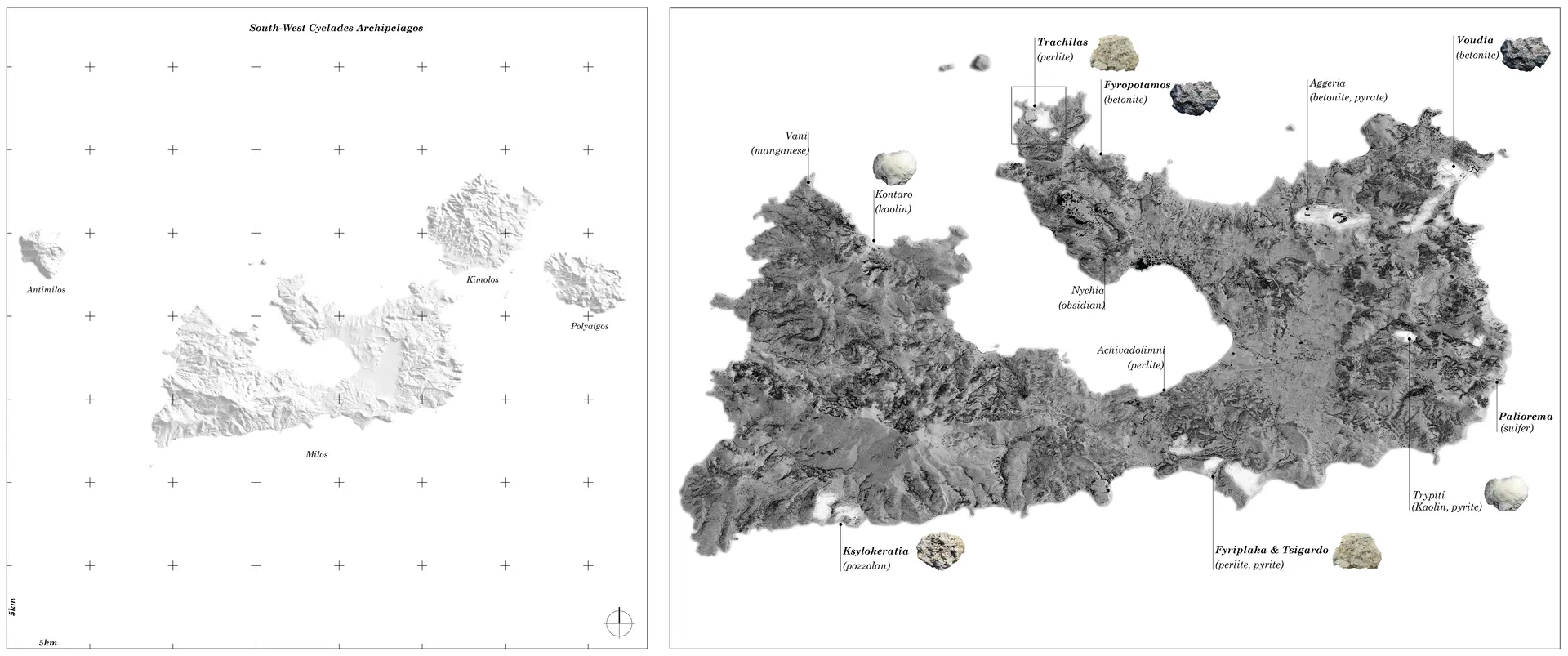
Milos is a Greek island located in the southwestern Cyclades Archipelagos. As an island of volcanic origin, the traces of former and ongoing extraction spaces have left a significant imprint on the island’s surface. Most of these spaces are closely connected to the coastline. Nowadays, as the mining industry is fading out, the industry of tourism is gradually taking over the island’s surface. The cultural landscape of Milos is changing, with the beach being the protagonist of this transition in practices.
“The experience of the beach is primarily heliocentric.” (P. Obrador Pons)
In the context of summer holidays in the Greek islands, the heliocentric touristic package is highly marketed. However, this heliocentric experience is affected by the yearly higher temperatures that make exposure to the sun intolerable. In the heat of the sun there is so much you can do. It gradually becomes necessary to look for alternative concepts of being in the sun.

What is the relation of the beach to the cultural landscape of mineral extraction and modern heliocentric tourism?
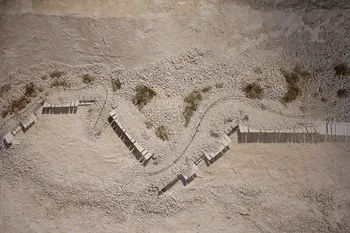
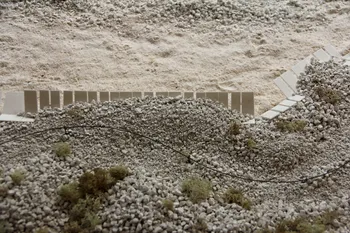
As a testing ground, the project focuses on a non-touristic beach in the northern part of the island that is connected to a perlite quarry. The extraction activities have altered the topography of the area creating eroding cliffs and deserted land.
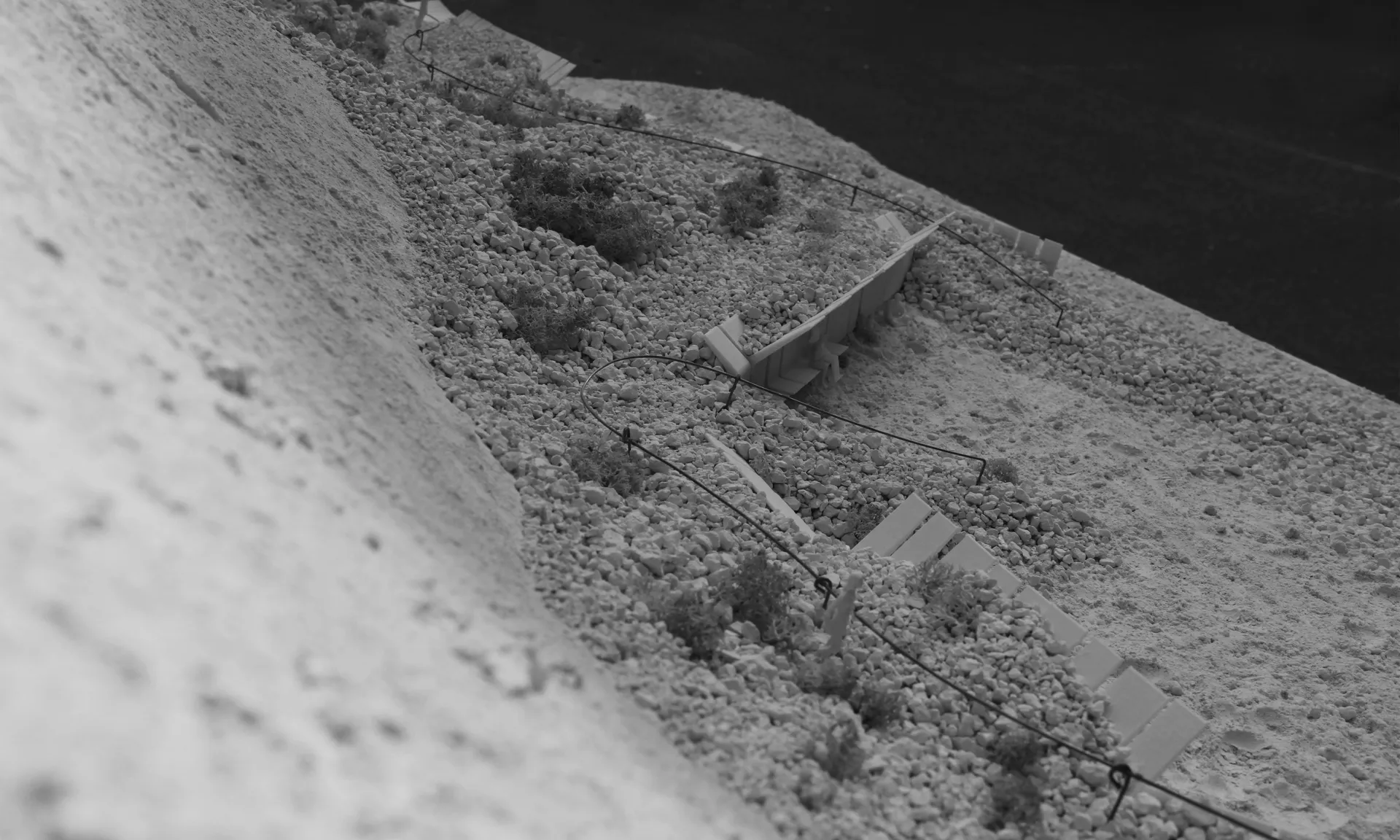
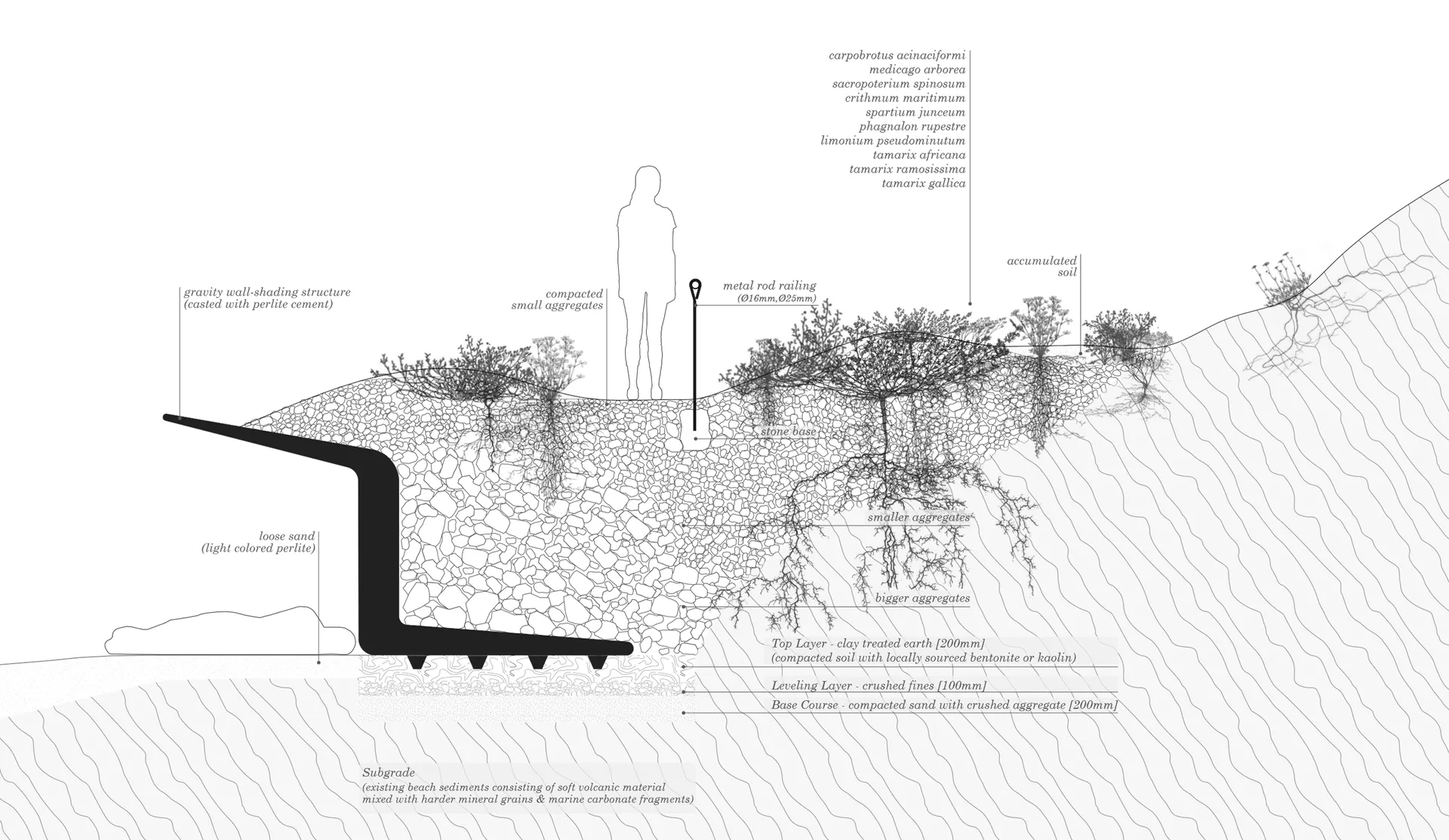
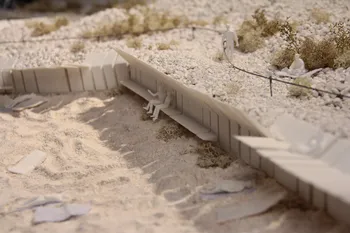
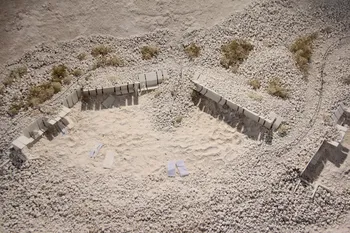
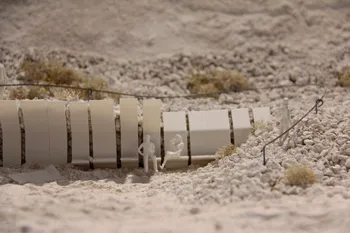
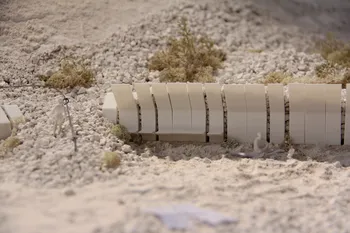
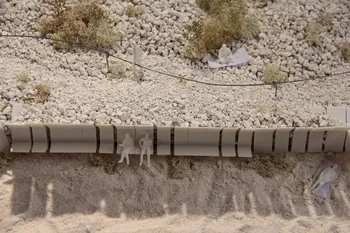
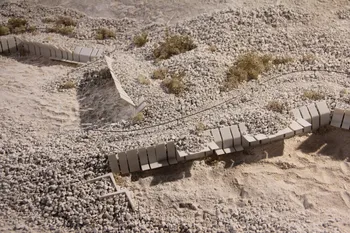
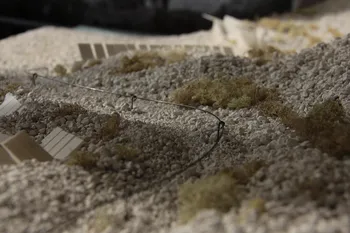
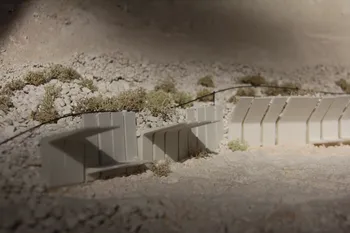
The mineral displacement is addressed through a series of gravity walls. This modular prefabricated system creates catchment areas where soil accumulates, generating a new topography that fosters conditions and micro-climates for coastal plants to grow. Through seasonal maintenance the accumulated area becomes accessible: sorting the rocks into piles, compacting the soil for trails, creating depressions for water accumulation. Maintenance borrows concepts from the quarry vocabulary establishing itself as a dynamic process in a dynamic landscape.
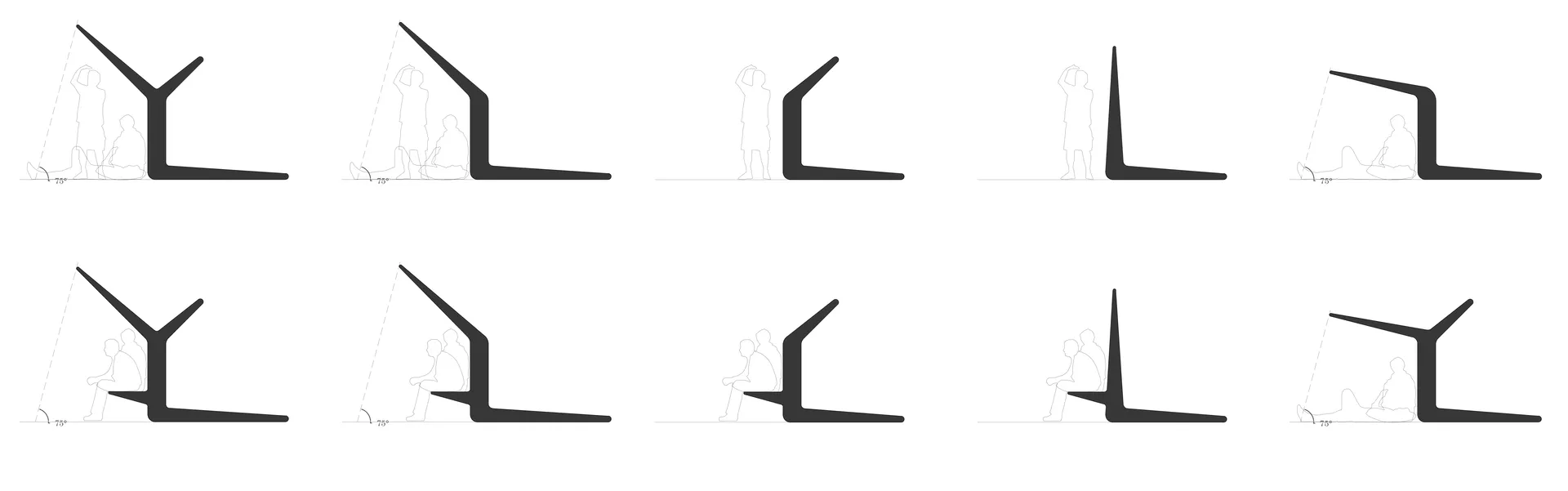
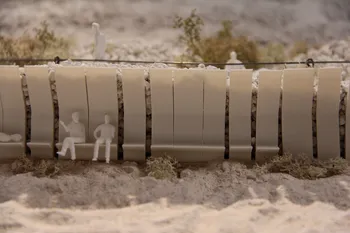
The other side of the modules adjusts to the sun parameters of the area in order to host the human embodied experience based on the three basic positions: standing, sitting, and laying down. In the Mediterranean region, where the summer sun reaches as high as 75°, people need direct shade above them. In a dry climate, with low vegetation, people are chasing the shadows created by natural or artificial wall formations. The Mineral elements become the shade providers. The use of the amphibian structures eventually ties back to local practices; chasing the wall shadows, finding ways to rest the human body, always adapting to a landscape that is slowly shifting.
Additionally, the project makes use of the local materiality: perlite. The structures are casted with perlite cement, a porous and lightweight material that displays good thermal performance and it is ideal to function as a cooling surface in a place of constant heat. After all, the beach experience in Milos is a material one.
Under the amphibian structures or between the piles of minerals and halophyte plants, a new narrative is introduced to the beach experience. The beach becomes the threshold to the cultural landscape of the island.
Milos is facing a metamorphosis.


Contact
Maria Kyriakaki-Grammatikaki / maria.kiriakaki@yahoo.gr / LinkedIn