Supervisor:
Erik Fenstad Langdalen
Nicholas Ryan Coates
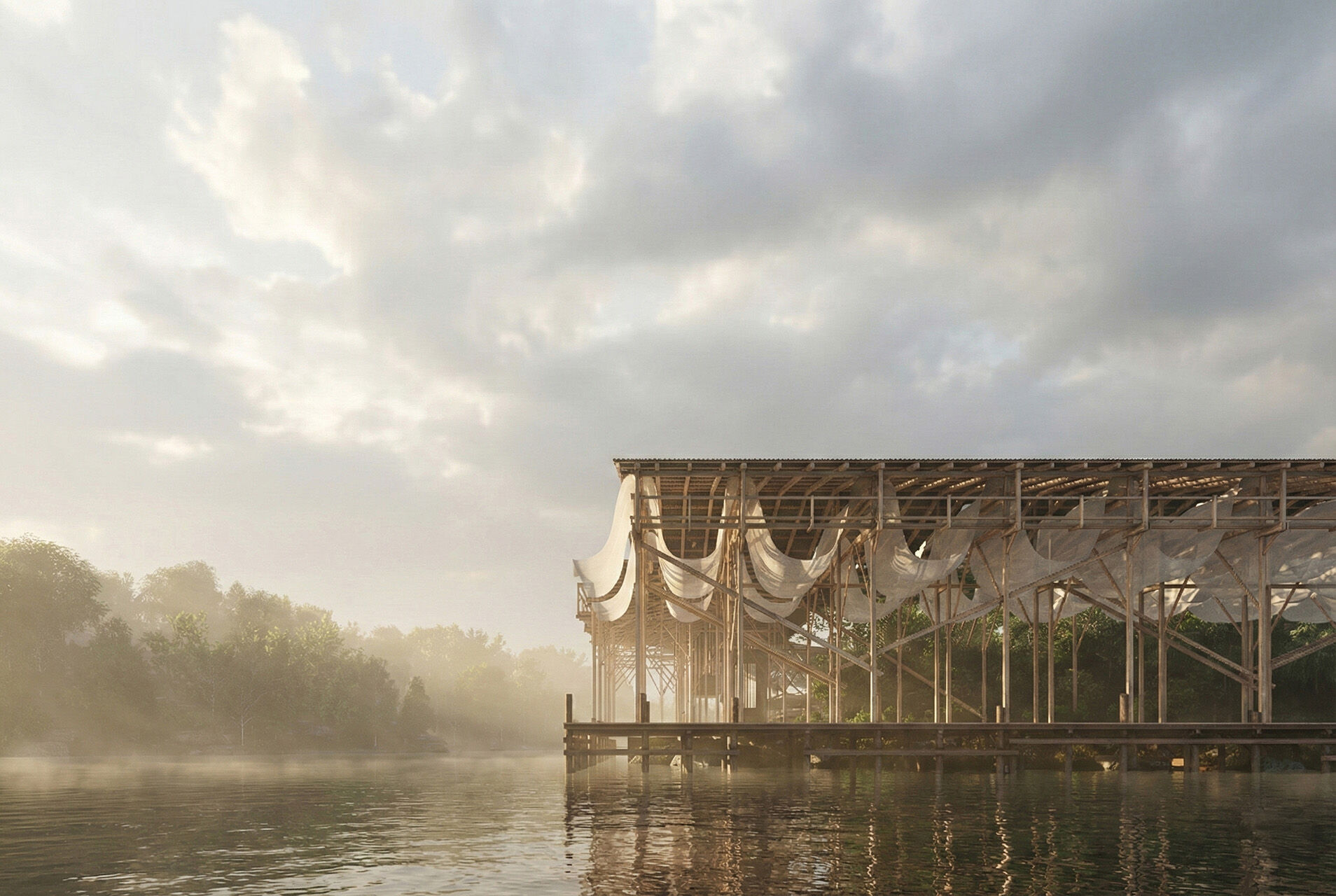
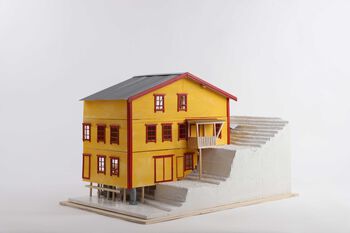
Nothengs played a crucial role in maintaining fishing equipment. They provided the spaces needed to produce and repair nets, impregnate them to withstand seawater, and dry them to prevent rot. Established in 1932, Hjellens notbøteri, stands as the largest facility of its kind.
Today, Hjellens Notheng stands as the largest and the only protected structure of its kind, yet it remains closed to the public and limited in its function. Although preservation efforts have allowed the building to remain standing, it loses inherent cultural, educational and architecture value, due to its restricted access.
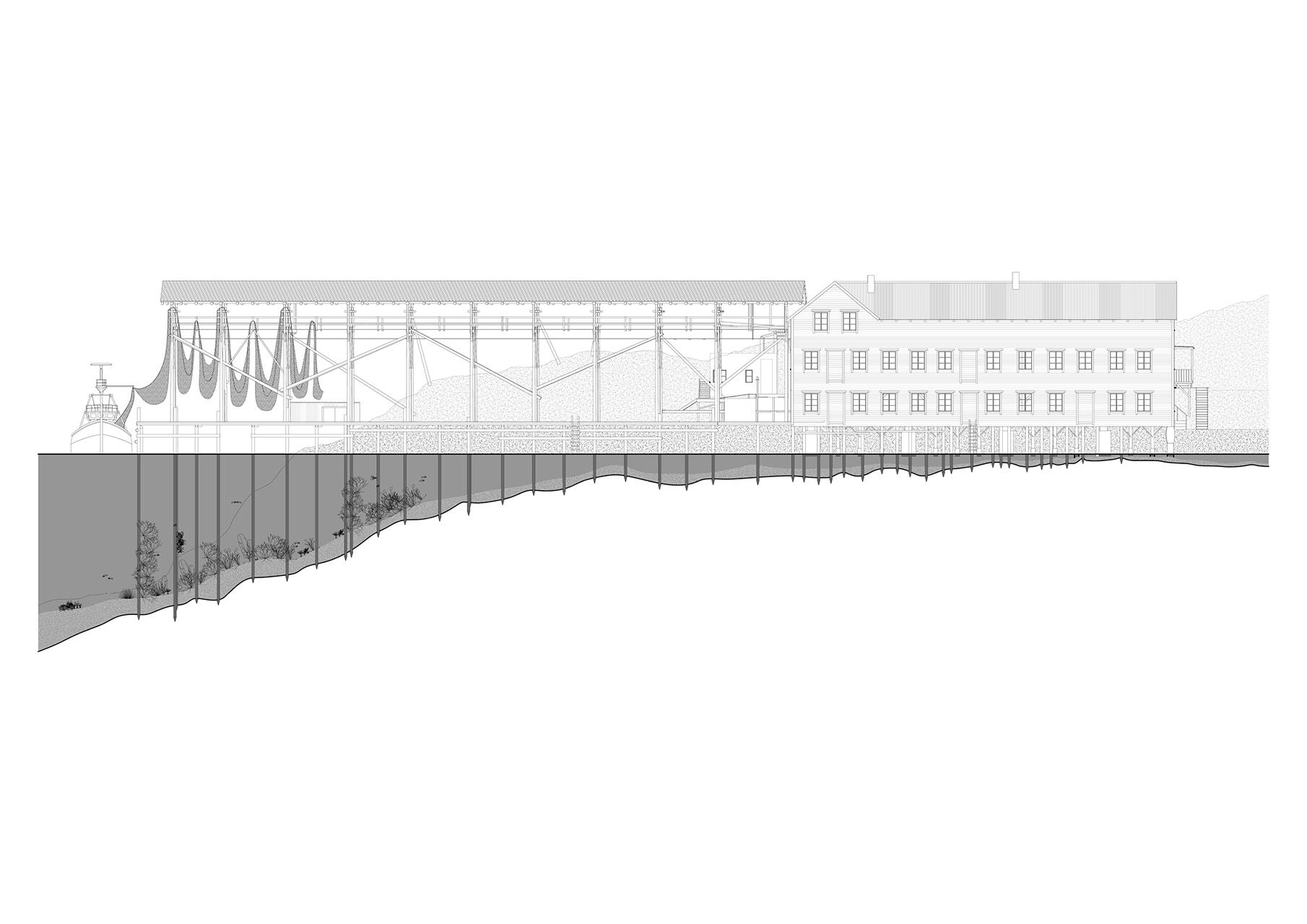
Traditional Notheng structures were designed to serve a specific function in the fishing industry. However, as technology advanced, it’s function changed: Natural fibre fishing nets were replaced by larger plastic ones. This meant that Notheng structures had to evolve into larger concrete halls, in order to accommodate both material and size.
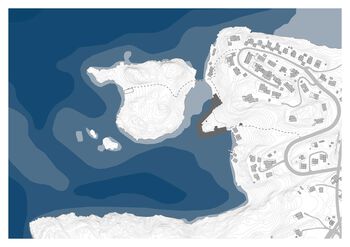
However, because of the site´s steep terrain, Hjellen´s notheng did not evolve, leaving it as a rare example of this coastal typology. With this rarity comes responsibility, to treat the site not just as a monument, but as the cultural, historical and architectural resource that it is. The core challenge of the diploma is therefore to make necessary changes to the building, allowing it to be open to the public, while still respecting its past.
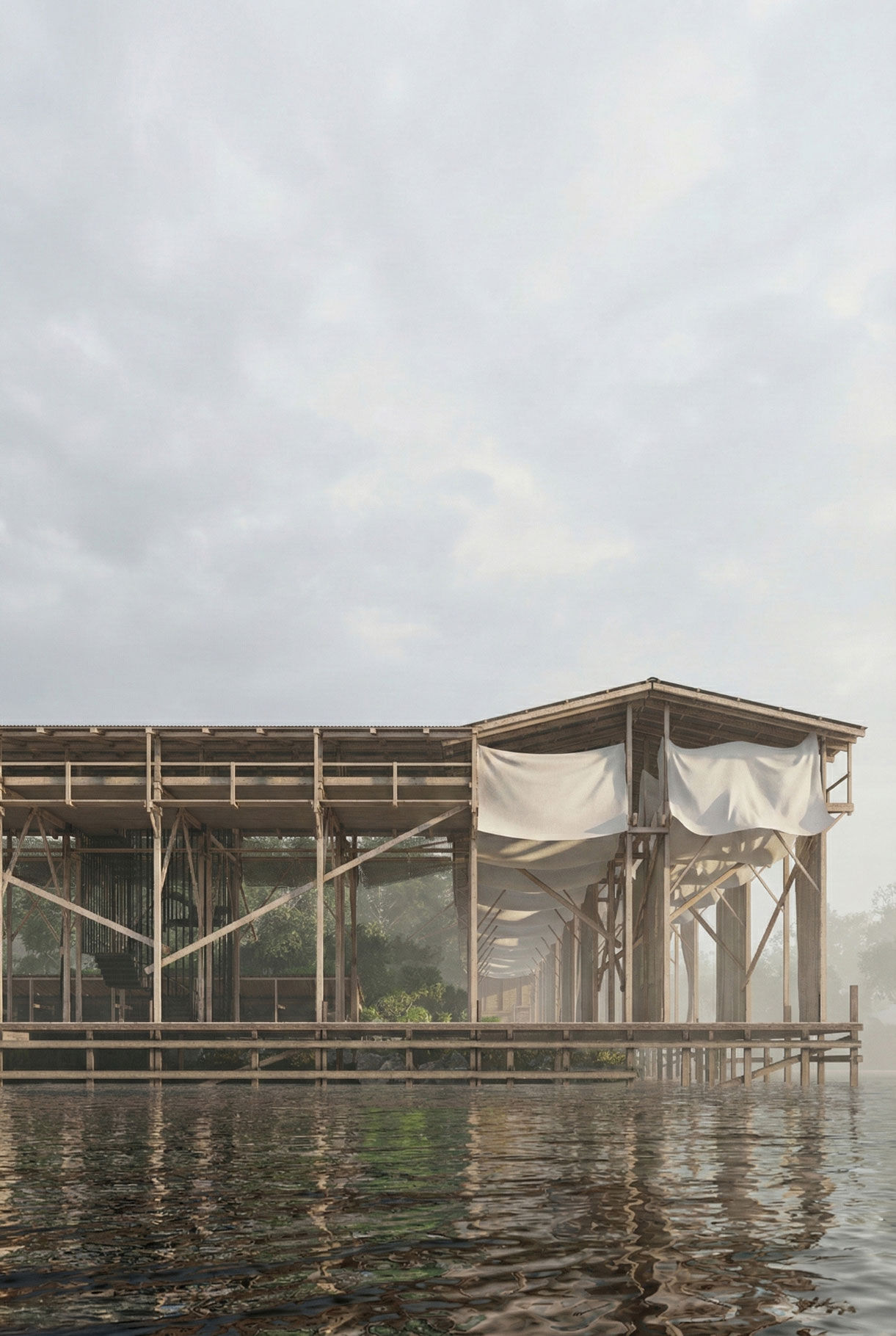
In Norway, anything labelled «fredet» means it is under the highest protection order. Hjellens Notheng is vedtaksfredet, meaning it requires application for any changes wanted. Additionally, it means that any larger changes can never be granted. Although the regulation makes this project impossible, the work speculates on how proposing certain changes could increase the building’s value. The diploma questions how can I maintain, adapt, and transform Hjellens Notheng without losing its architectural and cultural values?
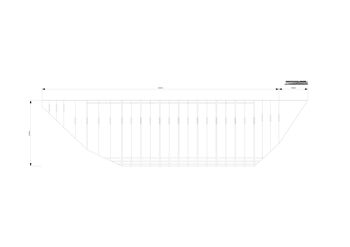
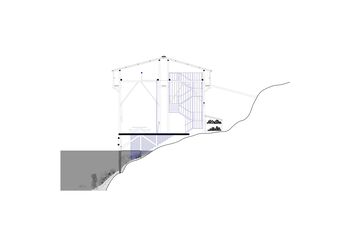
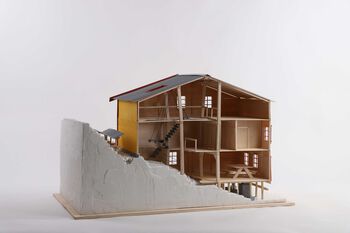
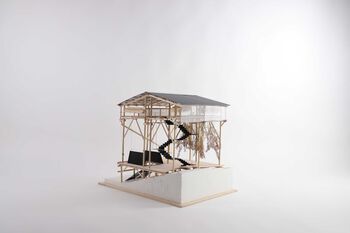
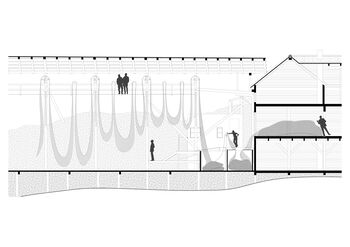
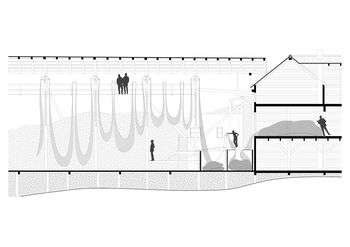
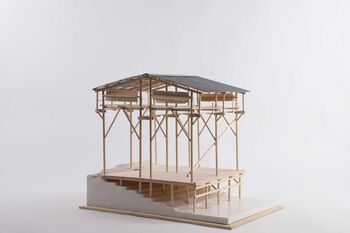
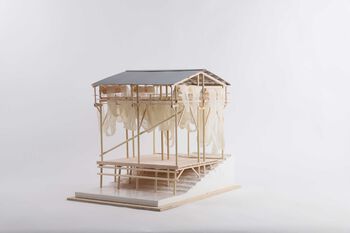
My approach began with historical research to clarify the cultural and architectural values of the site. This was followed by a detailed survey of the building, including site visits, photography, and measurements, to produce accurate architectural drawings. Physical models were then used to study the construction and spatial qualities in greater depth. With these tools, I atempt to both explore and evaluate different scales of interventions. For example, the interventions ranged from simply opening the doors of the building, to installing a metal stairway, allowing one to access the entire Notheng.
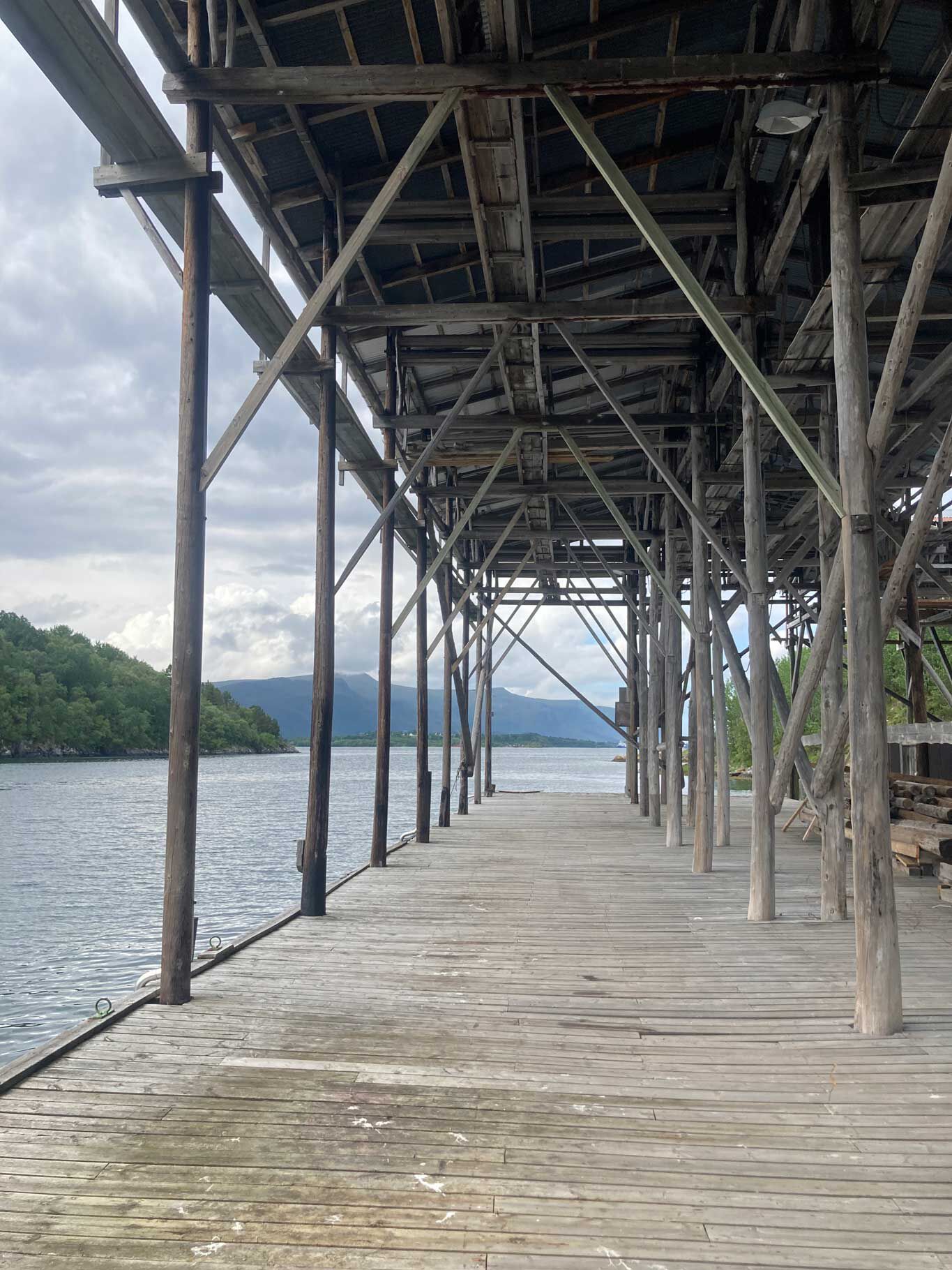
This project contributes to the architectural discourse on protection and coastal heritage, by exploring how appropriate interventions can reactivate a protected industrial structure, without compromising its identity. Reopening Hjellens Notheng provides access to an overlooked history, while revealing architectural qualities that have long been hidden from public view. The aim is to open the doors to a site where its architecture and history can be experienced and appreciated. The project demonstrates how adaptive reuse can support both preservation and contemporary use, offering a method for transforming historic buildings in a way that maintains their value and expands their relevance. The project is evaluated by the building’s ability to welcome the public, support contemporary activities, and retain its cultural and architectural values, ensuring its relevance for future generations.


Contact
Wilhelm Svendsen / Wilsvend@online.no / 90130451