
Supervisors:
Nicholas Ryan Coates, Erik Fenstad Langdalen
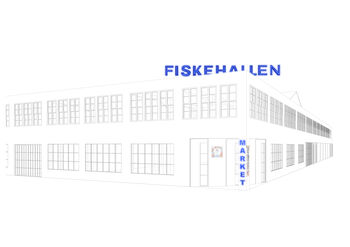
Situated at Vippetangen, an edge between infrastructure and the public city, Fiskehallen represents a piece of infrastructure that has retained its original use since its construction in 1935.
The operator of the building, Fiskehallen AS, has up to this point operated with only temporary short-term leases. Now, a new 50-year lease has been signed, paving the way for thinking in a more long term manner. This secures the building in its purpose and creates a concrete opportunity to explore how industrial architecture can remain operative, relevant, and publicly embedded within ongoing urban developments.
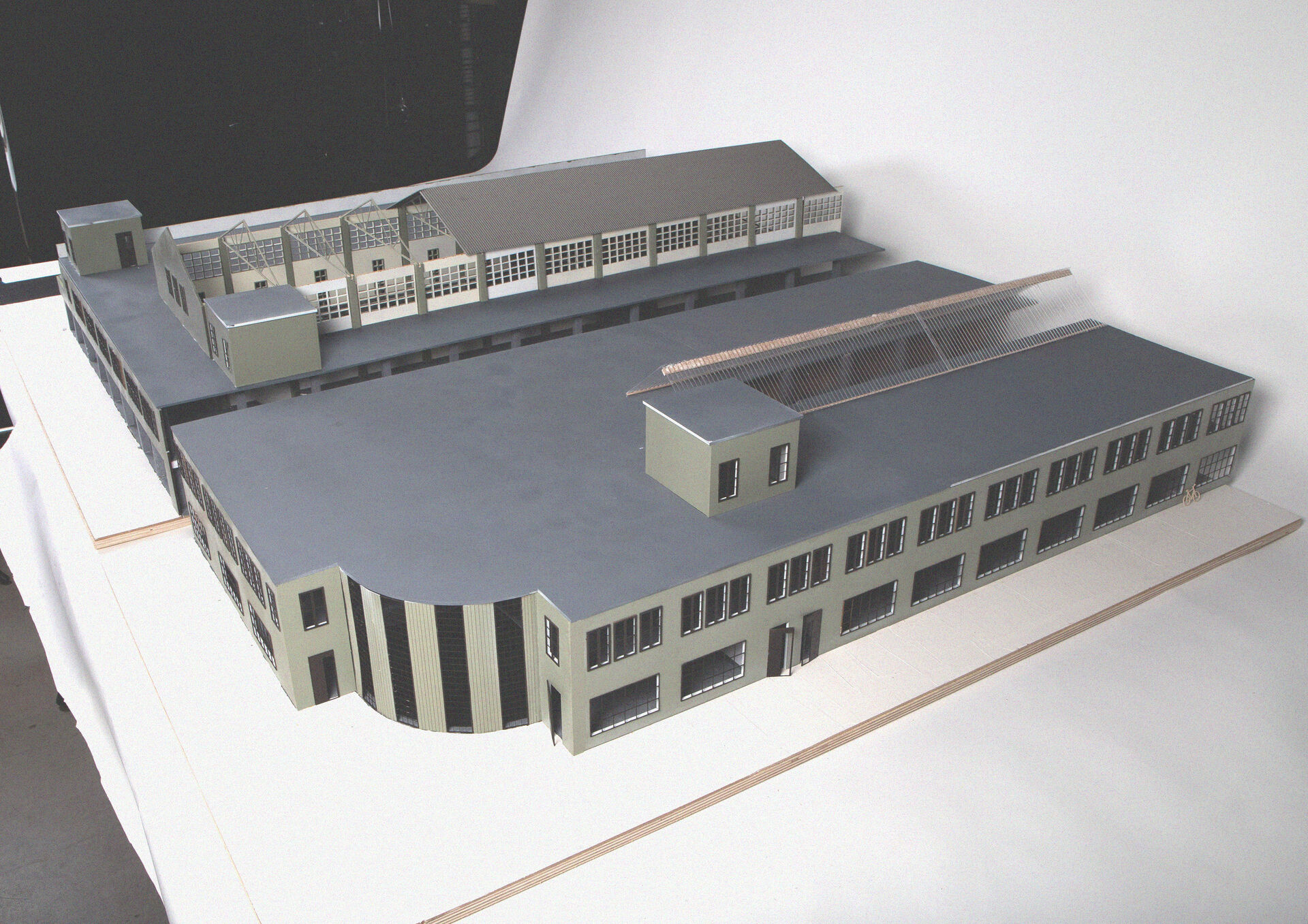
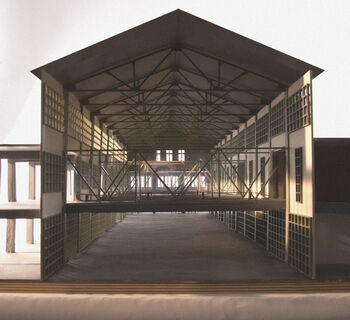
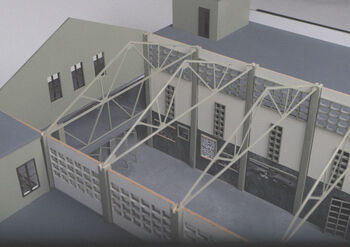
The project proposes a transformation rather than a replacement of the existing building. Its core function, fish processing and wholesale, remains intact, while spatial organization, logistics, and material flows are restructured to create more efficient, legible, and adaptable production processes. By clarifying circulation between sea, processing, storage, and distribution, the building is reactivated as a working machine for urban industry. At the same time, public functions such as a market and a restaurant are introduced as a direct addition to the industrial processes. Instead of isolating public programs as spectacle or consumption, they are connected and integrated into production. This allows visitors to encounter seafood in its raw and unprocessed state, rather than only through decontextualized finished consumer products. The building thus operates simultaneously as infrastructure, workplace, and public institution.
The project further responds to the ecological degradation of Oslofjorden, where fishing is no longer permitted. Fiskehallen is therefore expanded into a productive ecological interface, where the building hosts a pond for fish restocking and pilot projects that work together with seagrass beds and “nyttehager” integrated in the fjord for long-term ecological repair. These elements operate as slow, living infrastructures that link architecture, marine ecology, and future food production. The ambition is to restore water quality and fish populations to a level that enables small-scale local fishery. Through this layered strategy, the project positions architecture as an active mediator between industry, public life, and ecological recovery.


Contact

Charlotte Baumgartner / lottibaum@gmx.de