Supervisor:
Claudia Andrea Pinochet Rojas
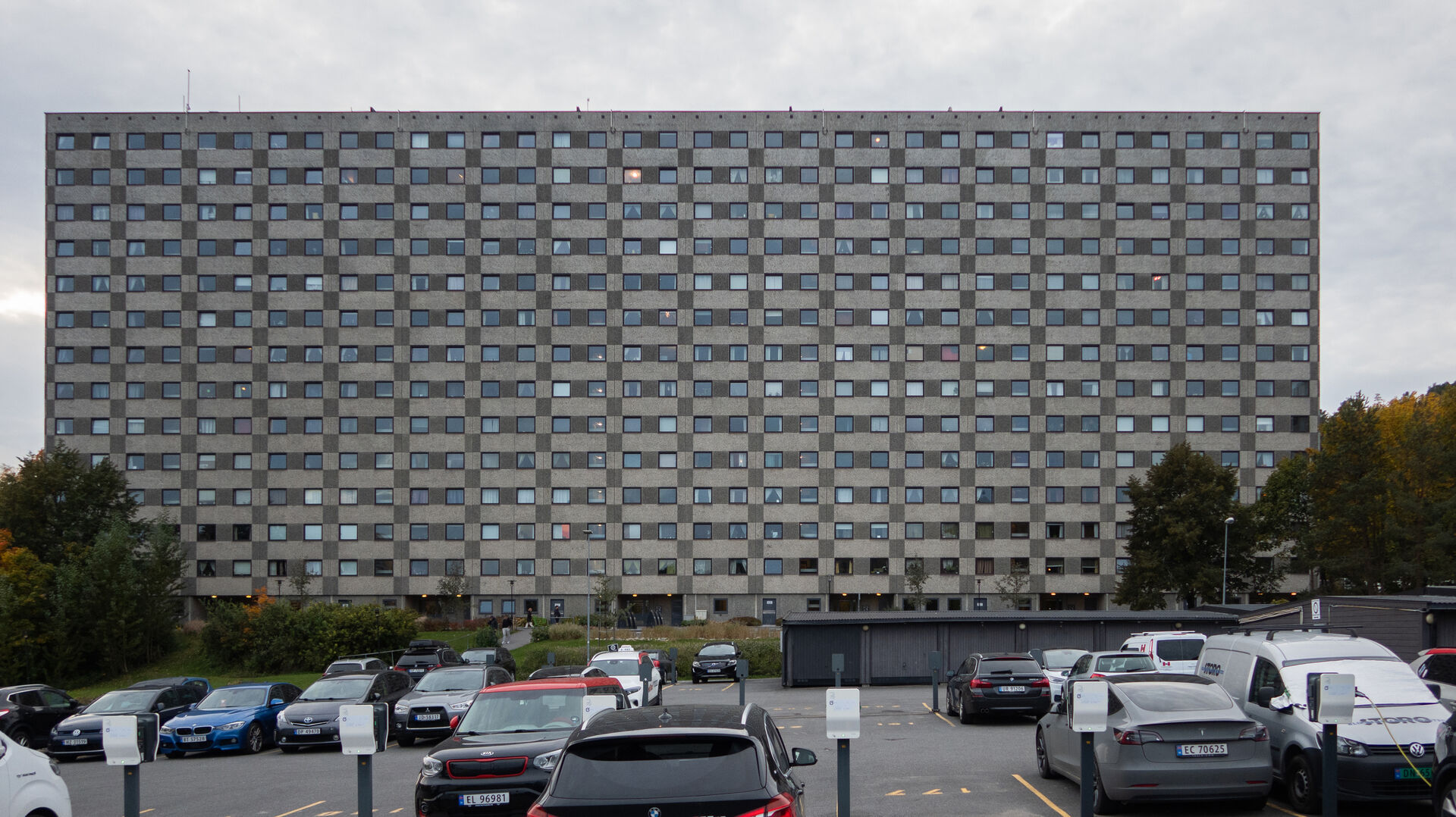
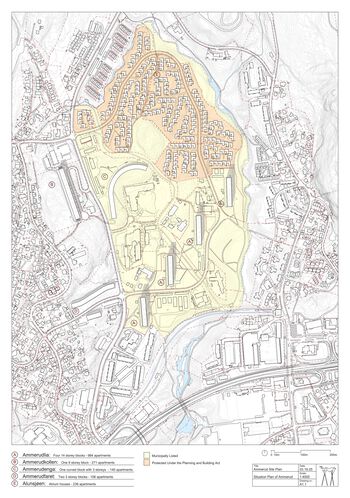
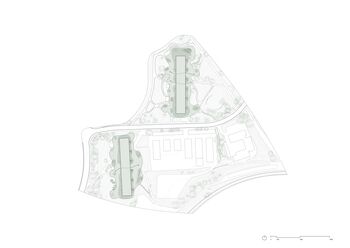
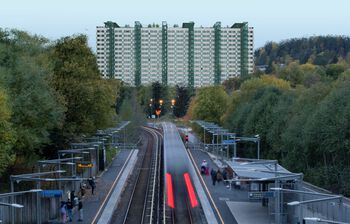
The project is situated on the outskirts of Oslo, in the post-war satelitte town of Ammerud. Once hailed as a modernist solution to urban housing needs, these 14-storey concrete blocks now face challenges tied to the concentration of municipally owned apartments, many of which are inhabited by, some of which are inhabited by individuals struggling with substance use or involved in minor criminal activity.
BLOCK 1 & 2
The first two blocks, housing 492 of the total 984 apartments, contain 128 municipally owned units. Some of these are occupied by residents living with addiction or psychosocial challenges.
A 2016 report titled, Area Renewal Ammerud: Well-being and Safety at Risk (Områdeløft Ammerud: Trivsel og trygghet på spill), reveals that 80% of all reported feelings of unsafety in the entire neighborhood of Ammerud, stem from Ammerudlia housing cooperative. Residents describe how shared spaces like stairwells, entrances, and outdoor areas have become sites of unease and tension. Long-term tenants express how noticeably different the situation has become and how “It’s no longer safe for children”.
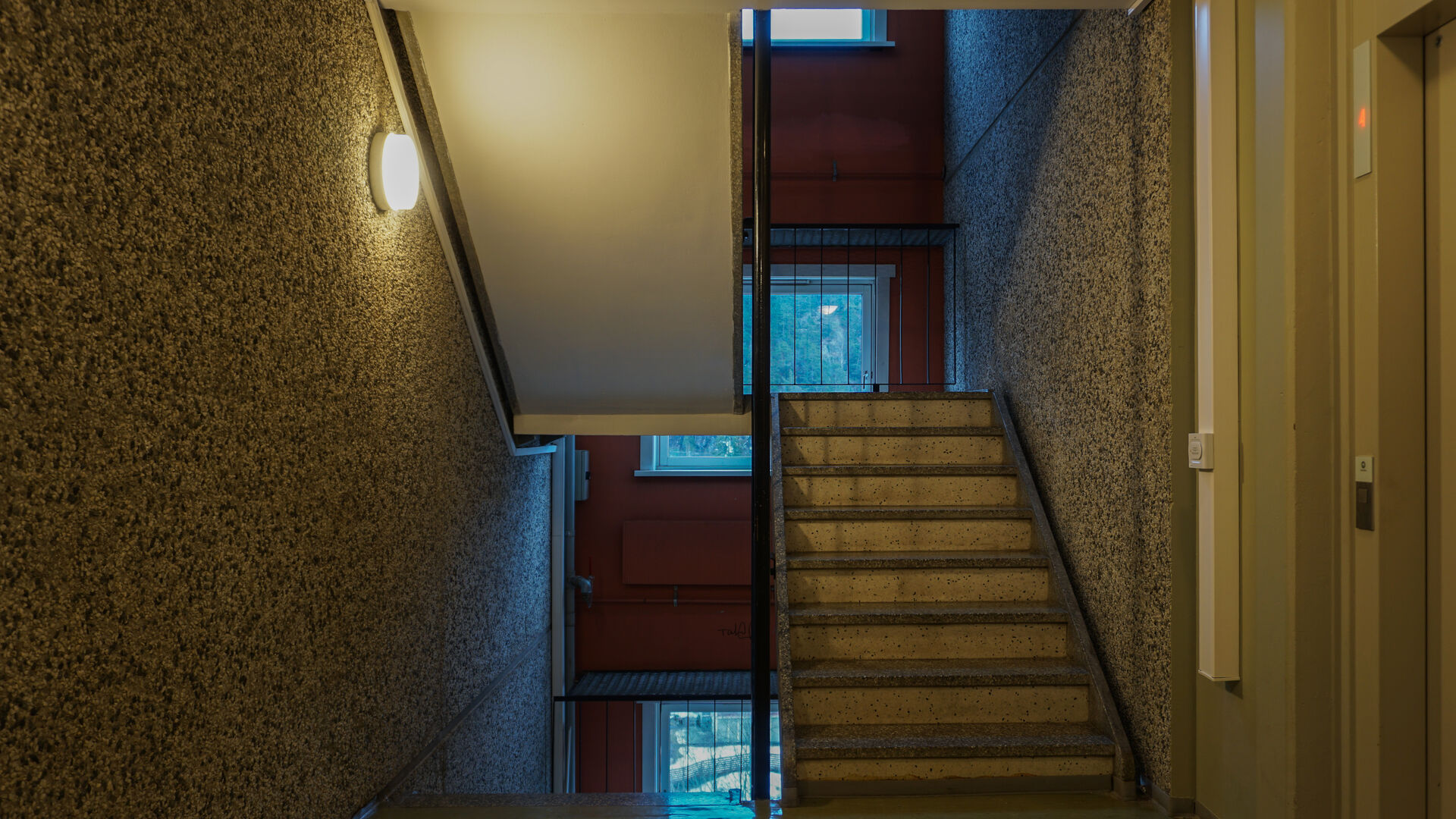
Blind corners, underlit passages and unclear thresholds between public and private contribute to this sentiment. These issues are not architectural alone, they are systemic, rooted in housing policy decisions and spatial models that prove dissonant within the current social and urban context.
POTENTIAL OF THE BLOCKS
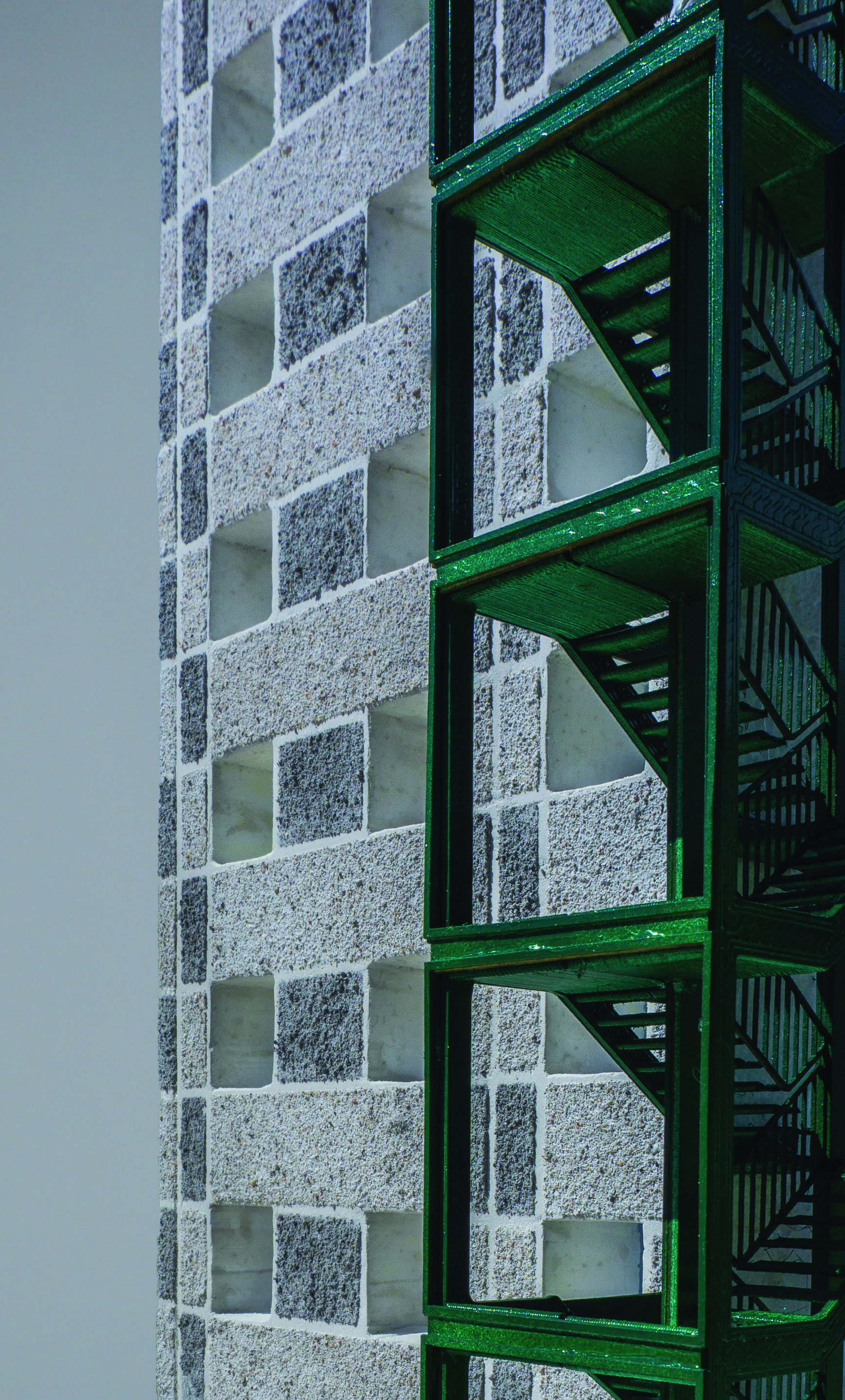
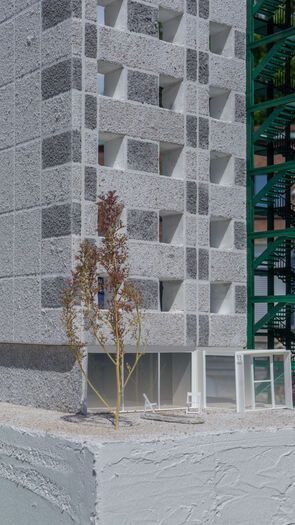
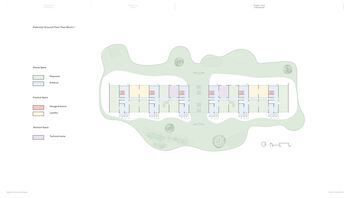
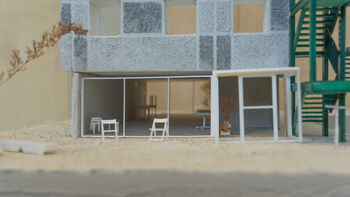
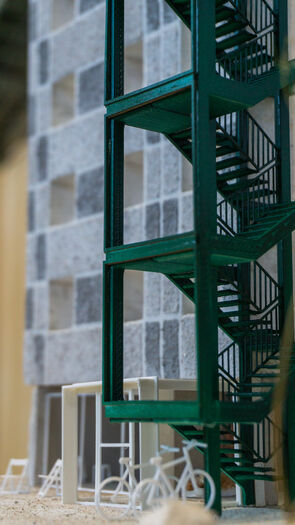
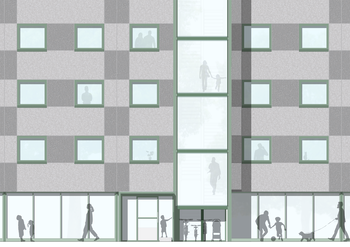
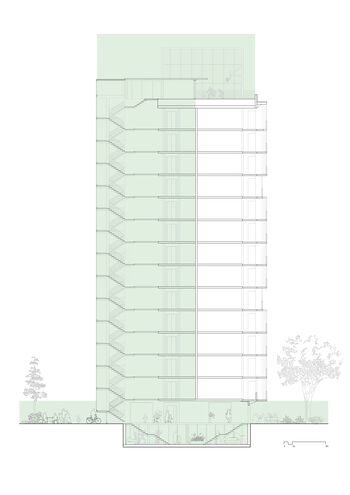
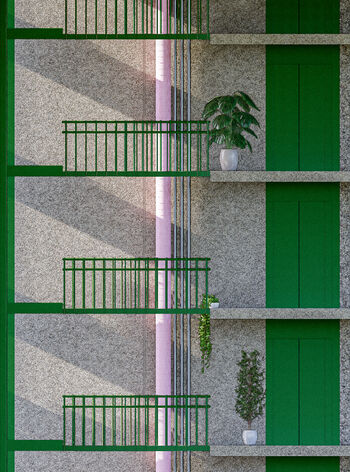
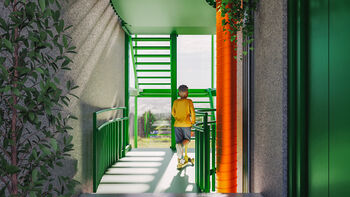
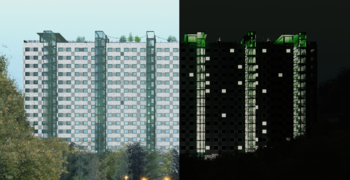
Through on-site analysis, historical context, and stakeholder engagement, the project proposes a pilot transformation of two of the affected blocks. By opening and extending circulation routes and reprogramming key ground-floor spaces, the projects aim to restore safety and a sense of ownership for all residents, without erasing the architecture's original identity or social ambition. A revitalization of underused interior spaces, activating community functions and reworking entry sequences with transparent staircas and better lighting.

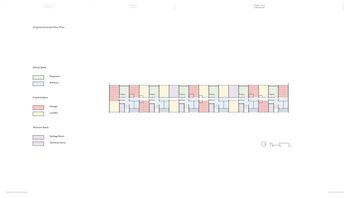
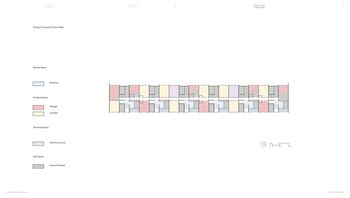
The situation today shows how some spaces have lost its meaning and value.
However, these unexploited spaces could become new potential. The old garbage rooms could become the new entrance space. And by combing laundry rooms, new spaces emerge, which can host new programs for the residents, and the neighborhood of Ammerud.

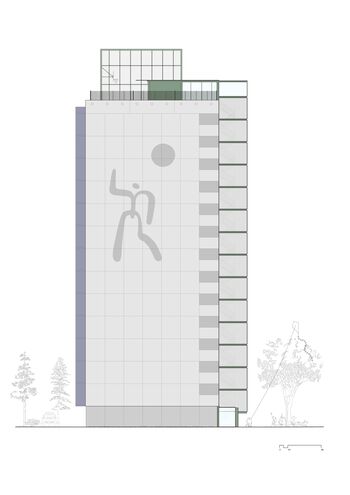
The project also explores the potential of transforming the 97-meter-long rooftops into shared terraces. By upgrading the existing rooftop structures, lightweight additions could be introduced, offering residents new communal spaces and access to a spectacular view over the Grorud Valley.
BLOCK by BLOCK
Although the buildings remain under cultural heritage protection, the focus shifts away from formal brutalism and toward lived experience, social trust, and the invisible architectures of inclusion and exclusion. The intervention becomes a pilot project, one that acknowledges trauma, confronts stigma, and offers a spatial prototype for renewal in similar blocks across Oslo.

The project challenges the notion that social housing must entail spatial marginalization, and instead explores how architecture can enable care, coexistence, and civic pride — BLOCK by BLOCK.



Contact

Gabriel Ochoa Svendberg / gabry_ochoa@hotmail.com