Supervisor:
Erik Fenstad Langdalen
Nicholas Ryan Coates
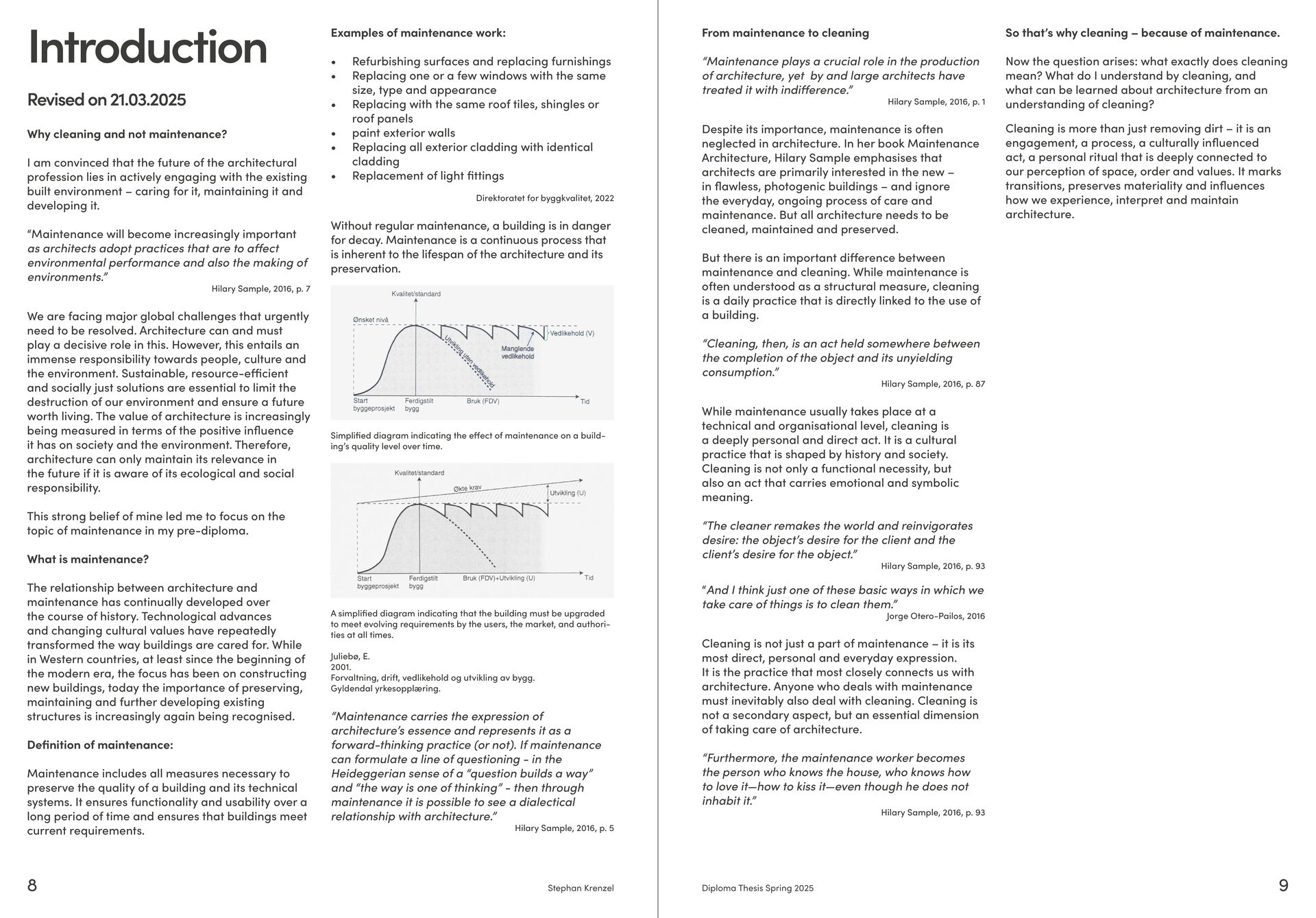
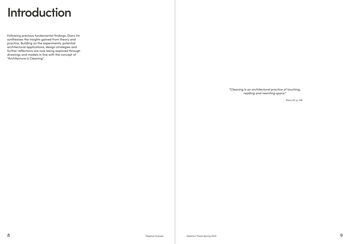
Originating from a personal interest in maintenance and the conviction that engaging with existing buildings is central to the future of architecture, this work focuses on cleaning. In this diploma, cleaning is understood as the most direct, everyday and personal form of interaction with built space. The underlying hypothesis is that cleaning can be a method for appropriating, understanding, reading and transforming space, which leads to the core questions:
- What can architects learn from cleaning?
- How does cleaning change the perception of space?
- Does cleaning become an architectural gesture?
The work unfolds along two central axes
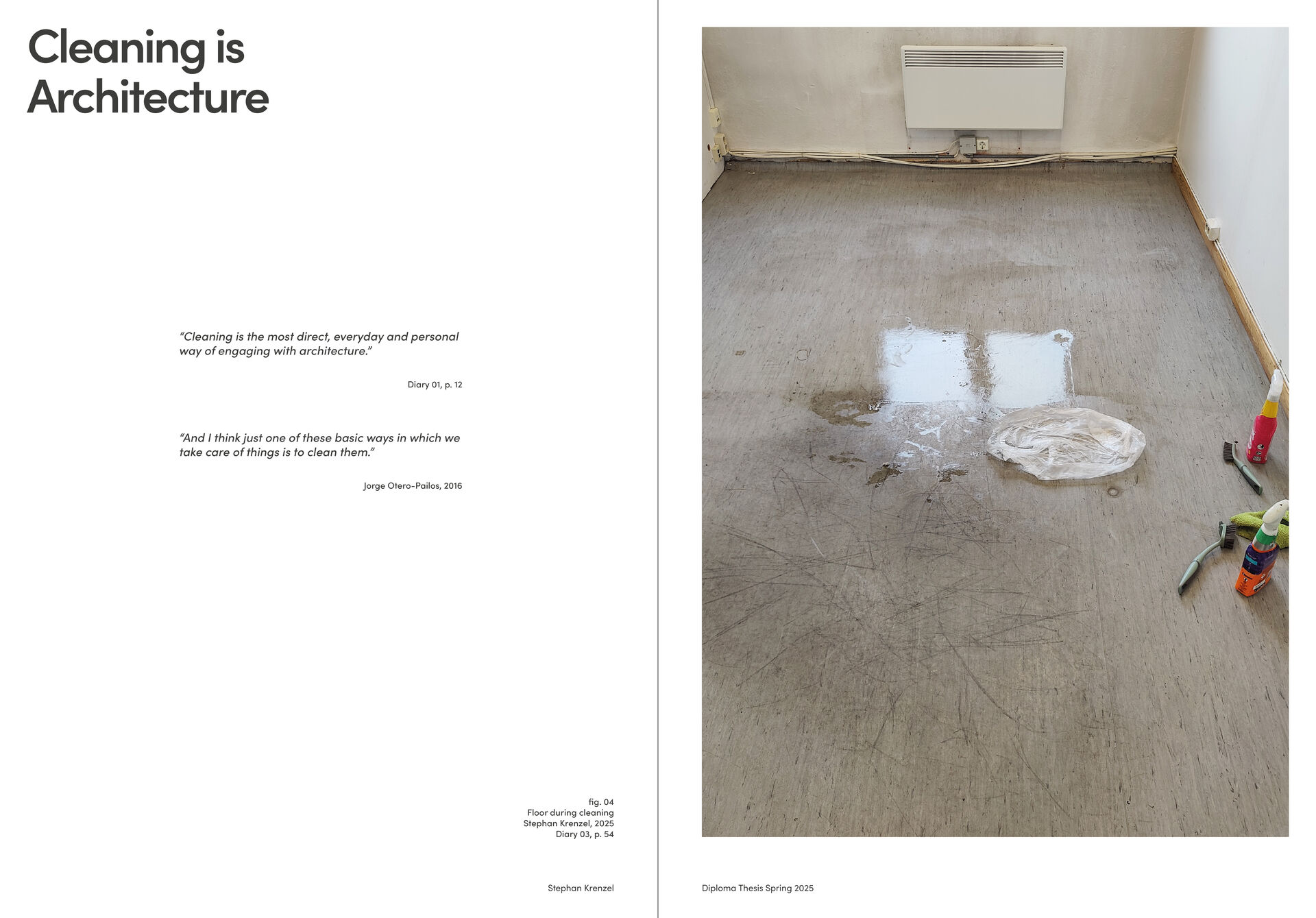
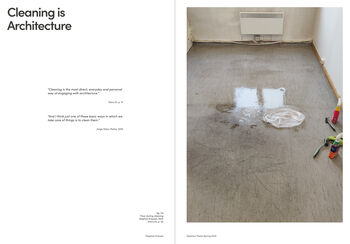
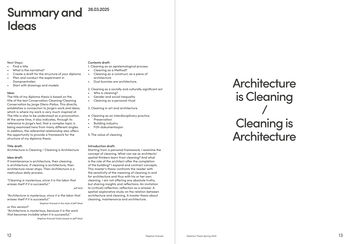
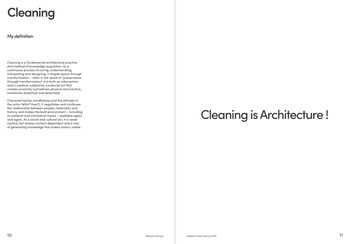
Cleaning is Architecture
This part examines the thesis that cleaning is not just a trivial activity, but instead a creative, space-shaping act that creates attachment, generates knowledge, and transforms buildings.
“Preservation through Transformation”
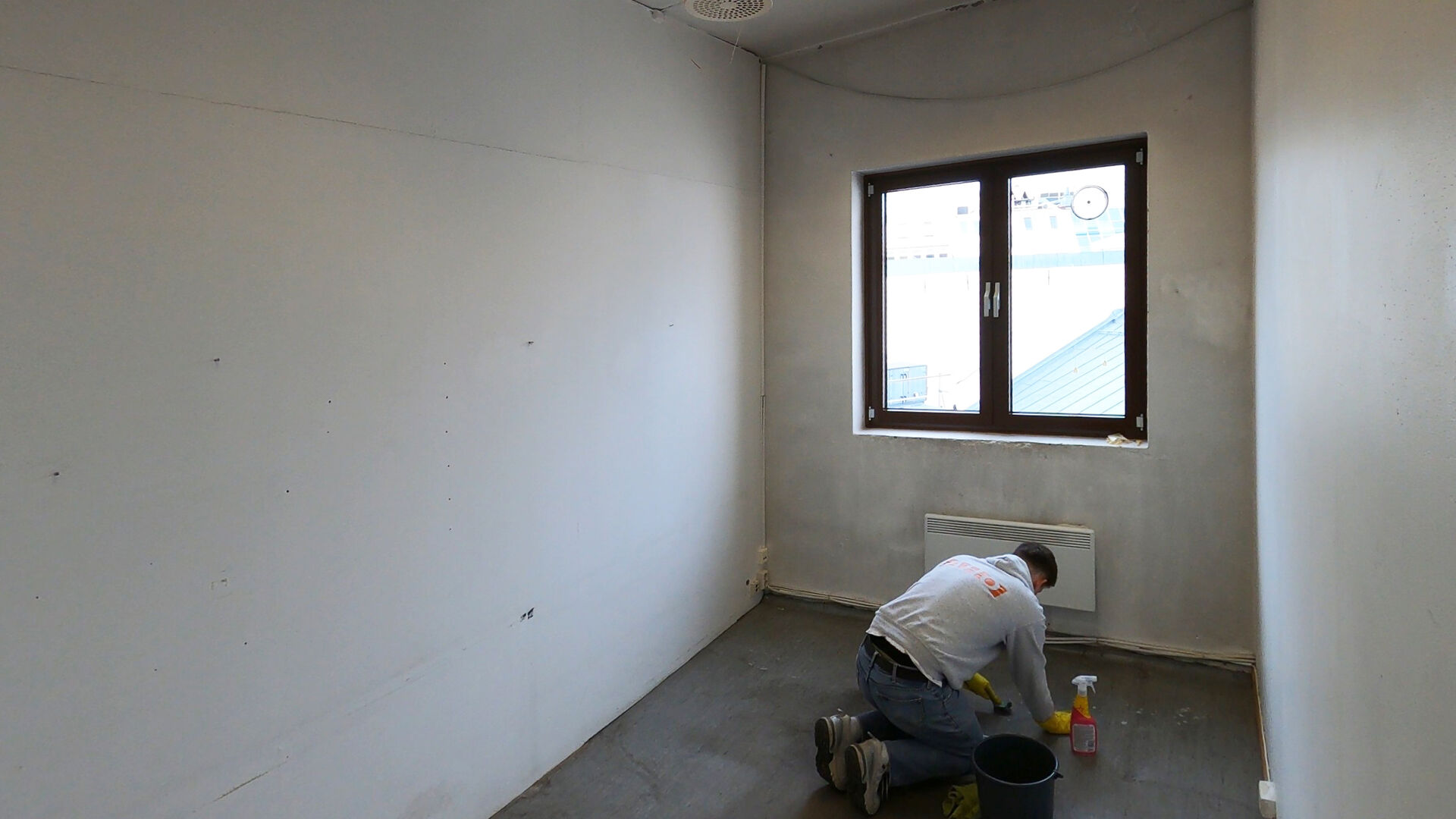
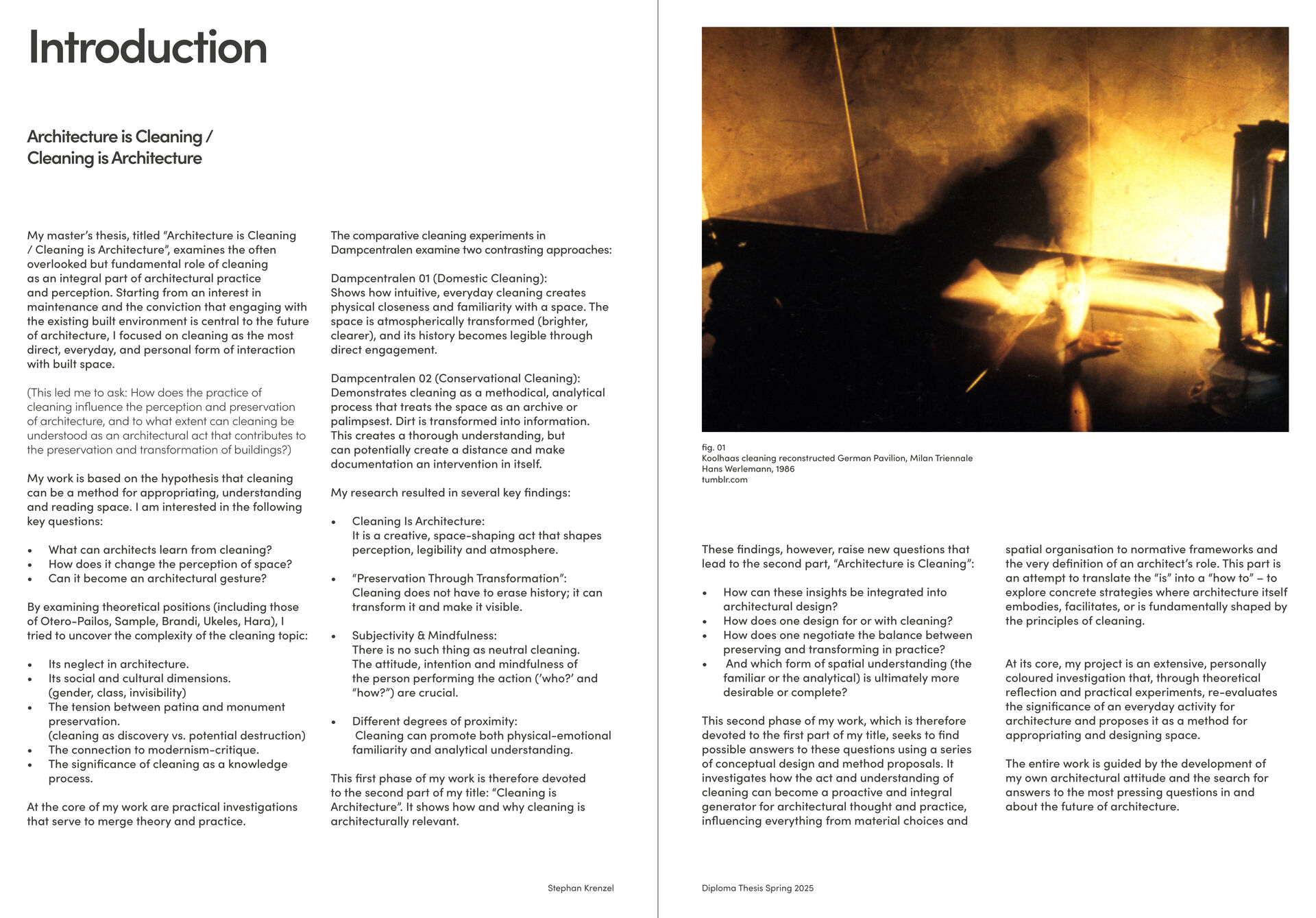
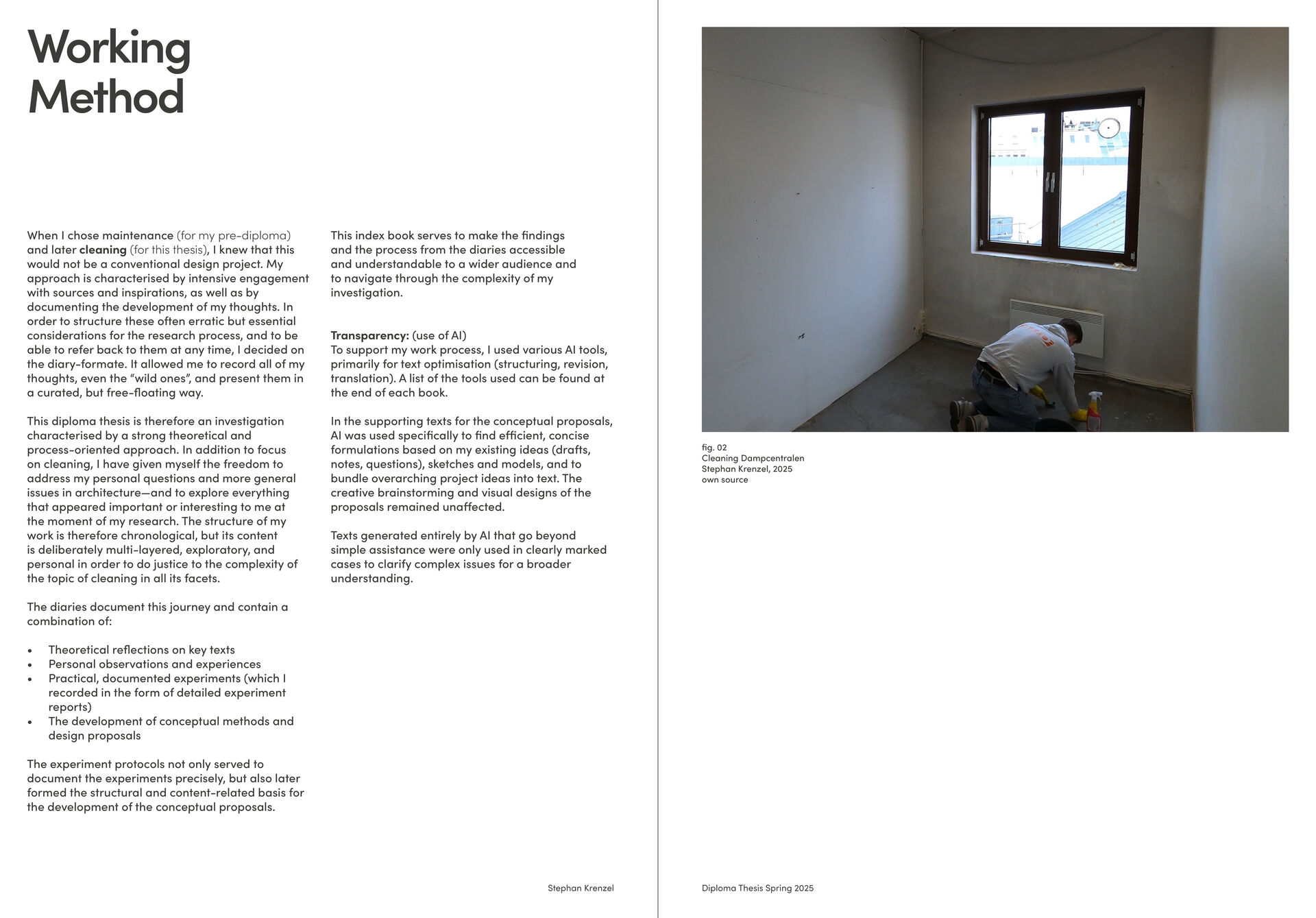
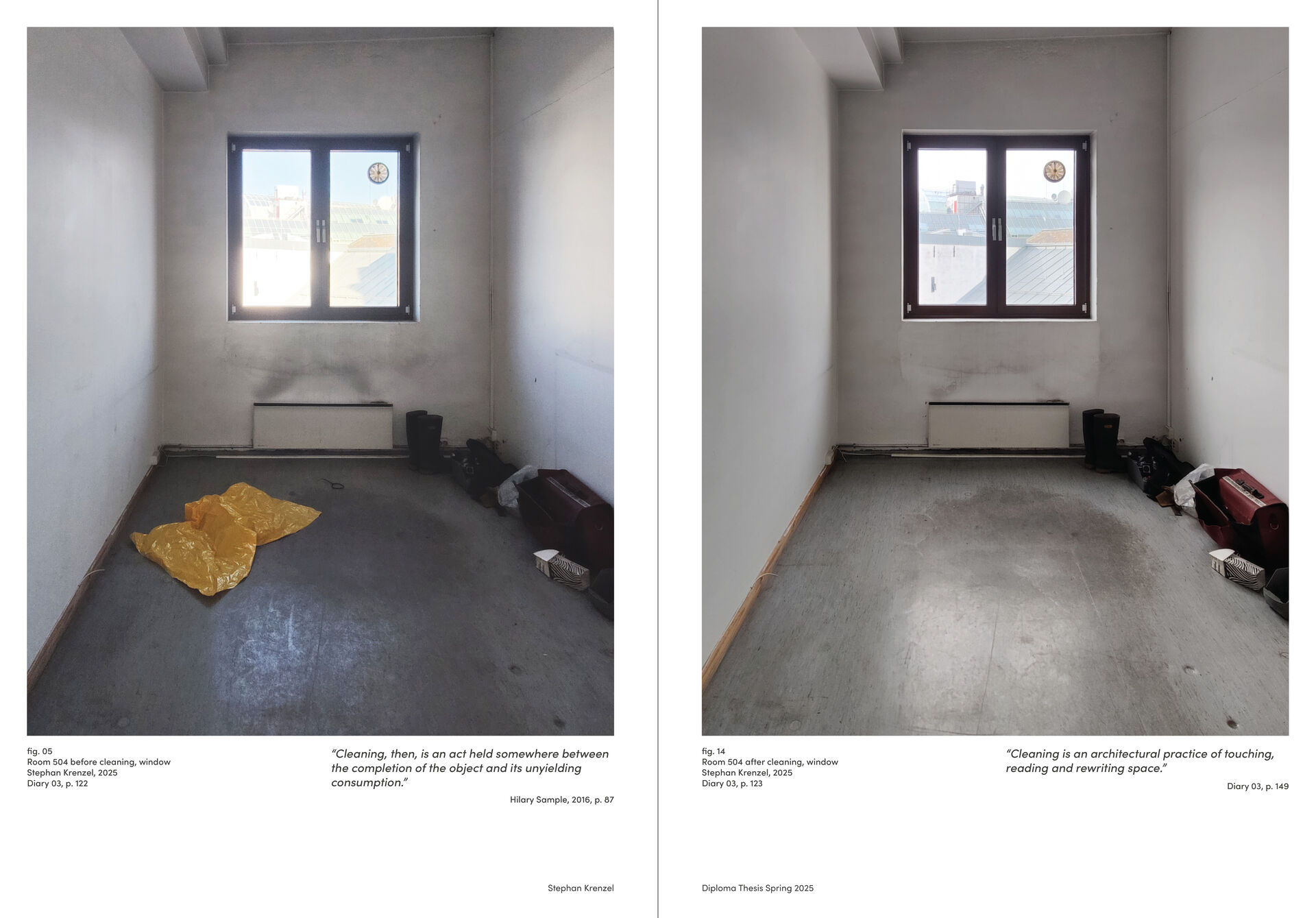
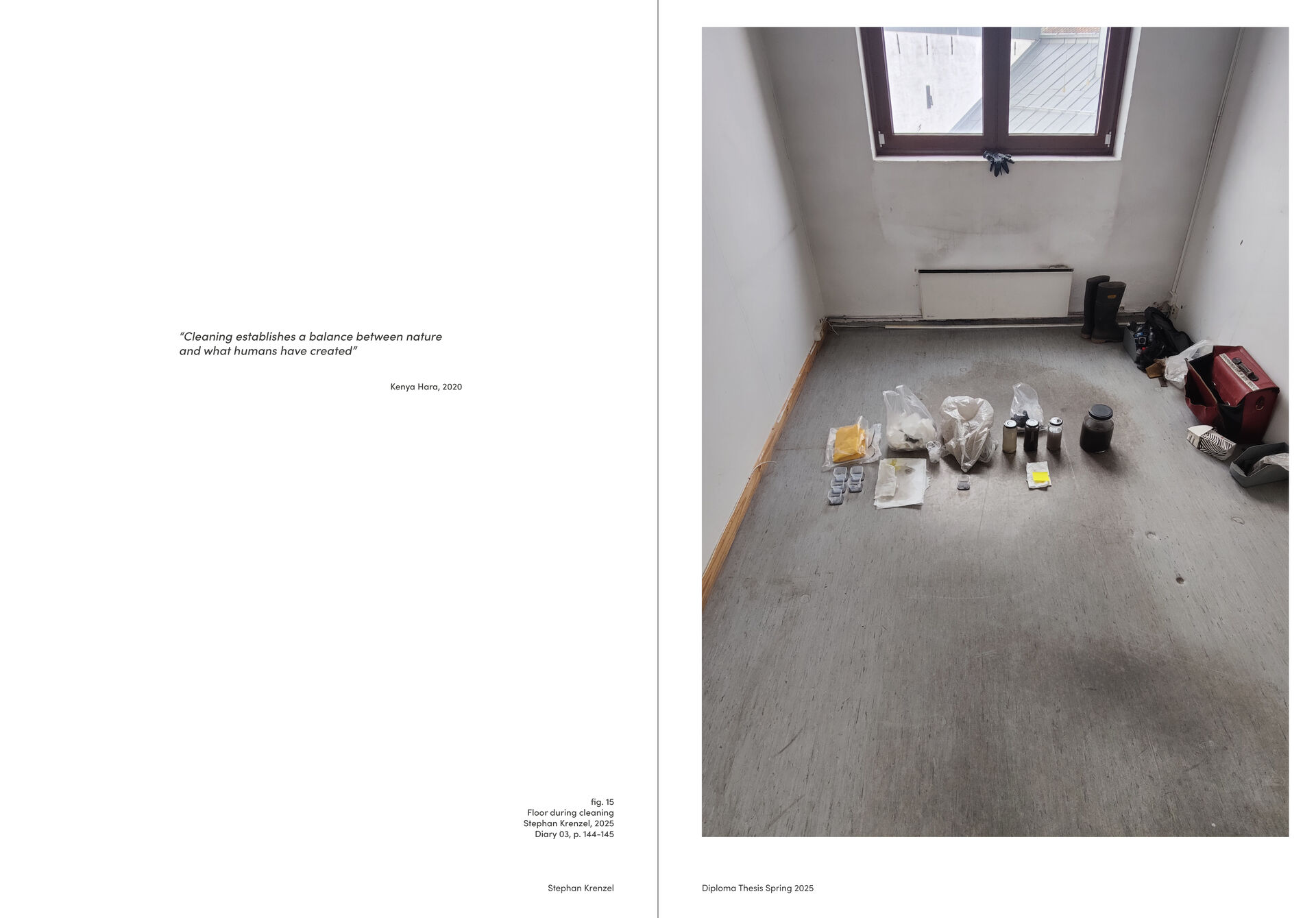
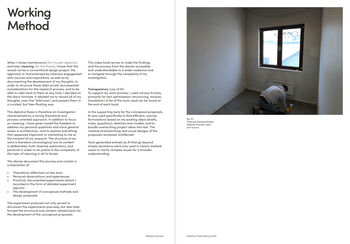
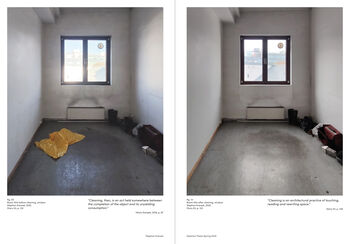
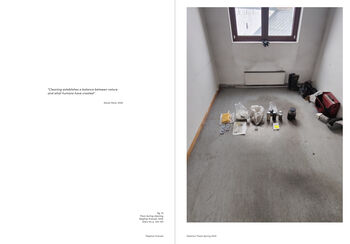
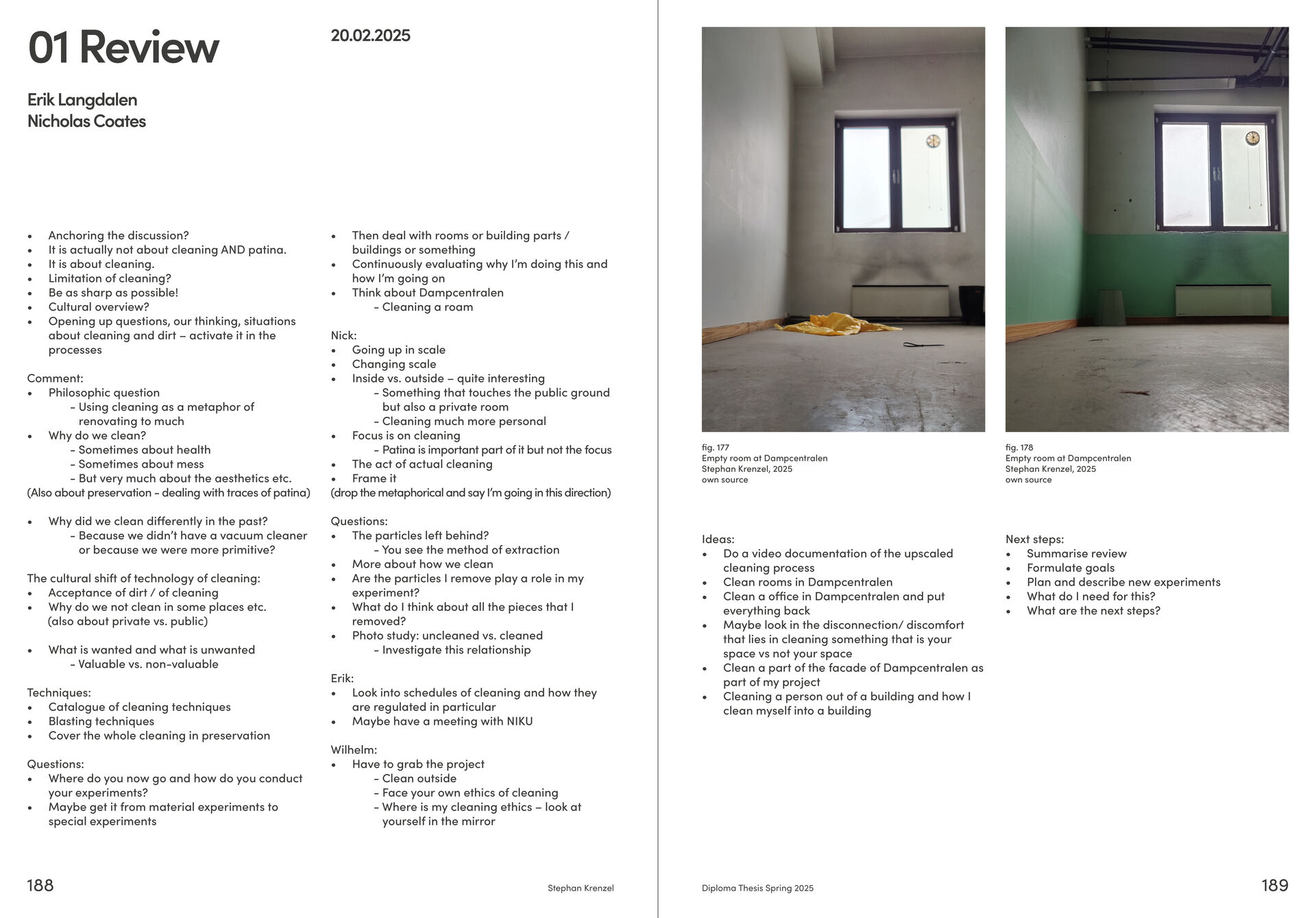
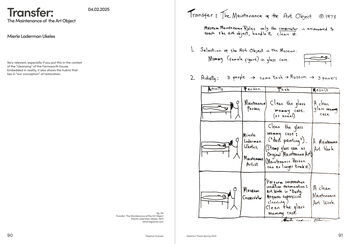
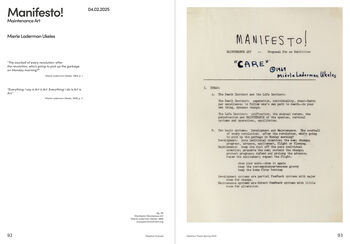
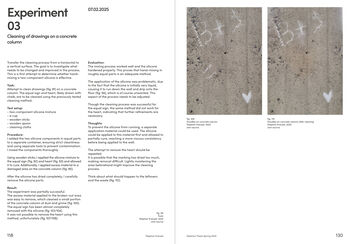
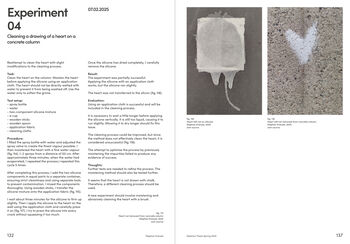
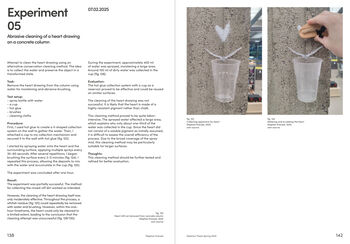
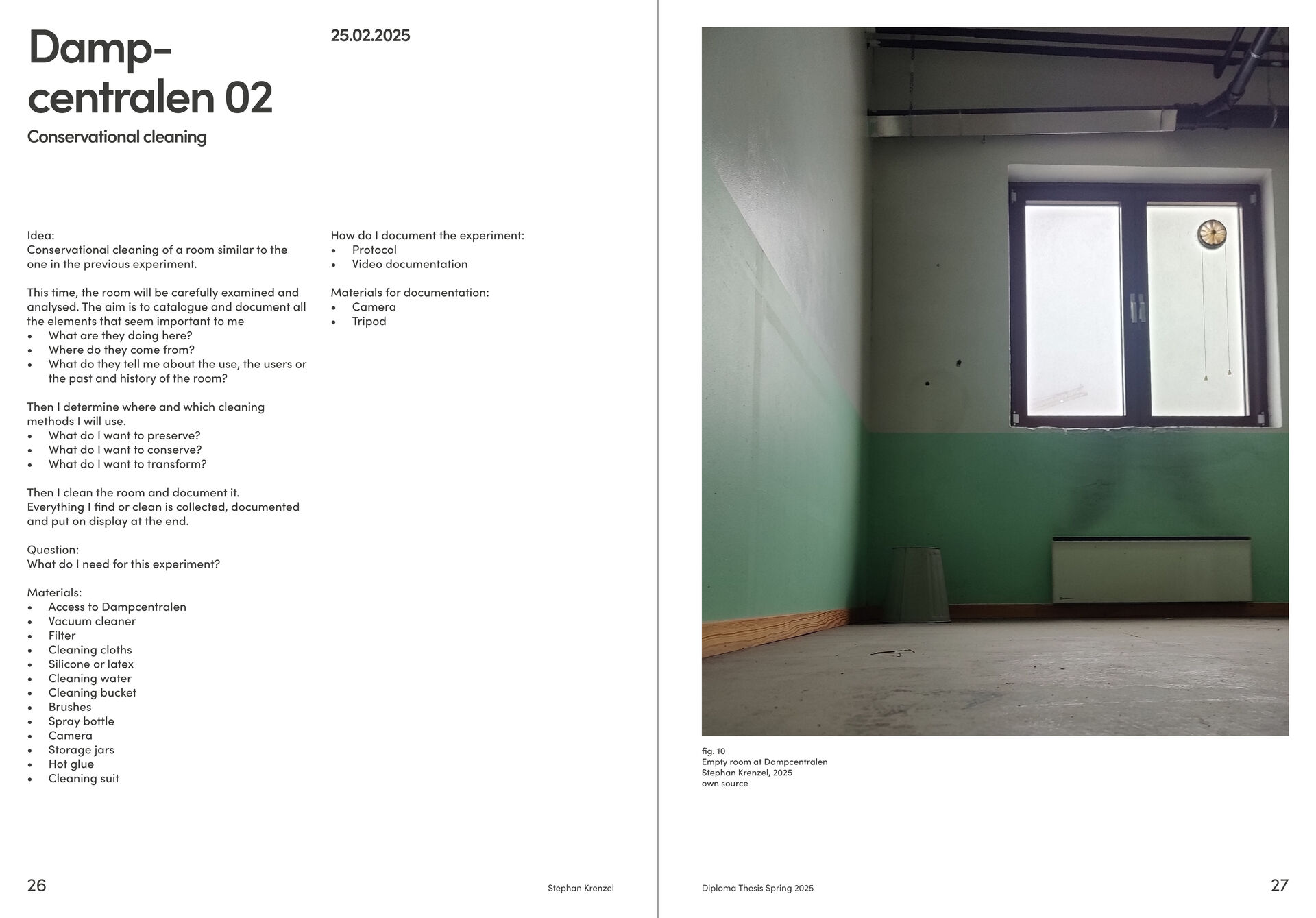
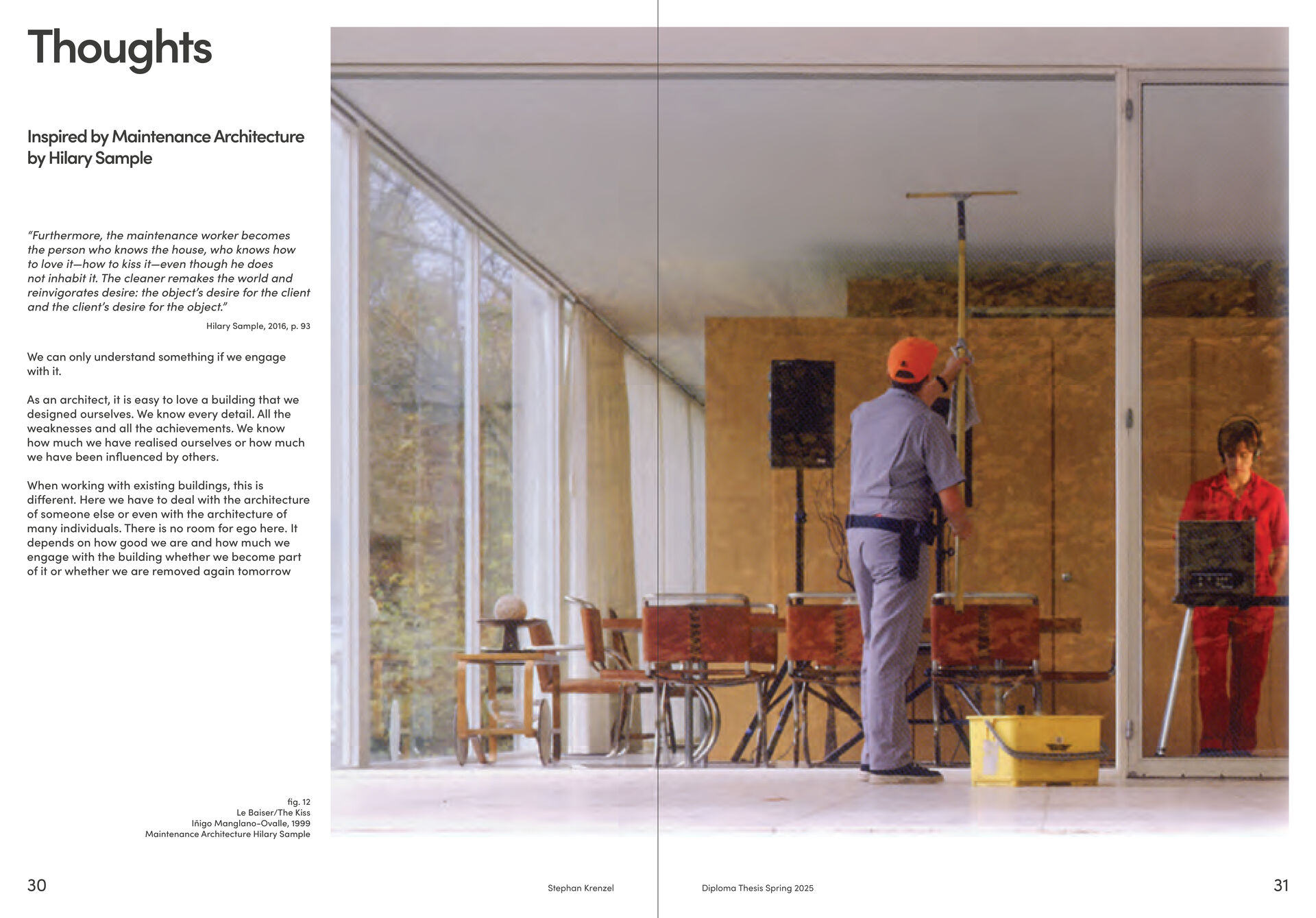
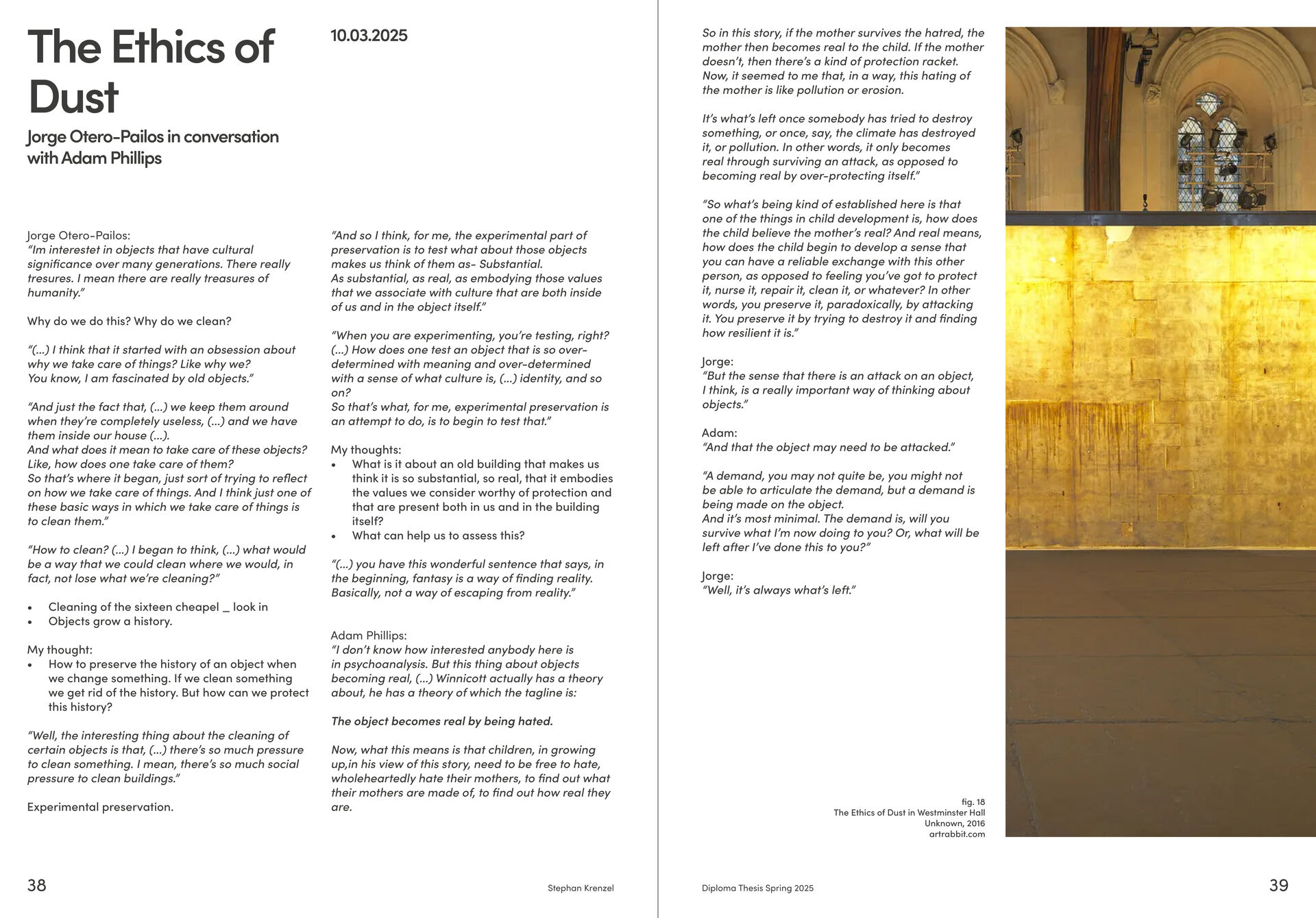
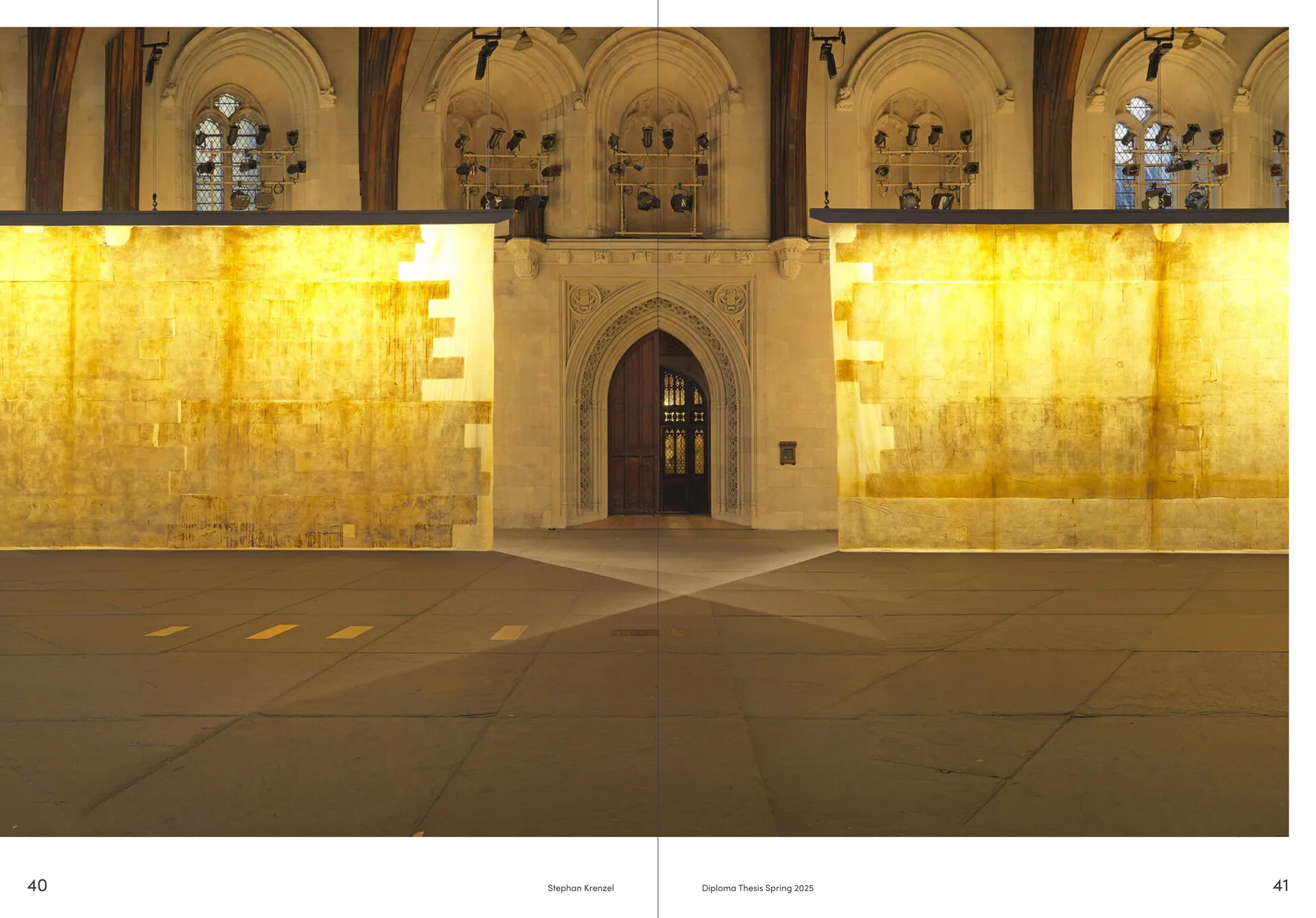
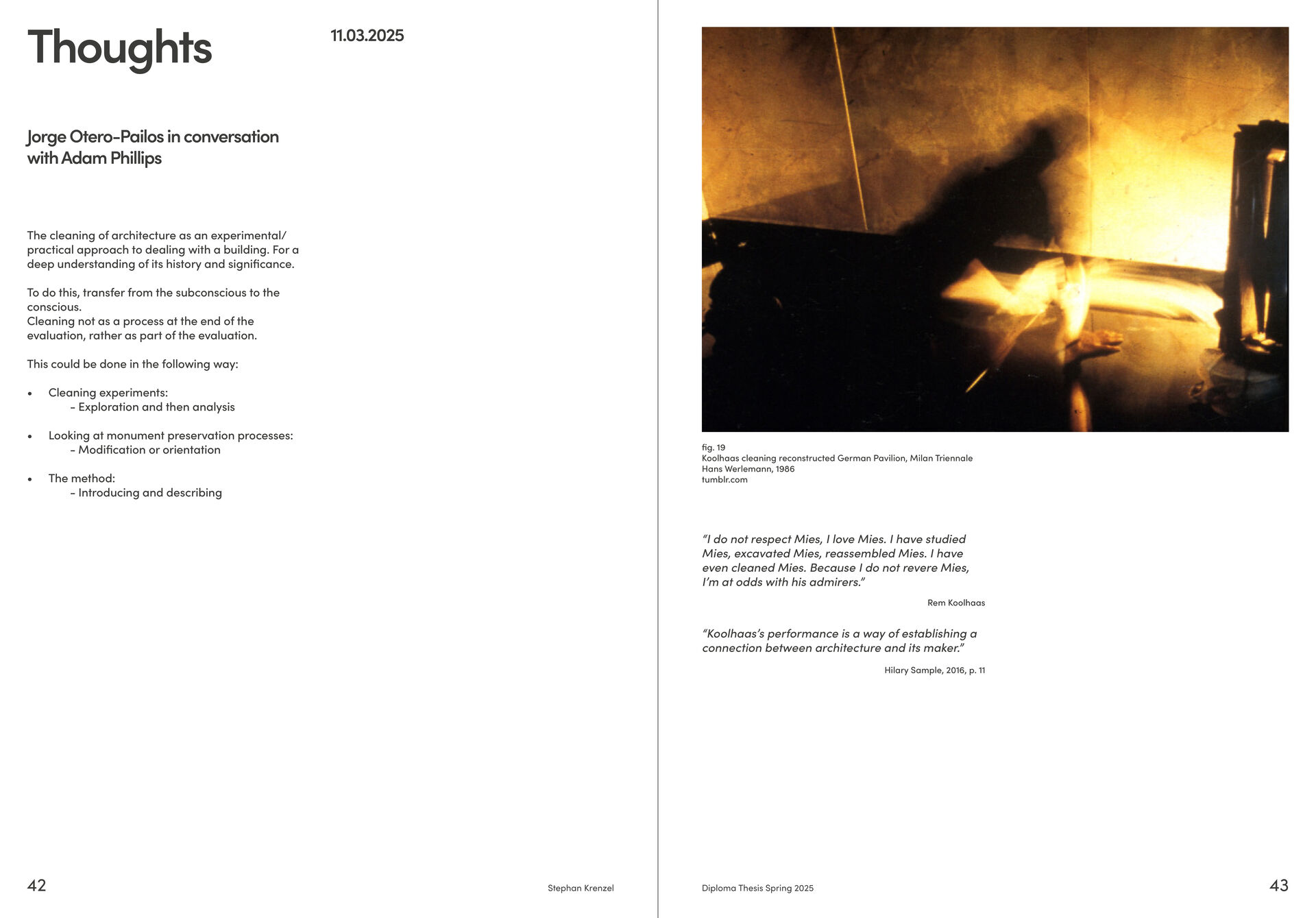
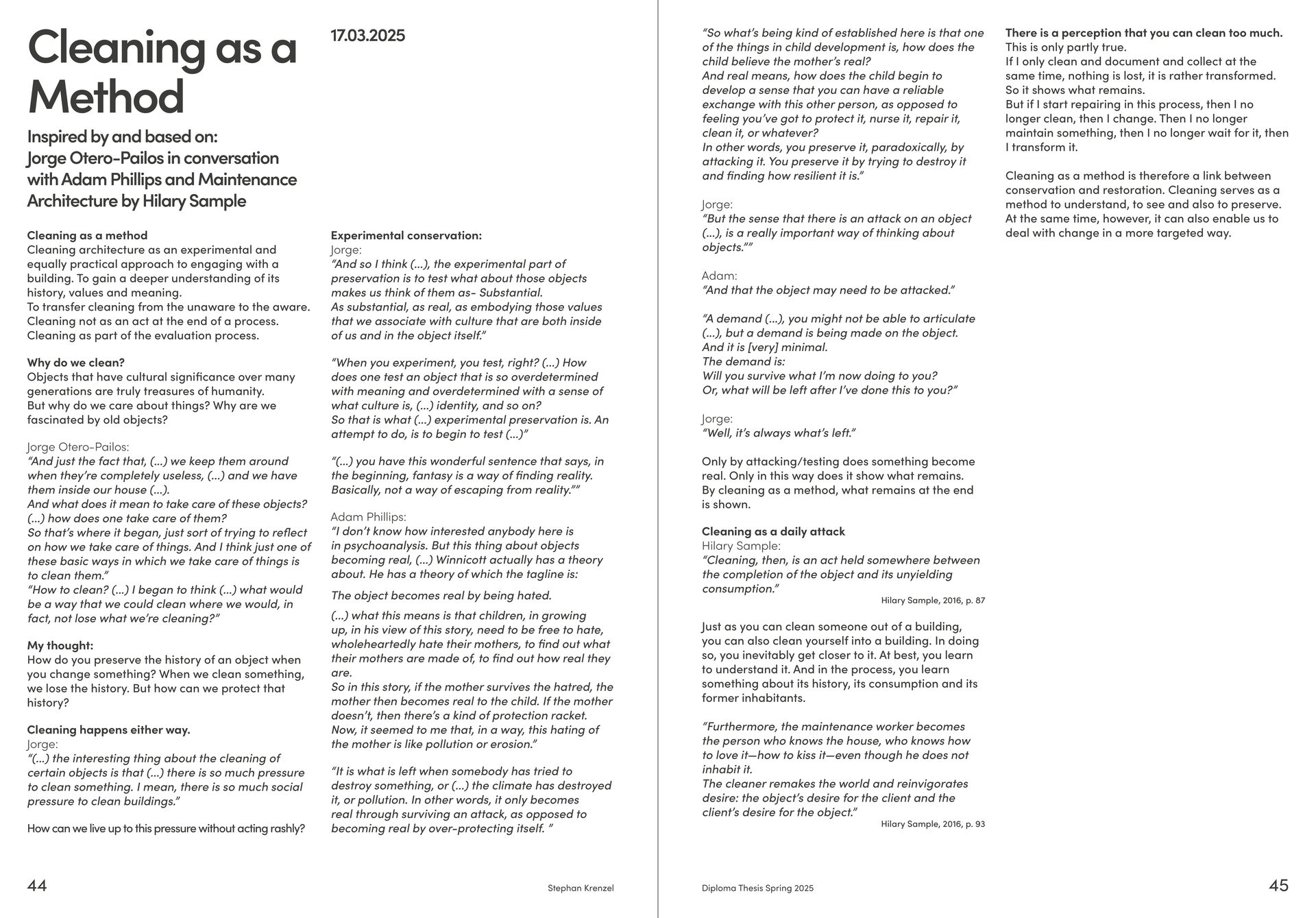
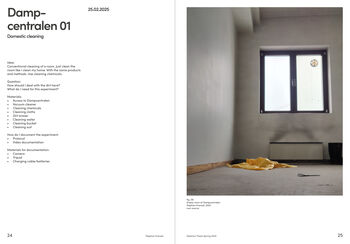
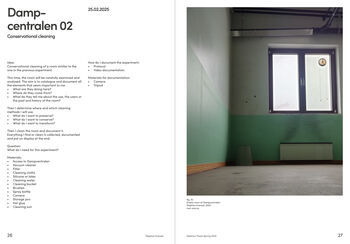
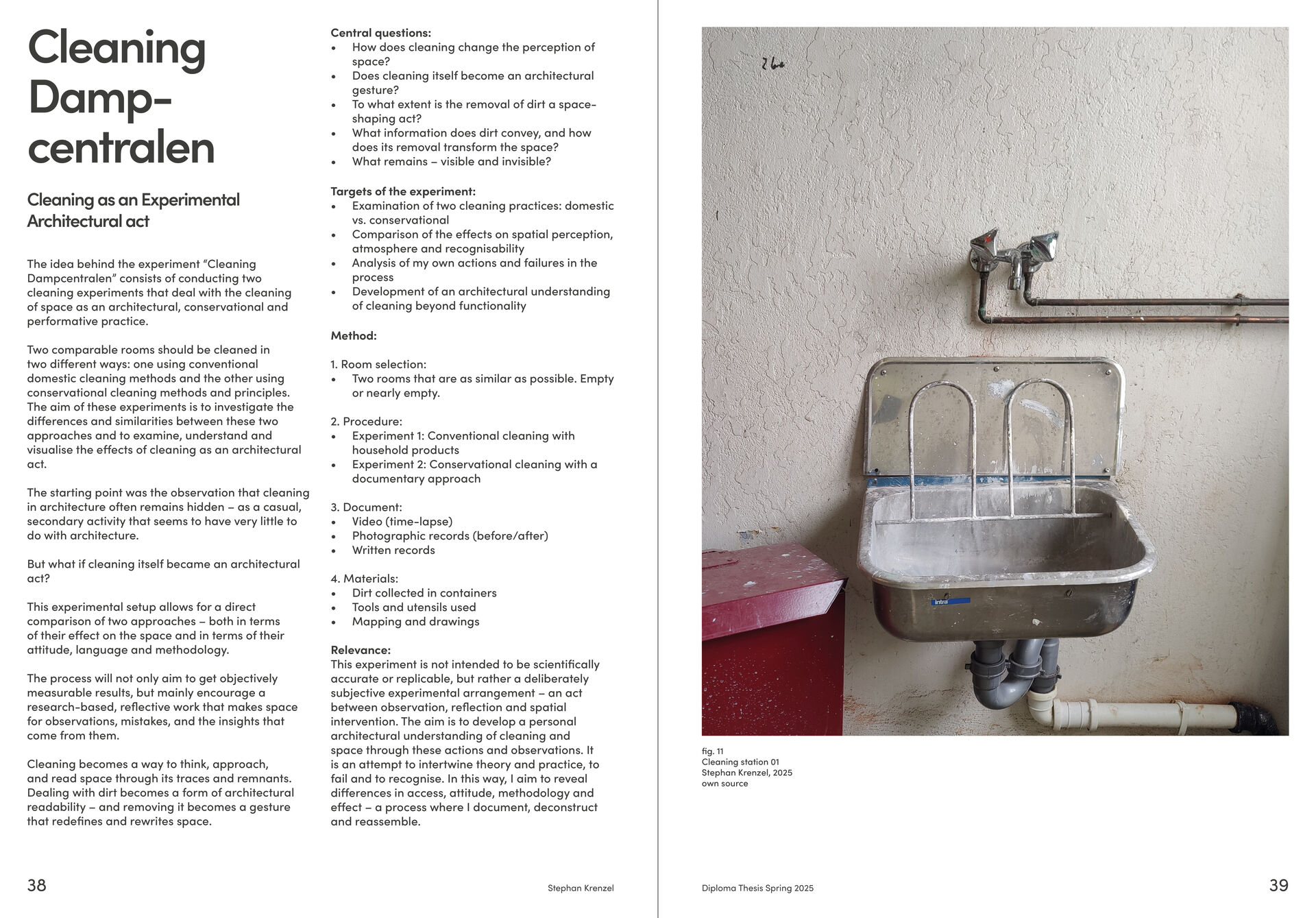
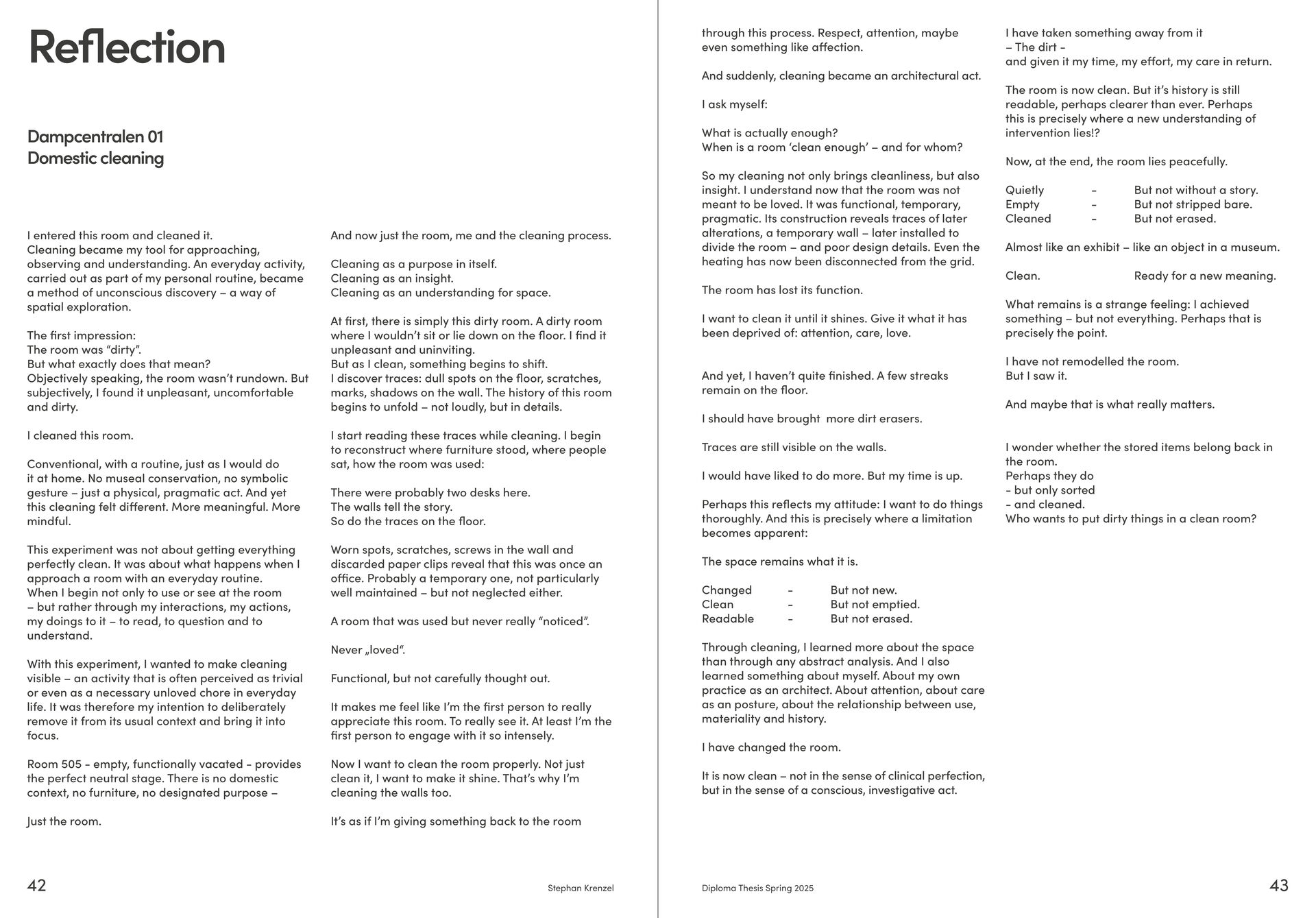
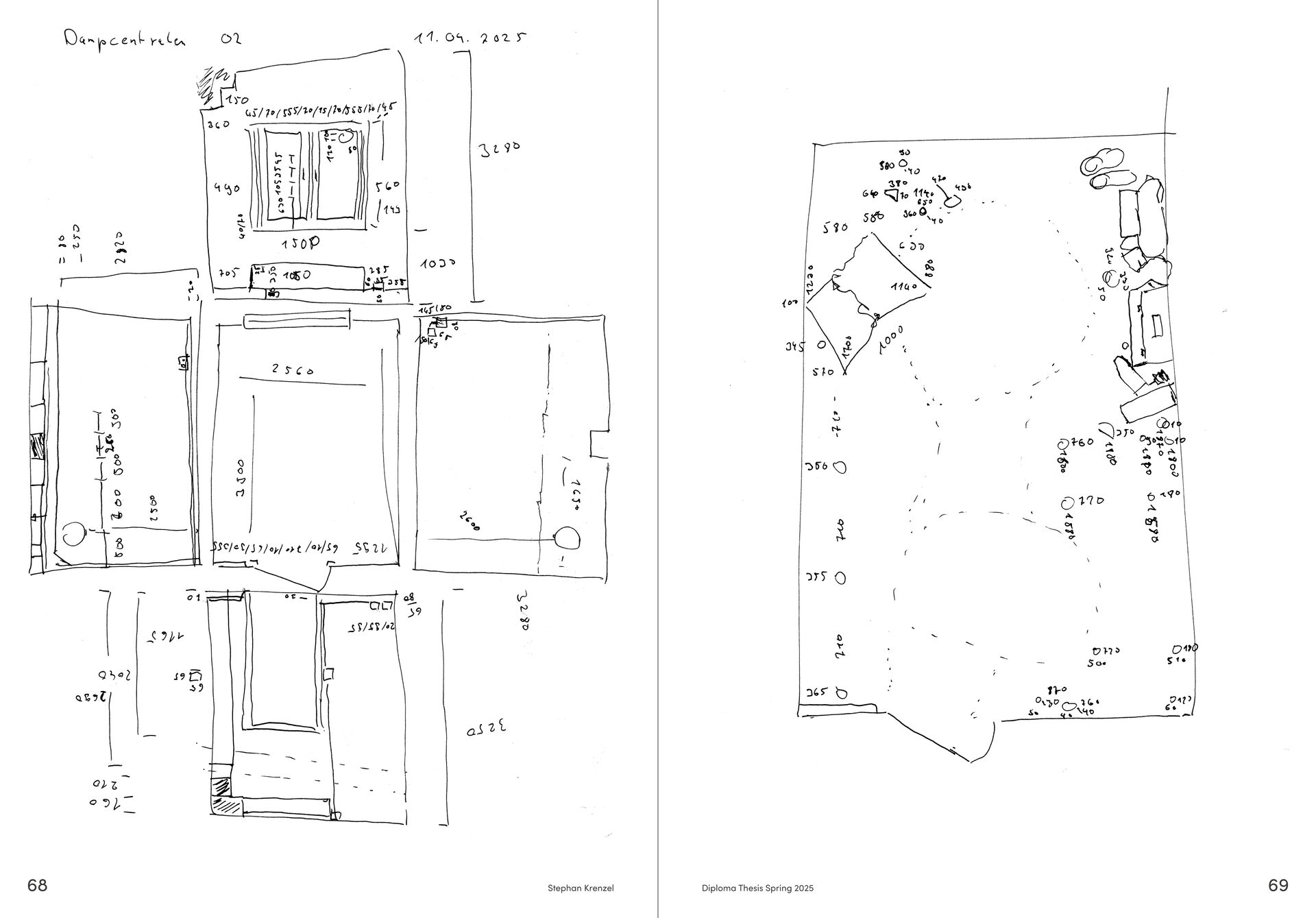
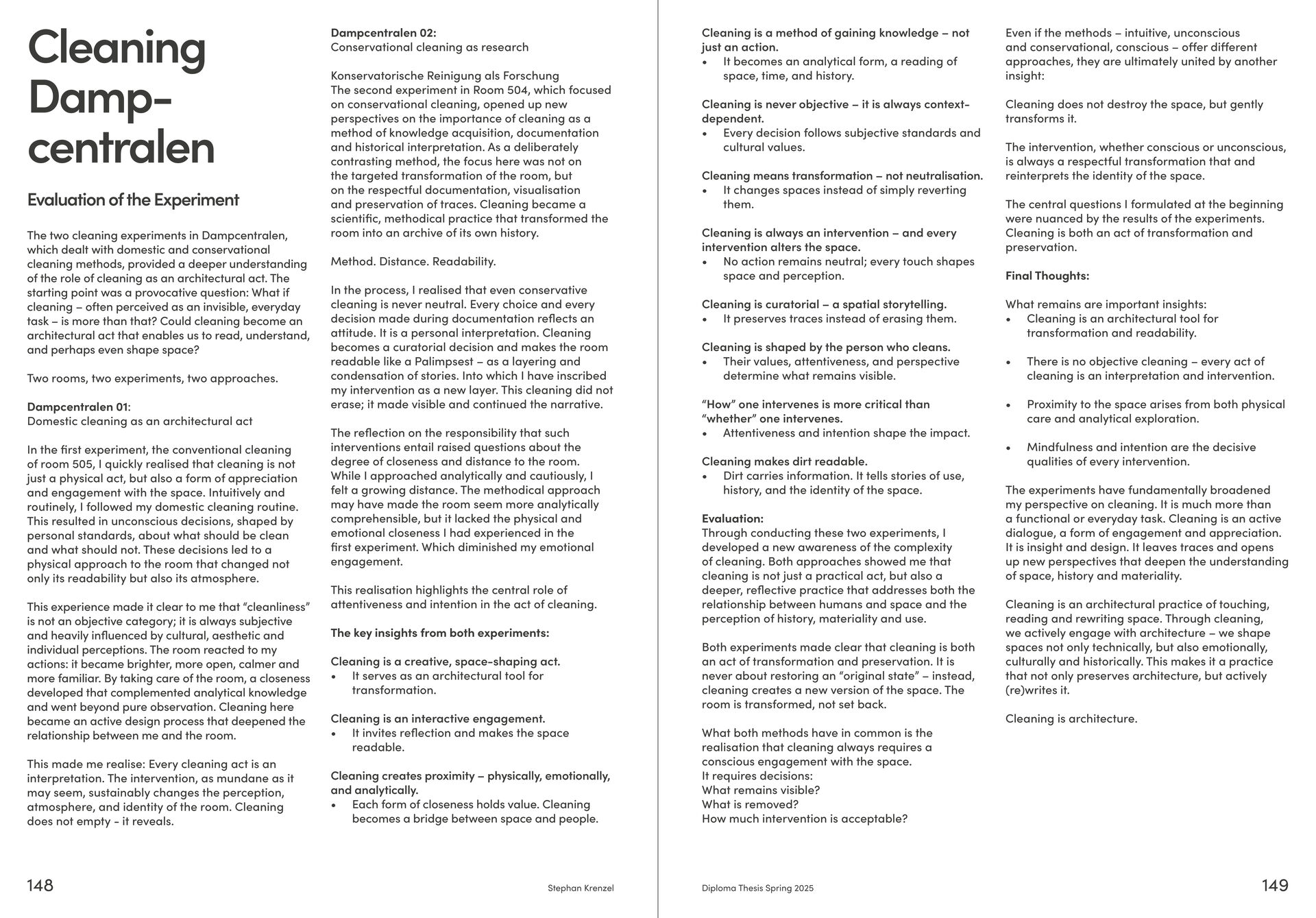
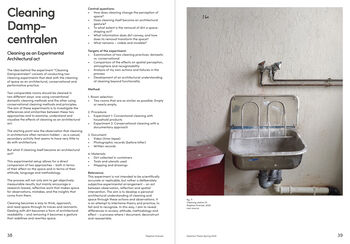
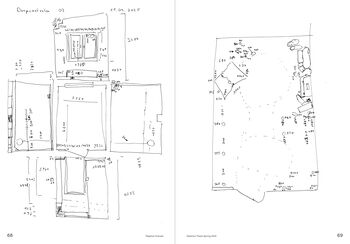
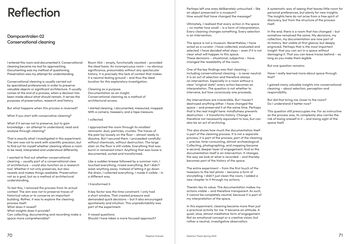
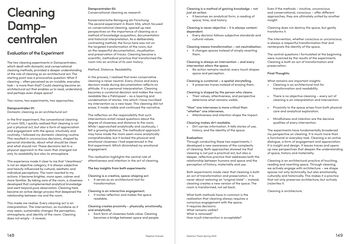
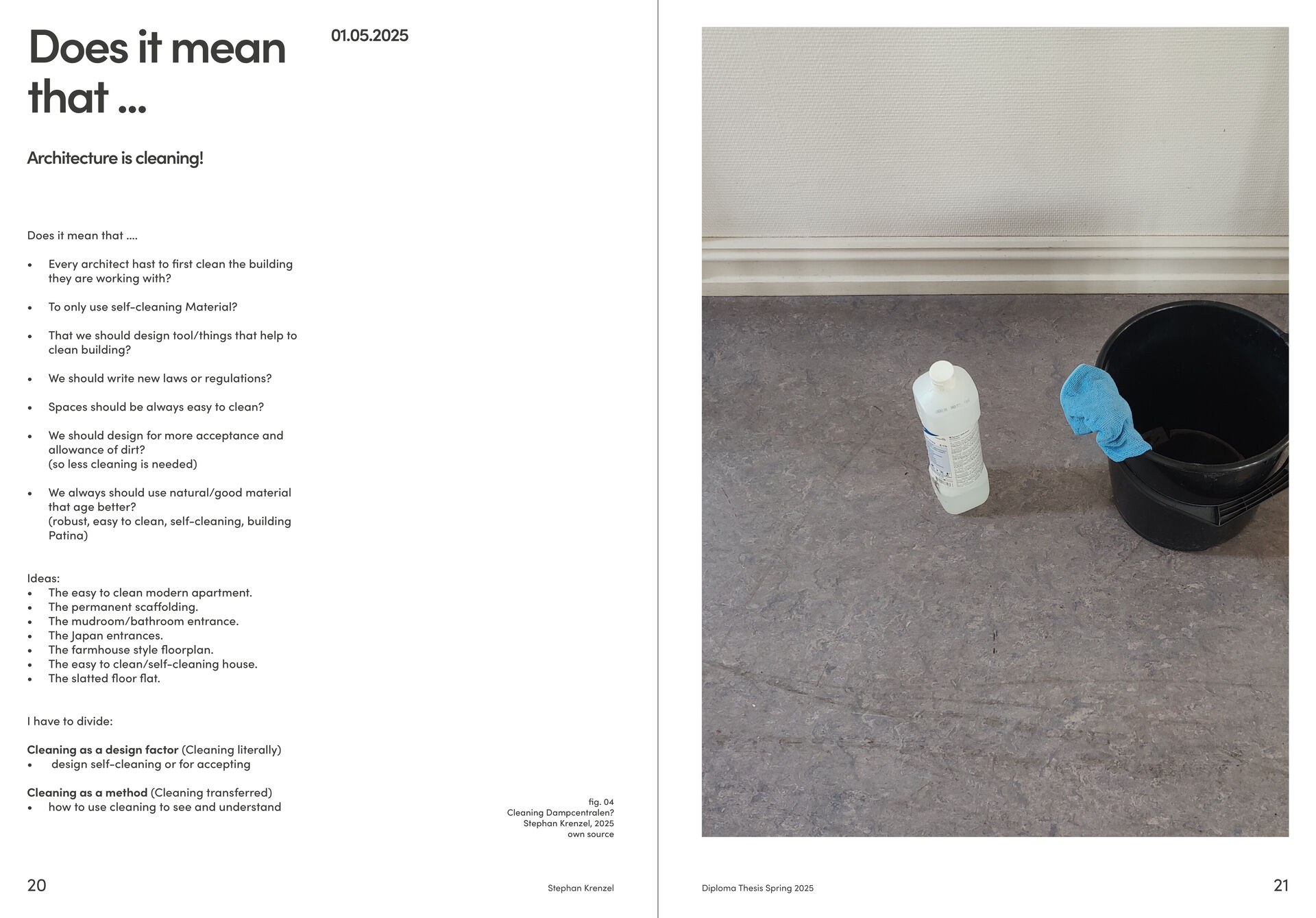
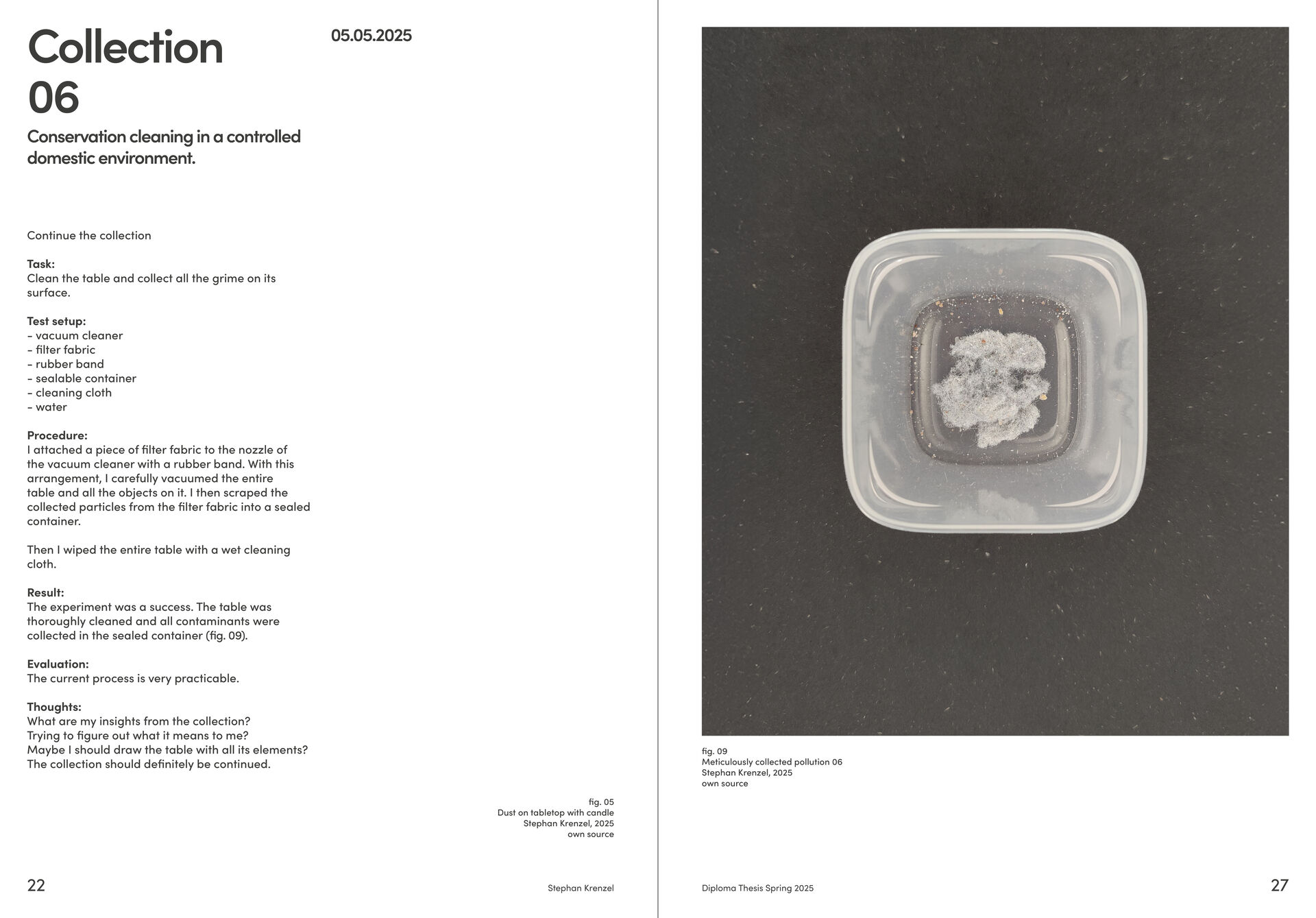
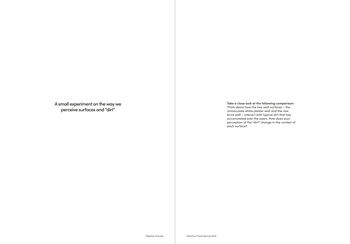
The diverse dimensions of cleaning as an architectural practice are explored through theoretical investigations (based on key texts by Otero-Pailos, Sample, Ukeles, among others), personal observations, and practical experiments - such as comparative cleaning studies in Dampcentralen.
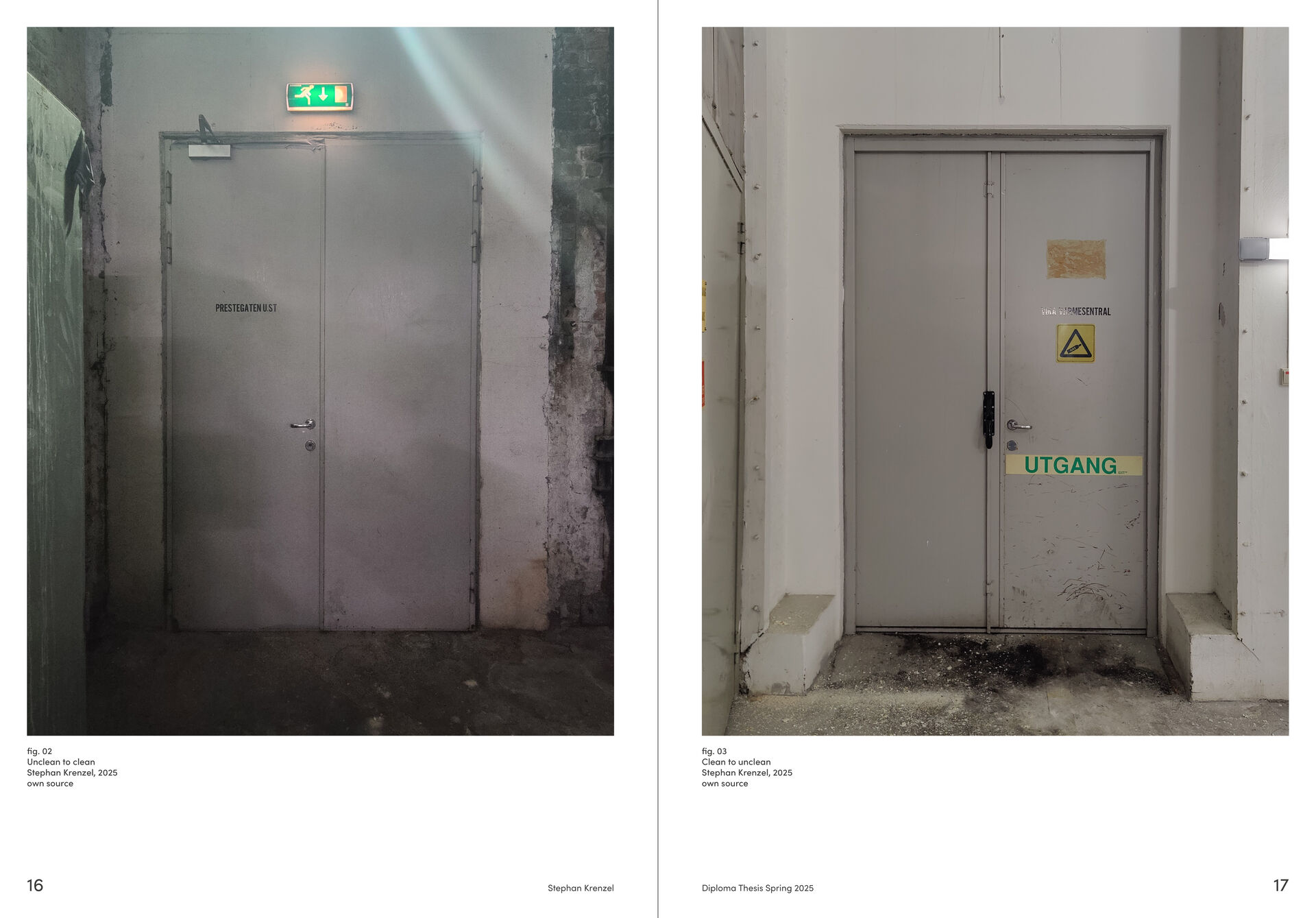
Cleaning Dampcentralen
Dampcentralen 01, Runtime: 02:13 min
Dampcentralen 02, Runtime: 03:17 min
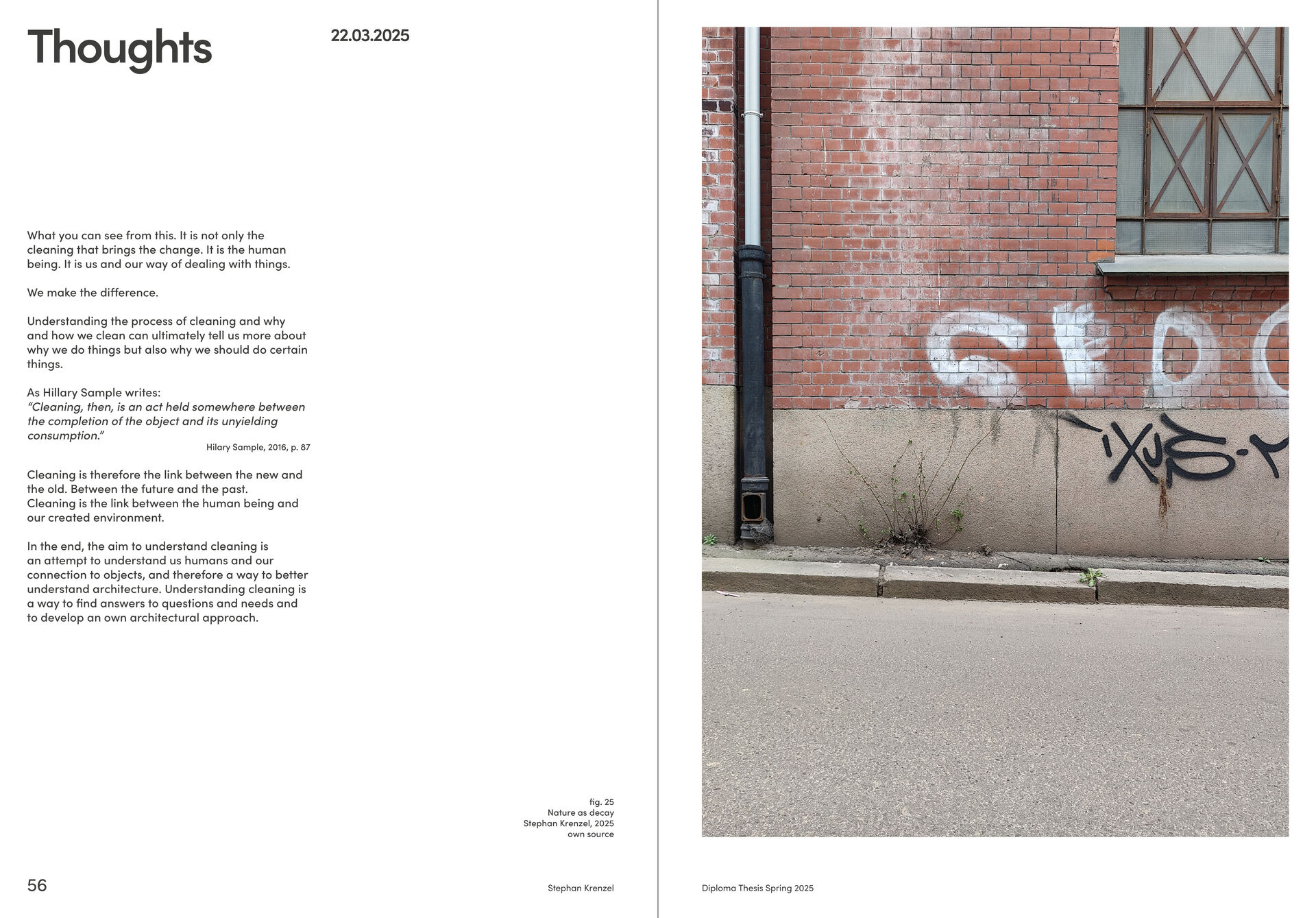
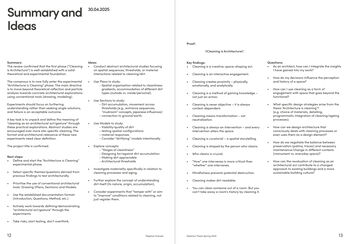
A central finding is that the effect of cleaning is strongly influenced by the attitude and mindfulness of the person performing it (“Who?” and “How?” are decisively important) and that cleaning makes dirt legible as information.
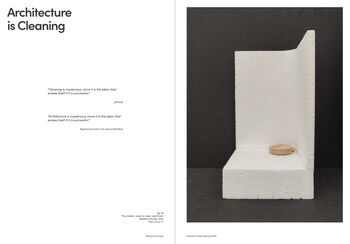
Architecture is Cleaning
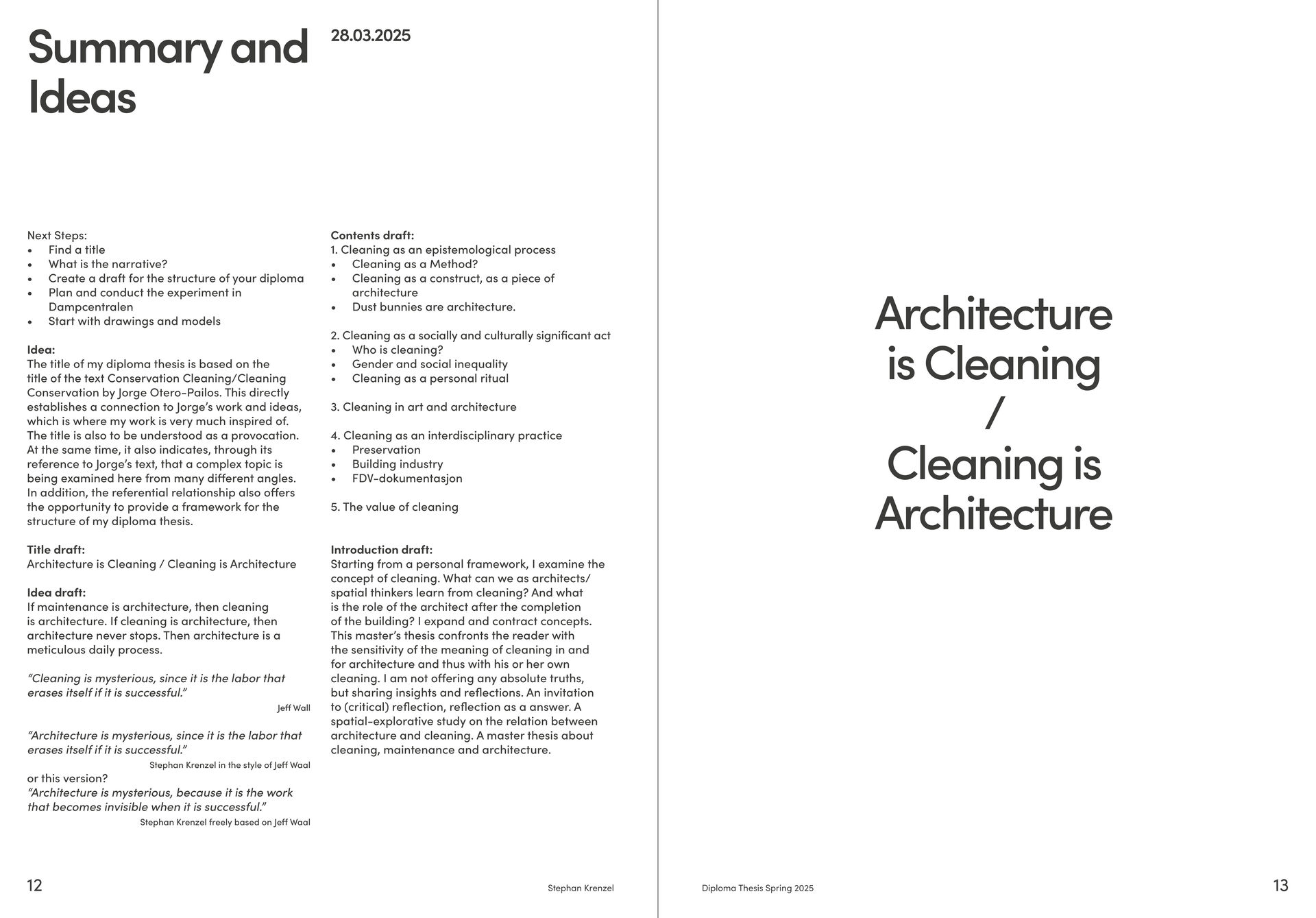
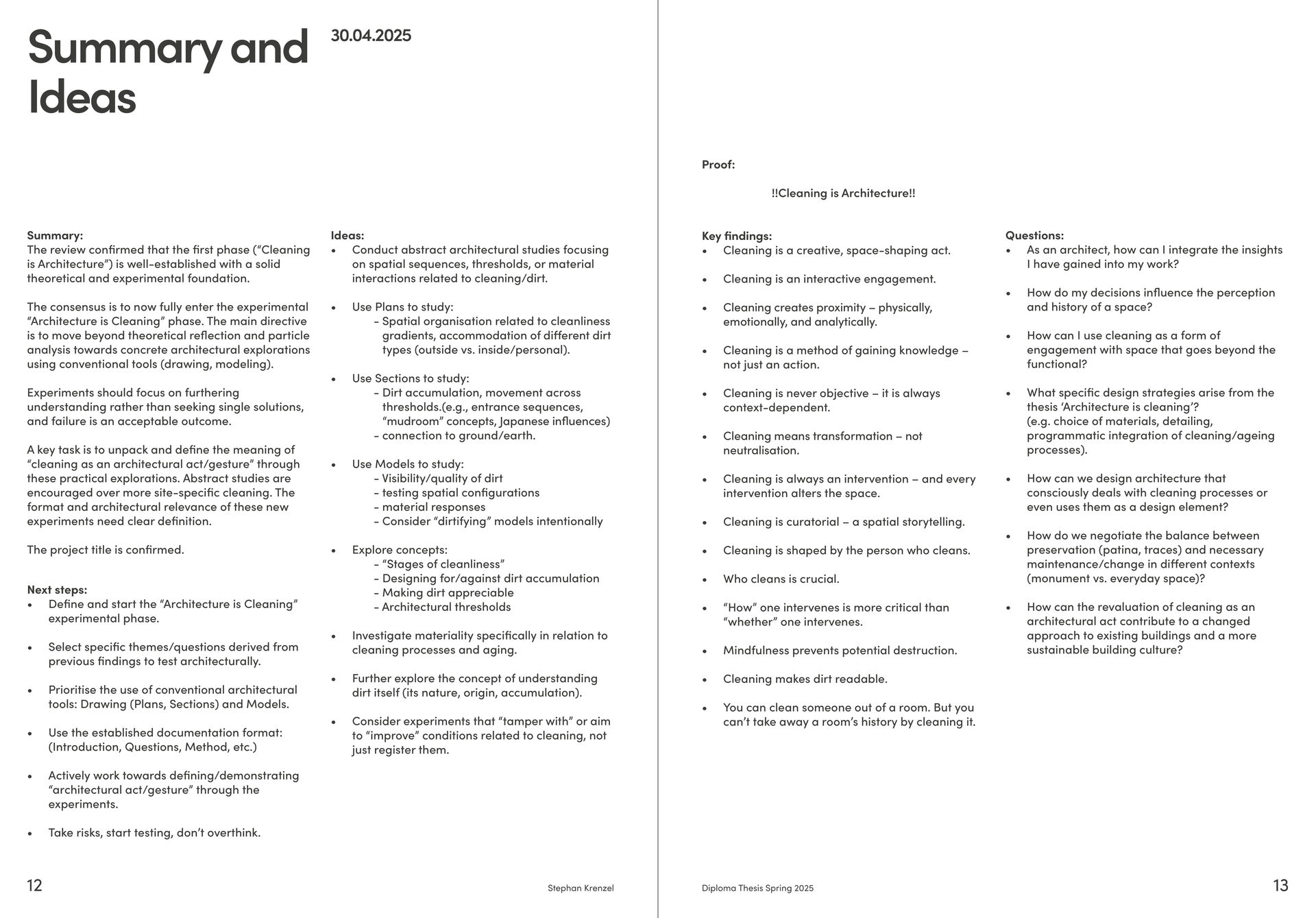
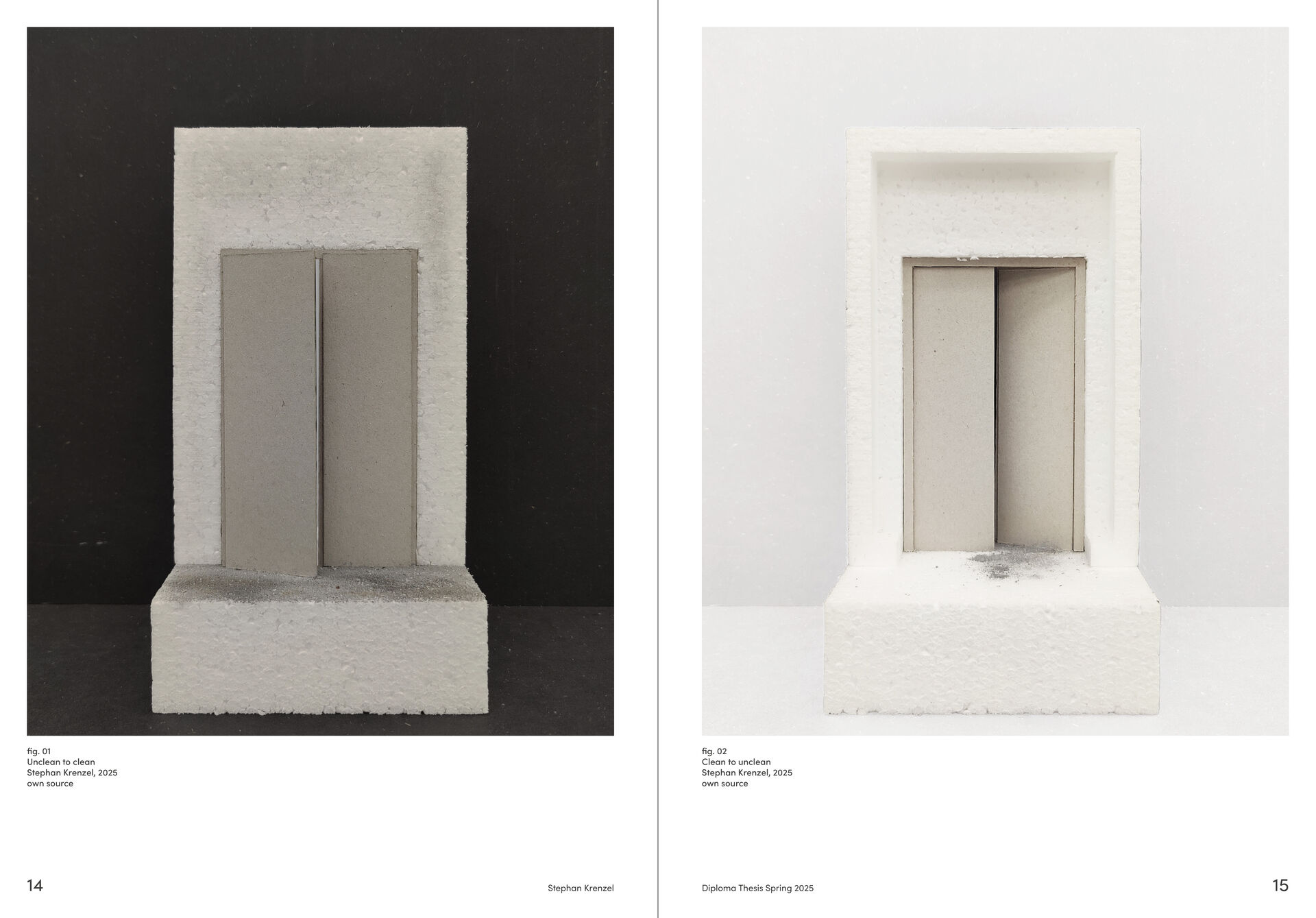
Building on the findings from the first phase, this part investigates how these insights can be translated into new designs and methodology. The aim is to explore the complexity of the topic, the tension between analysis and design, and to identify ways in which architecture can be designed more consciously through cleaning.
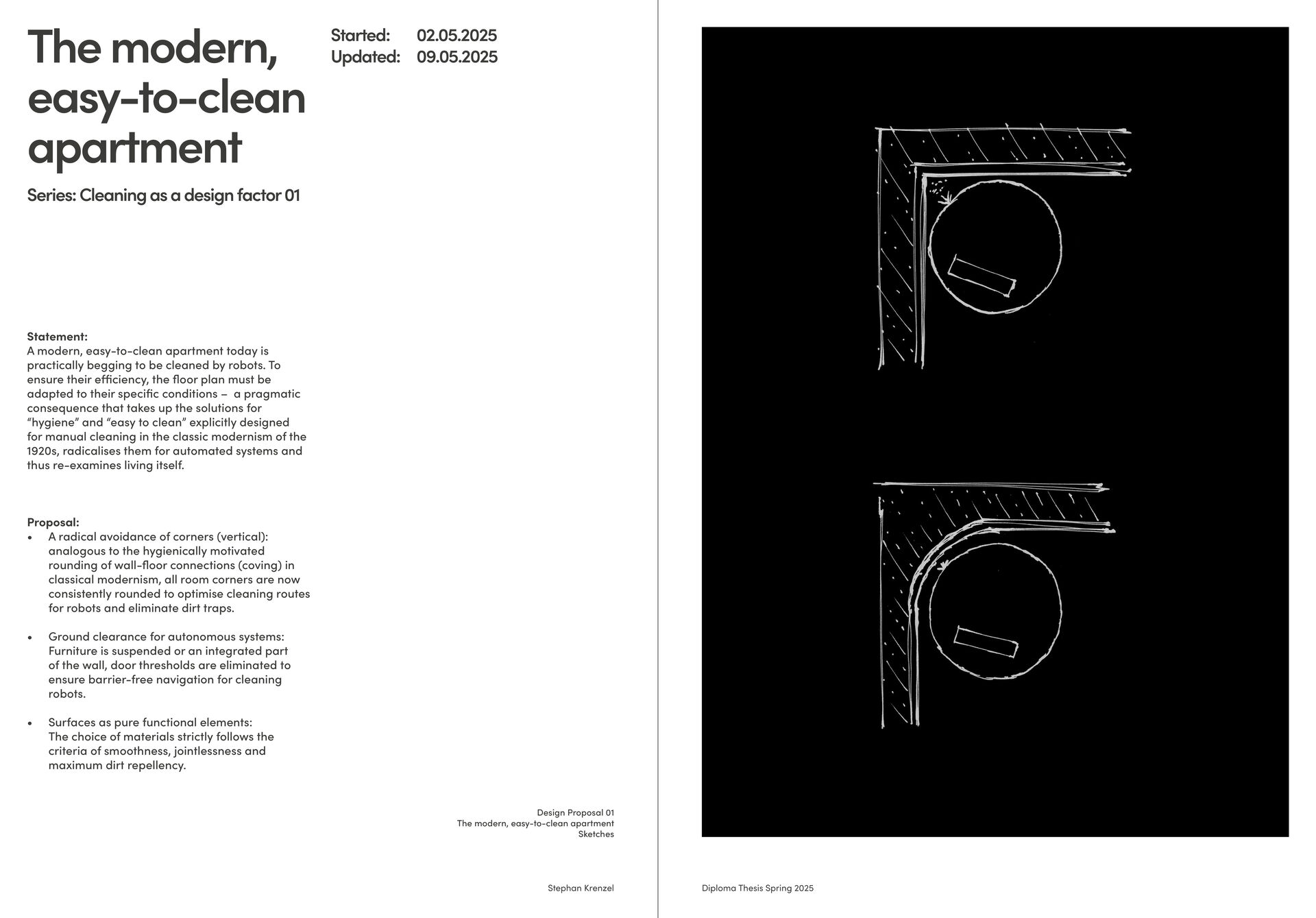
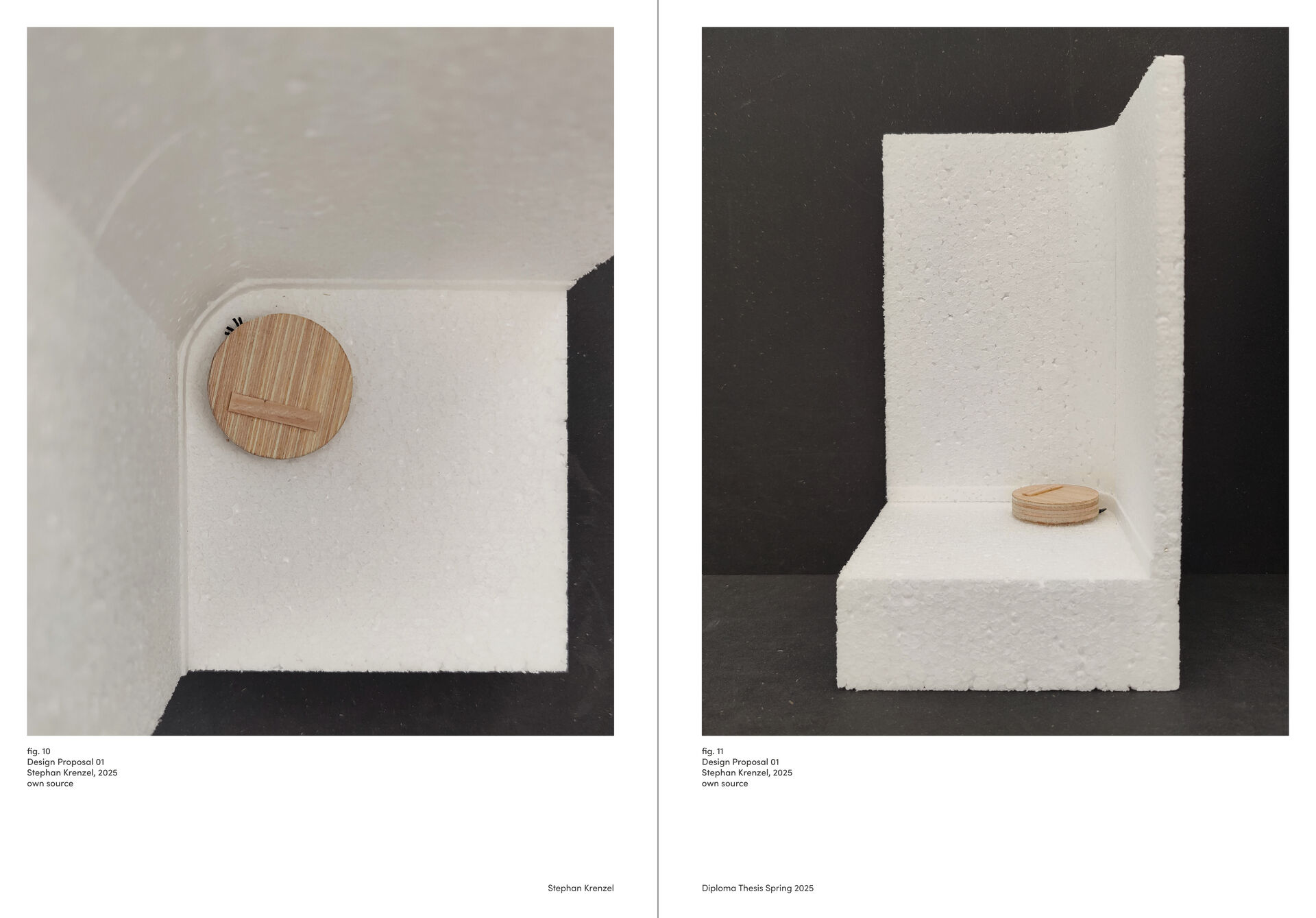
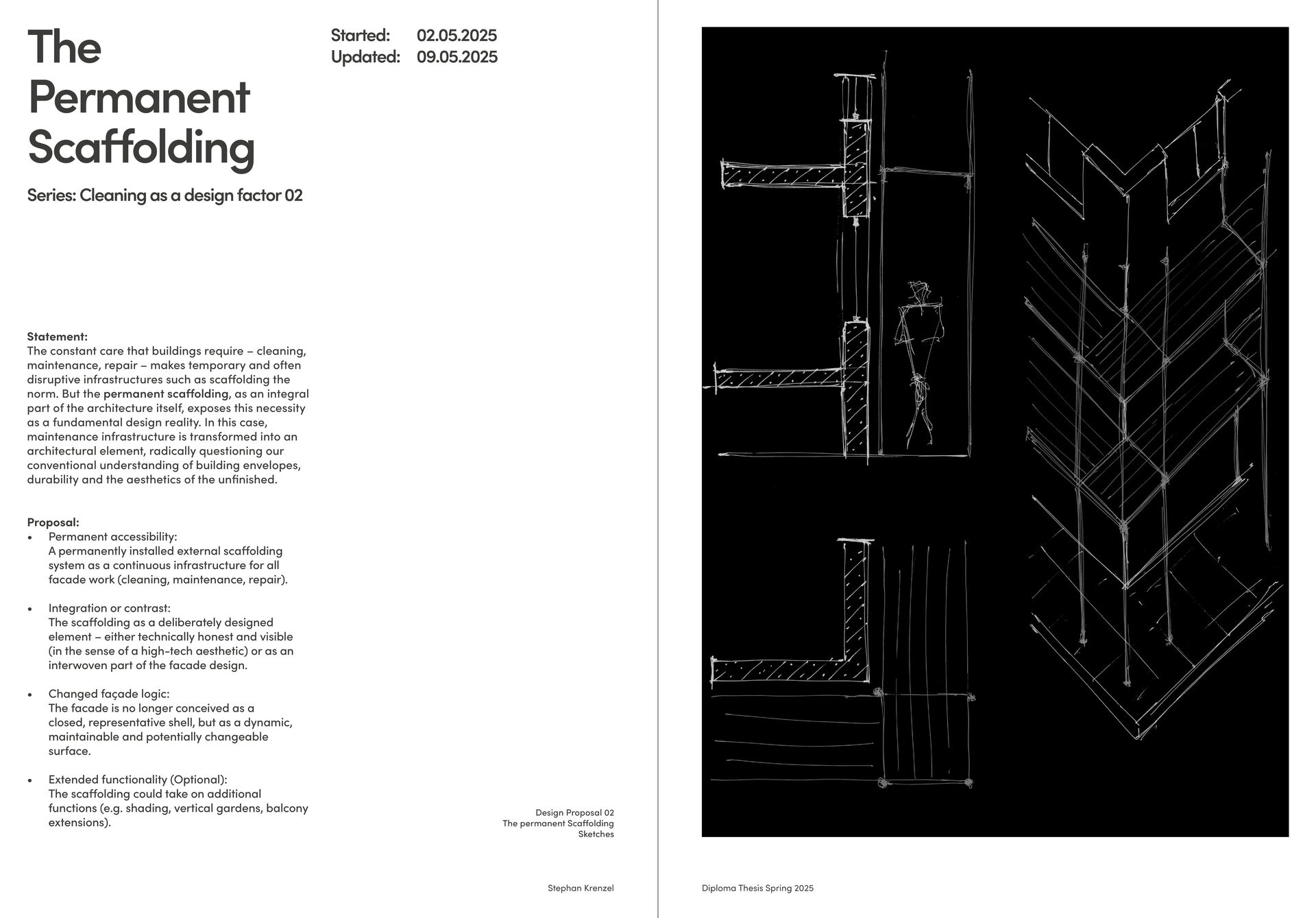
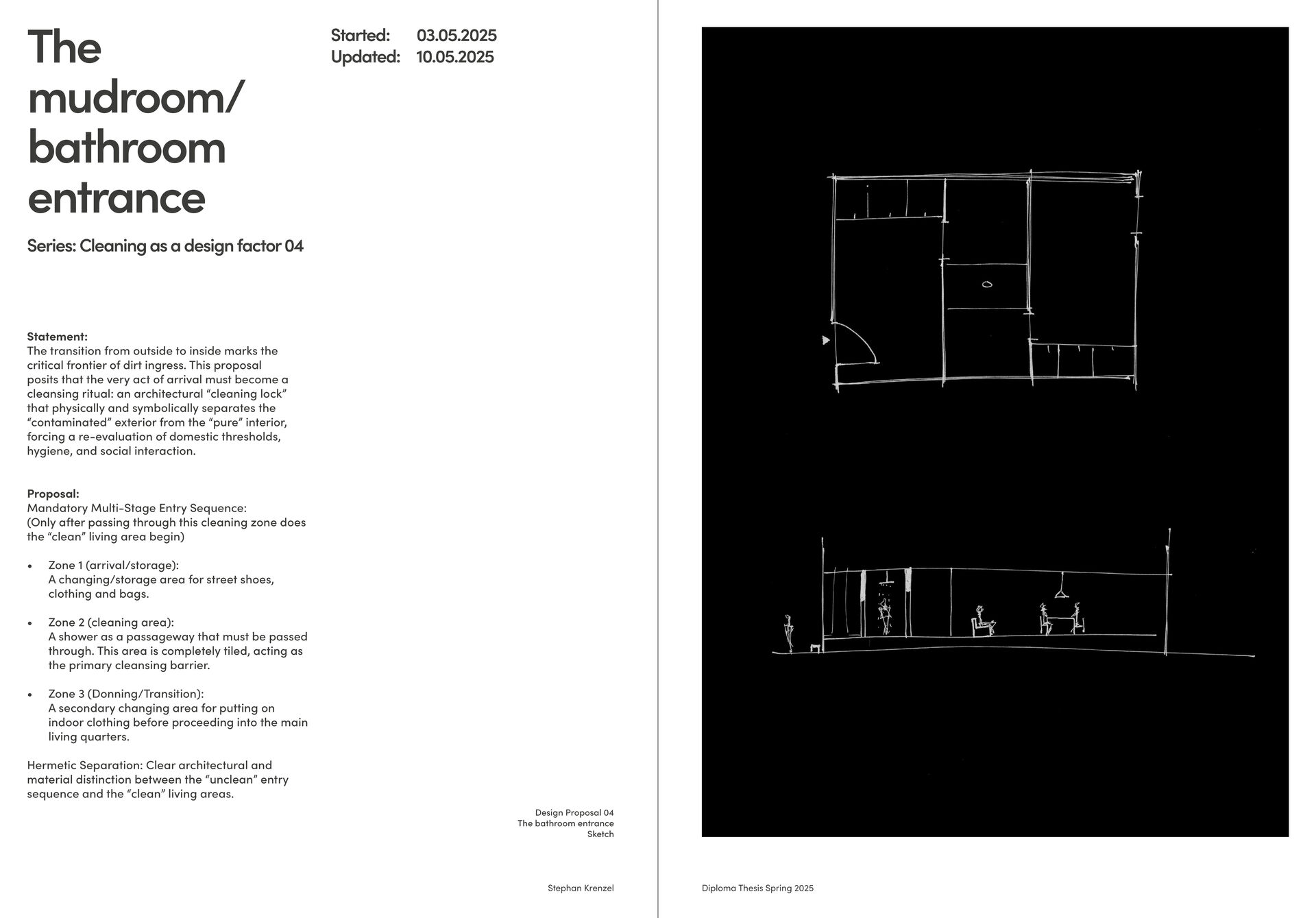
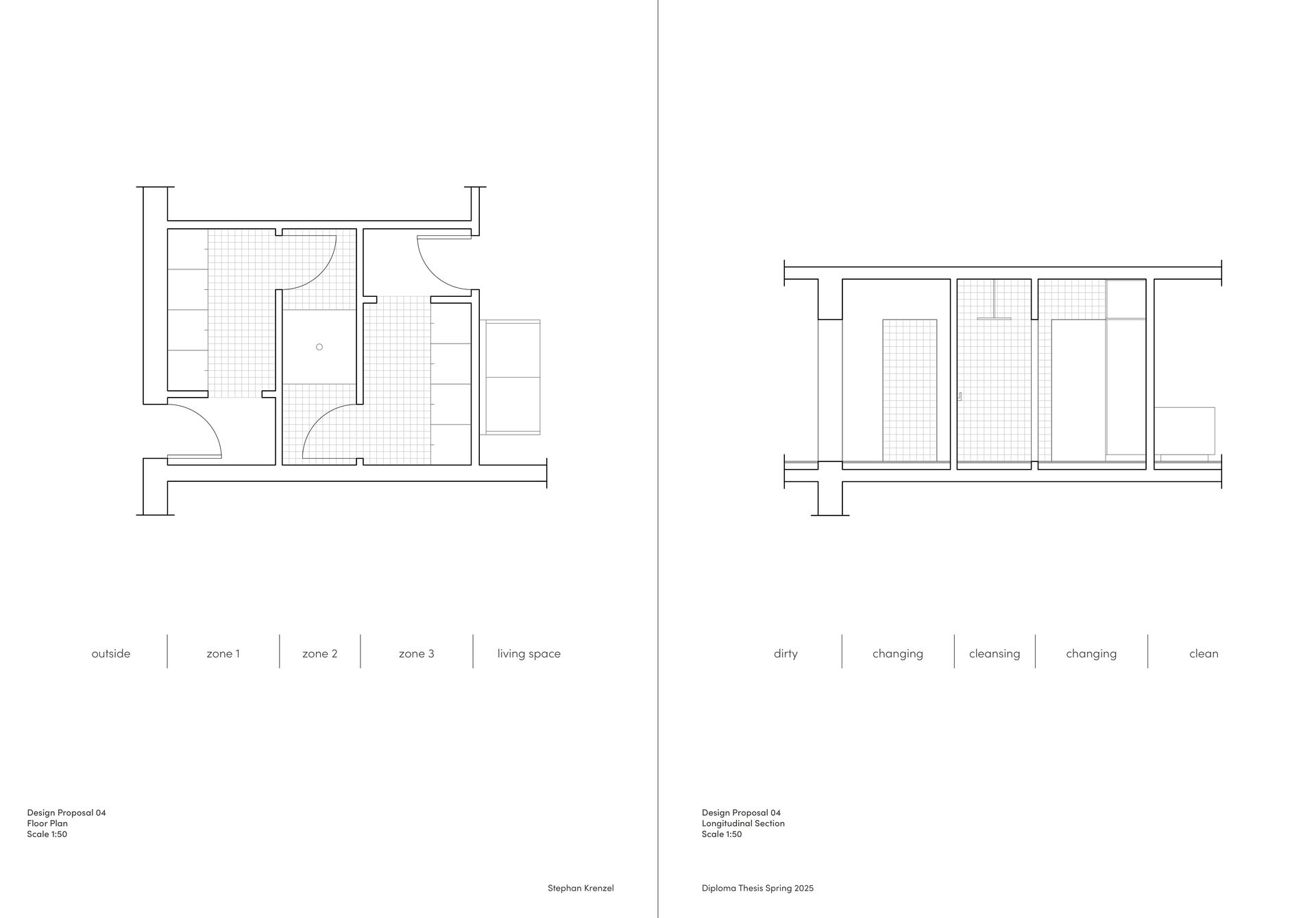
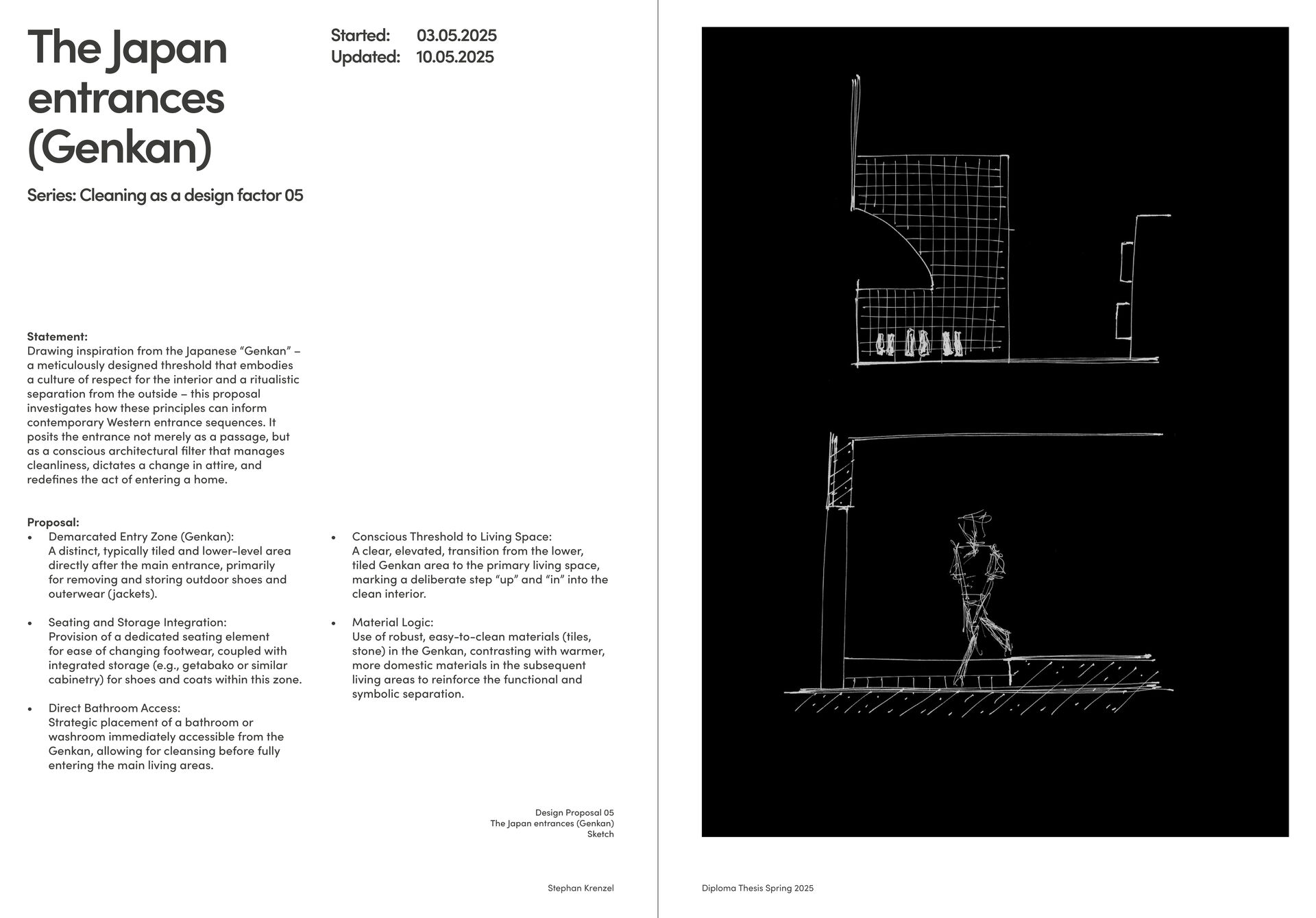
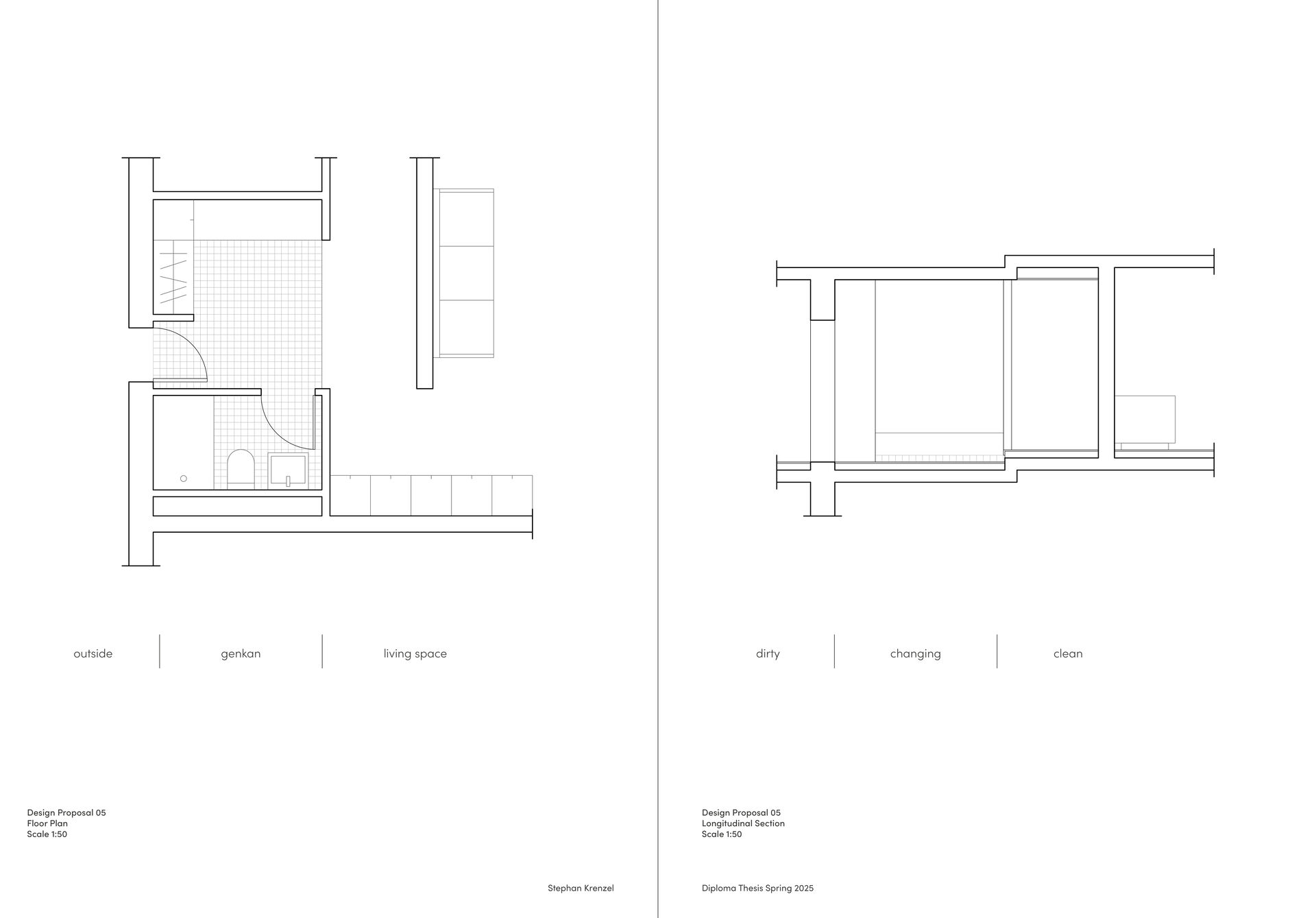
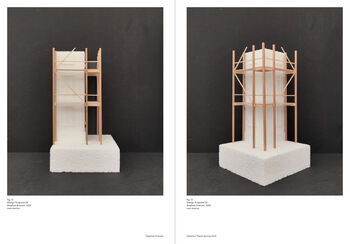
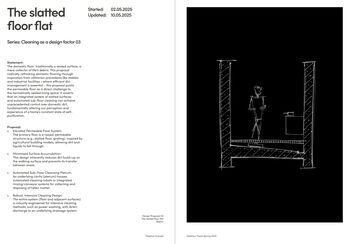
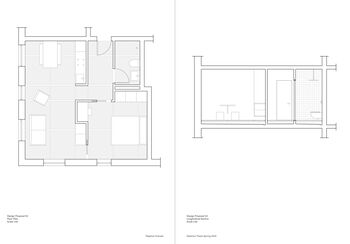
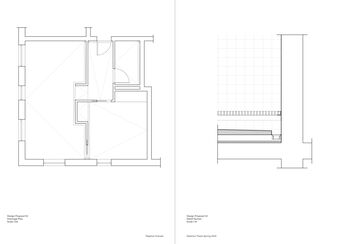
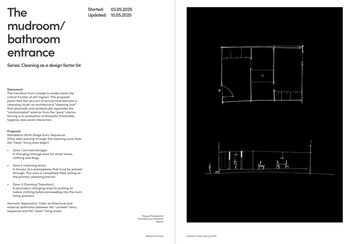
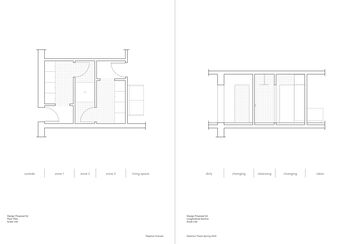
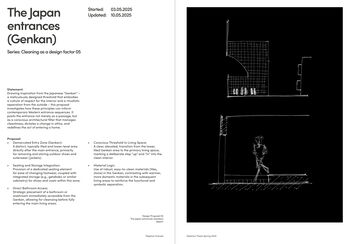
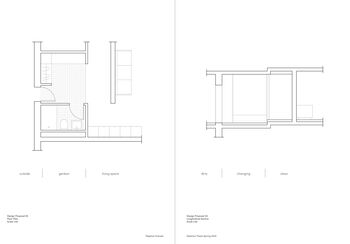
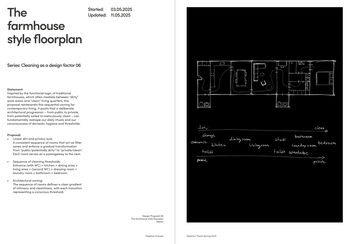
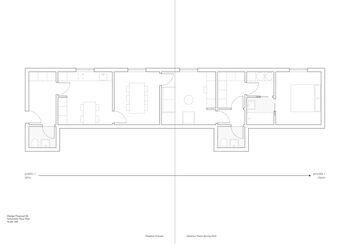
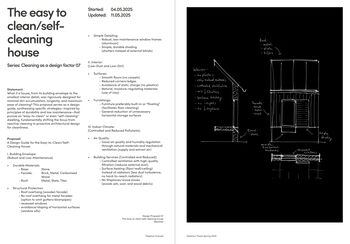
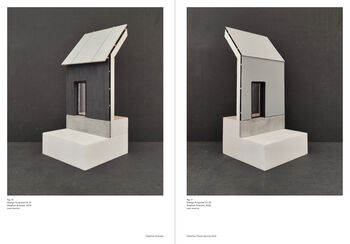
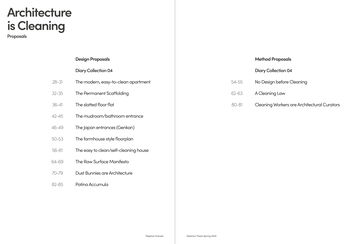
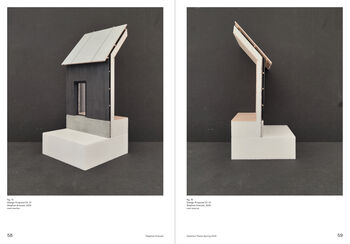
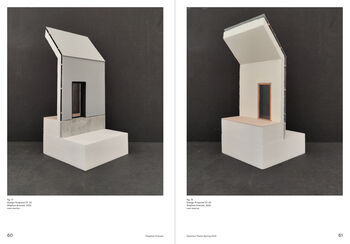
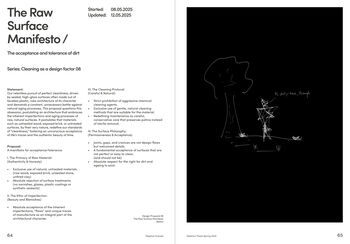
Method and Design Proposals
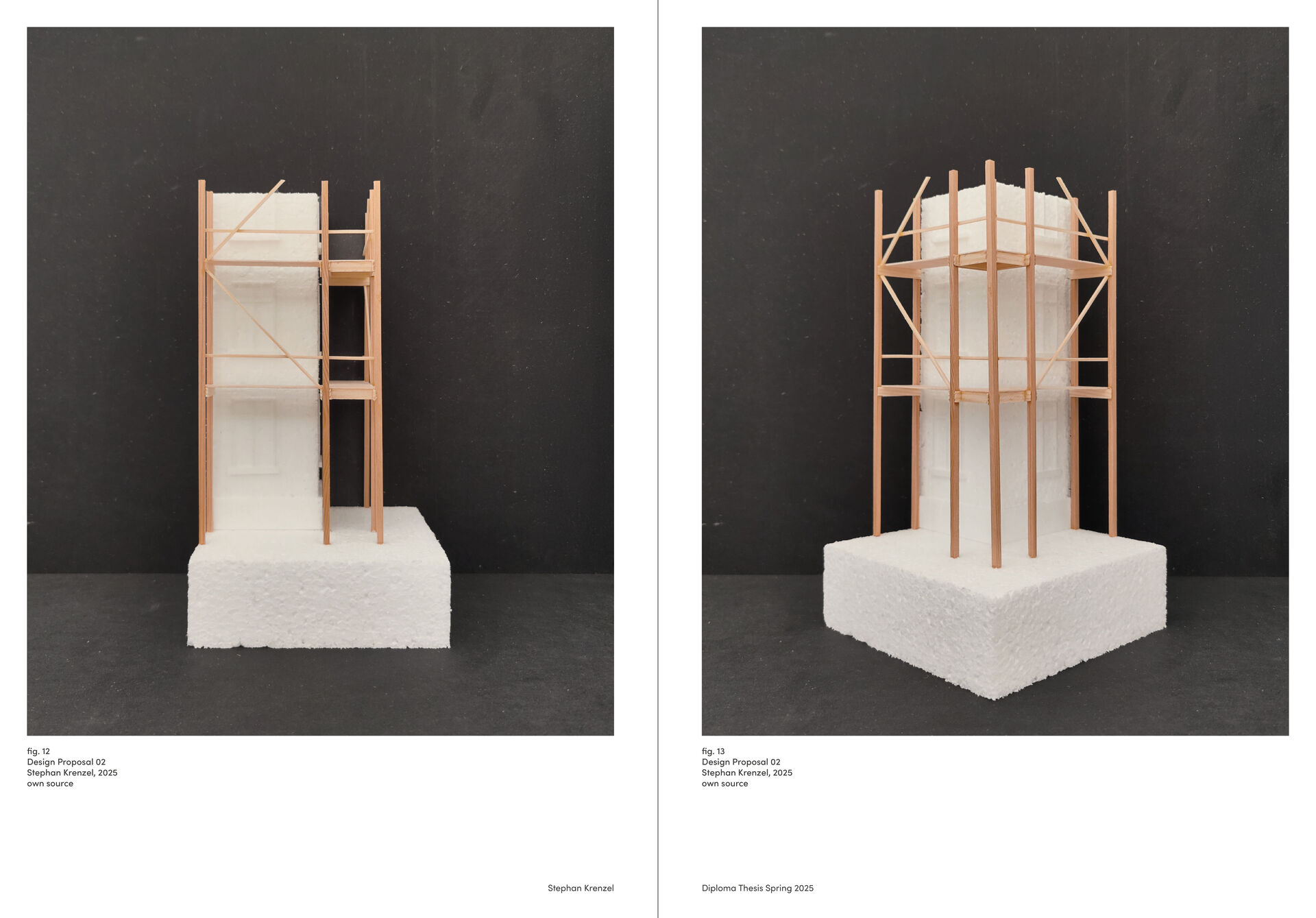
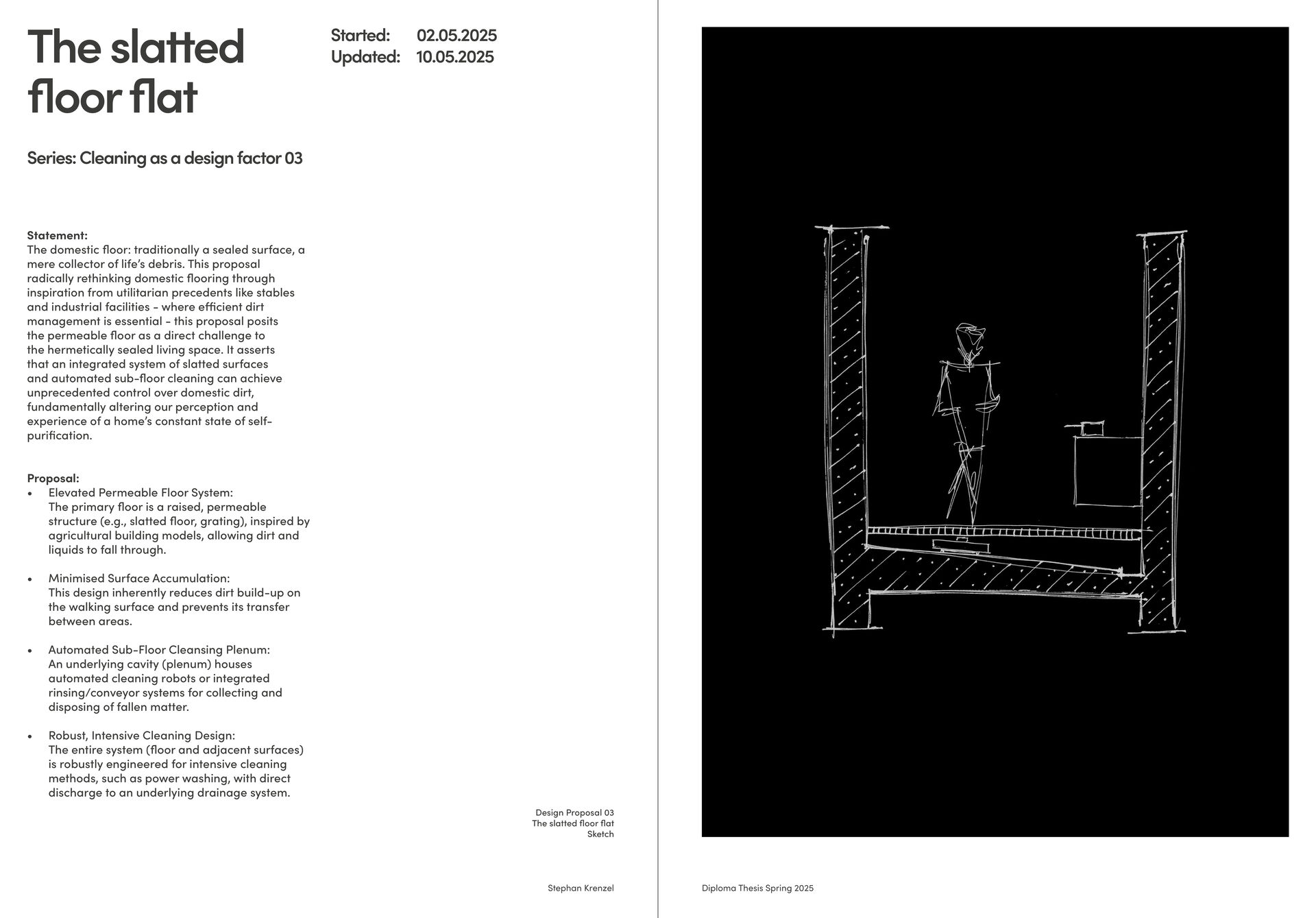
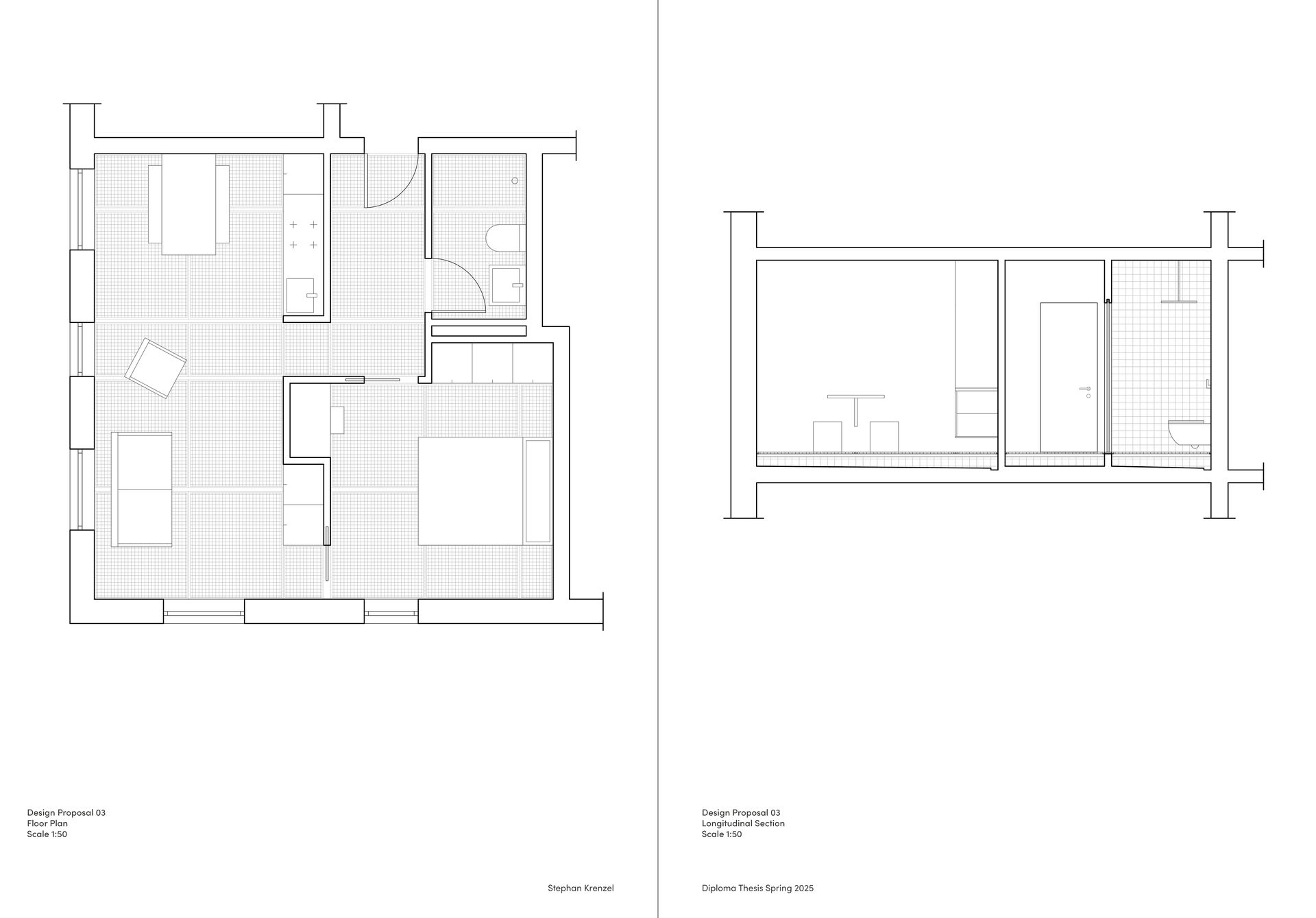
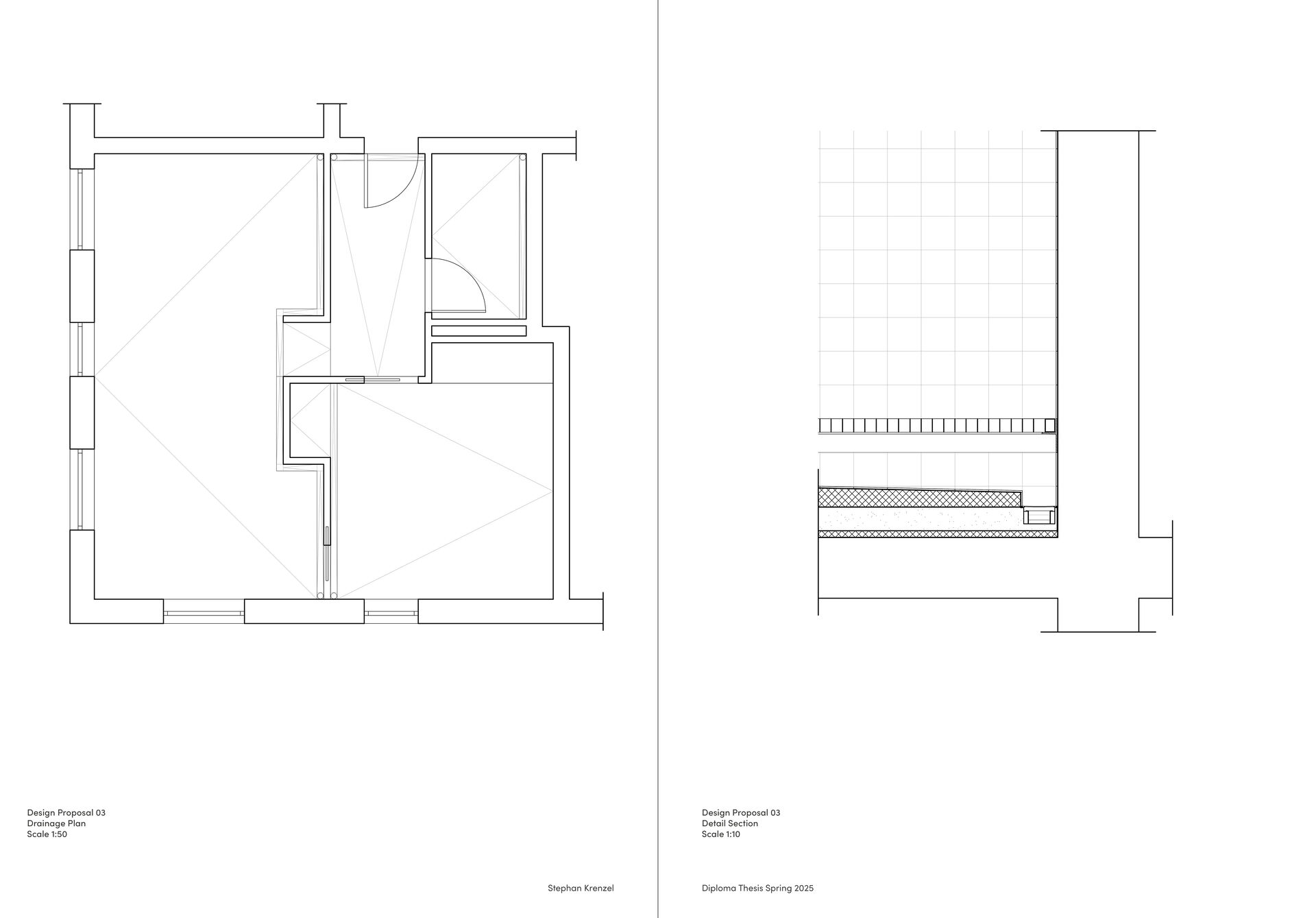
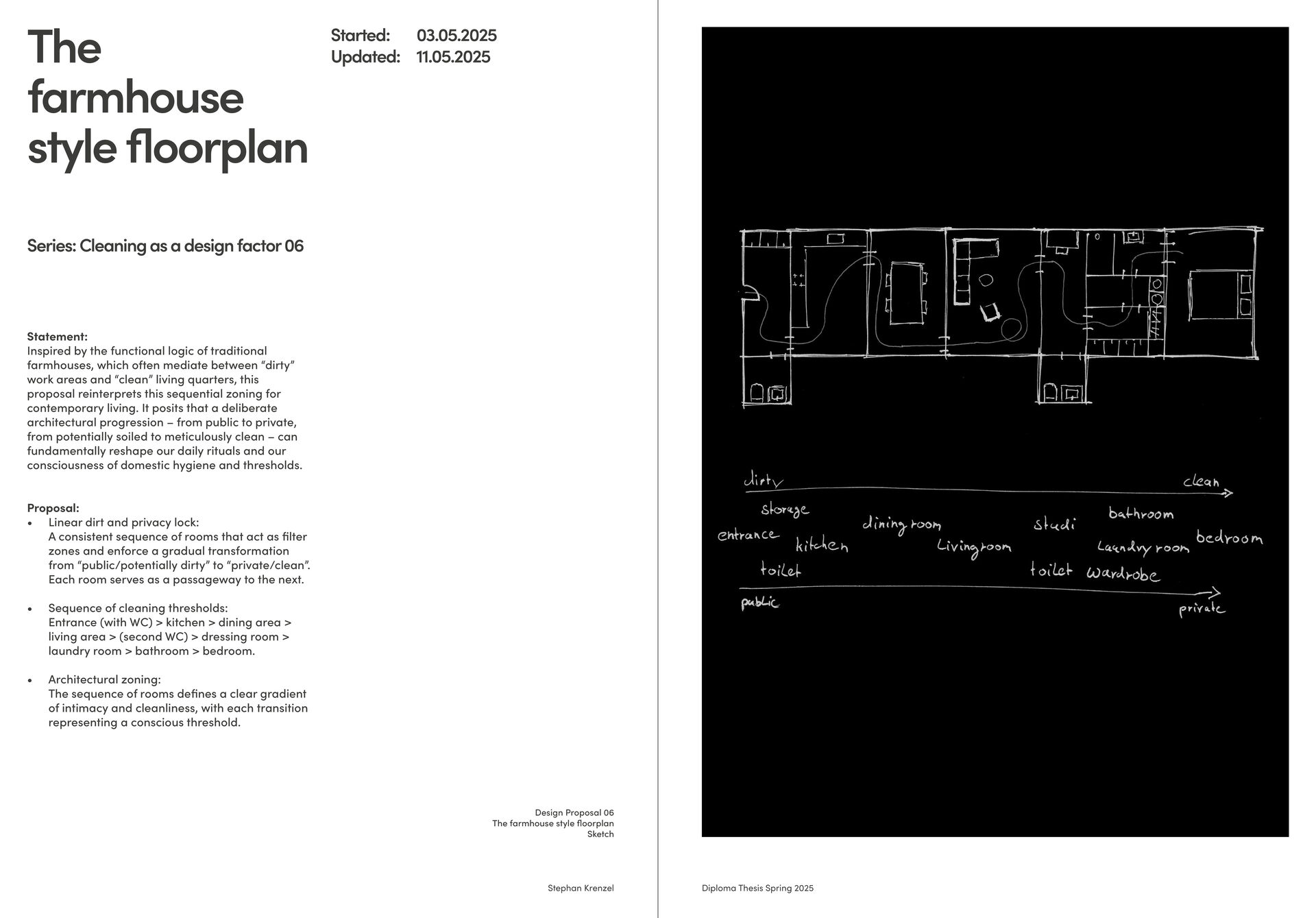
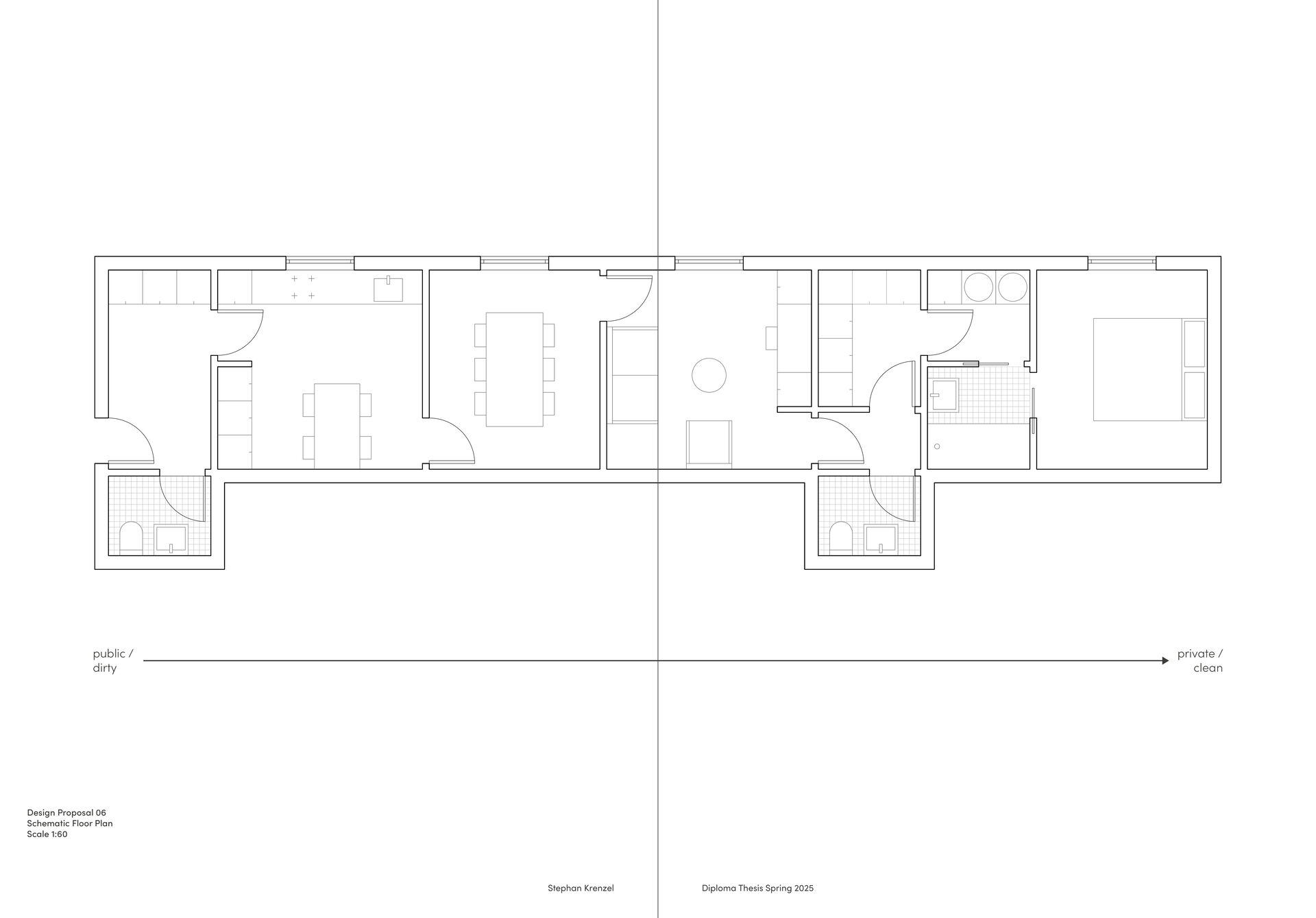
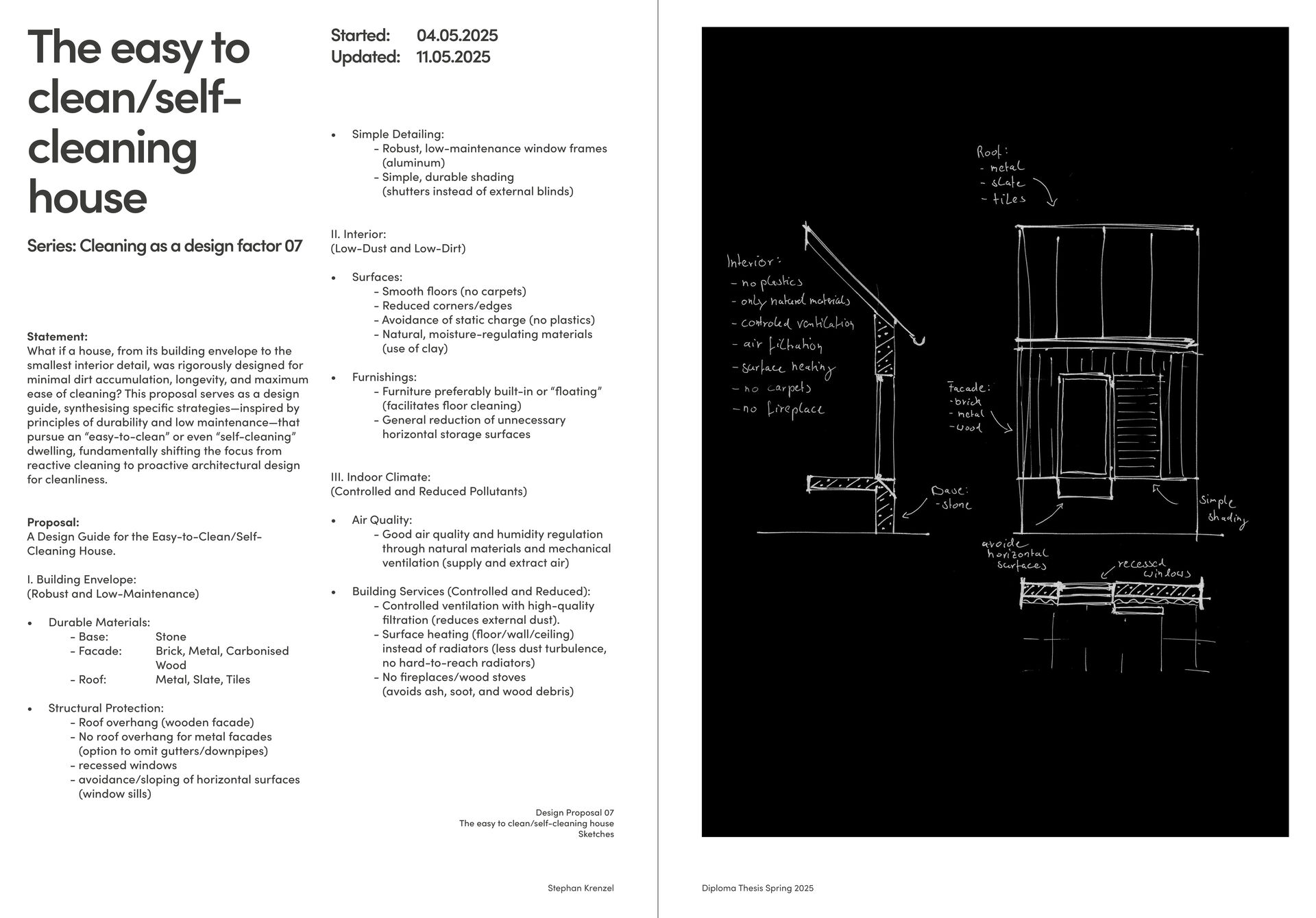
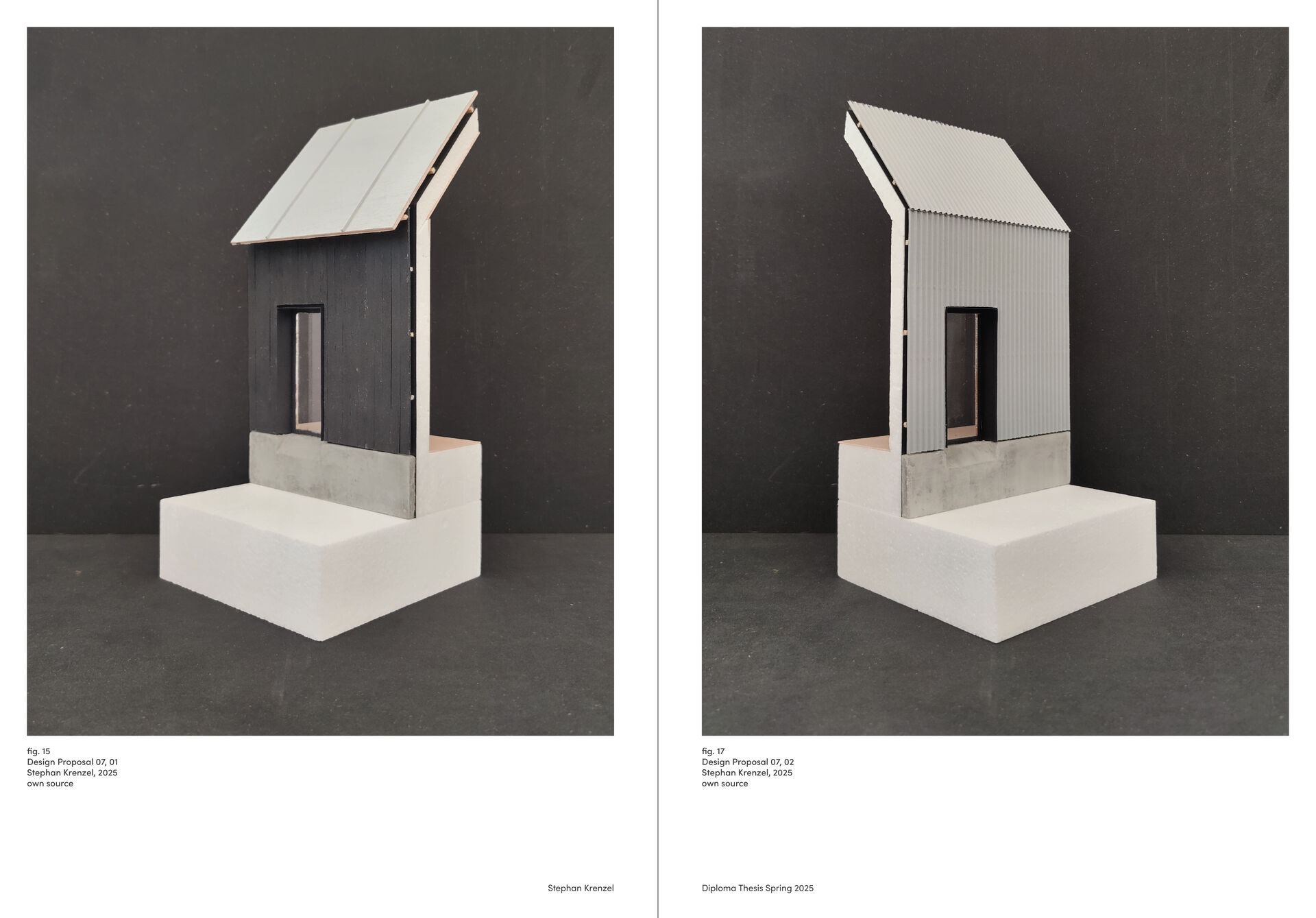
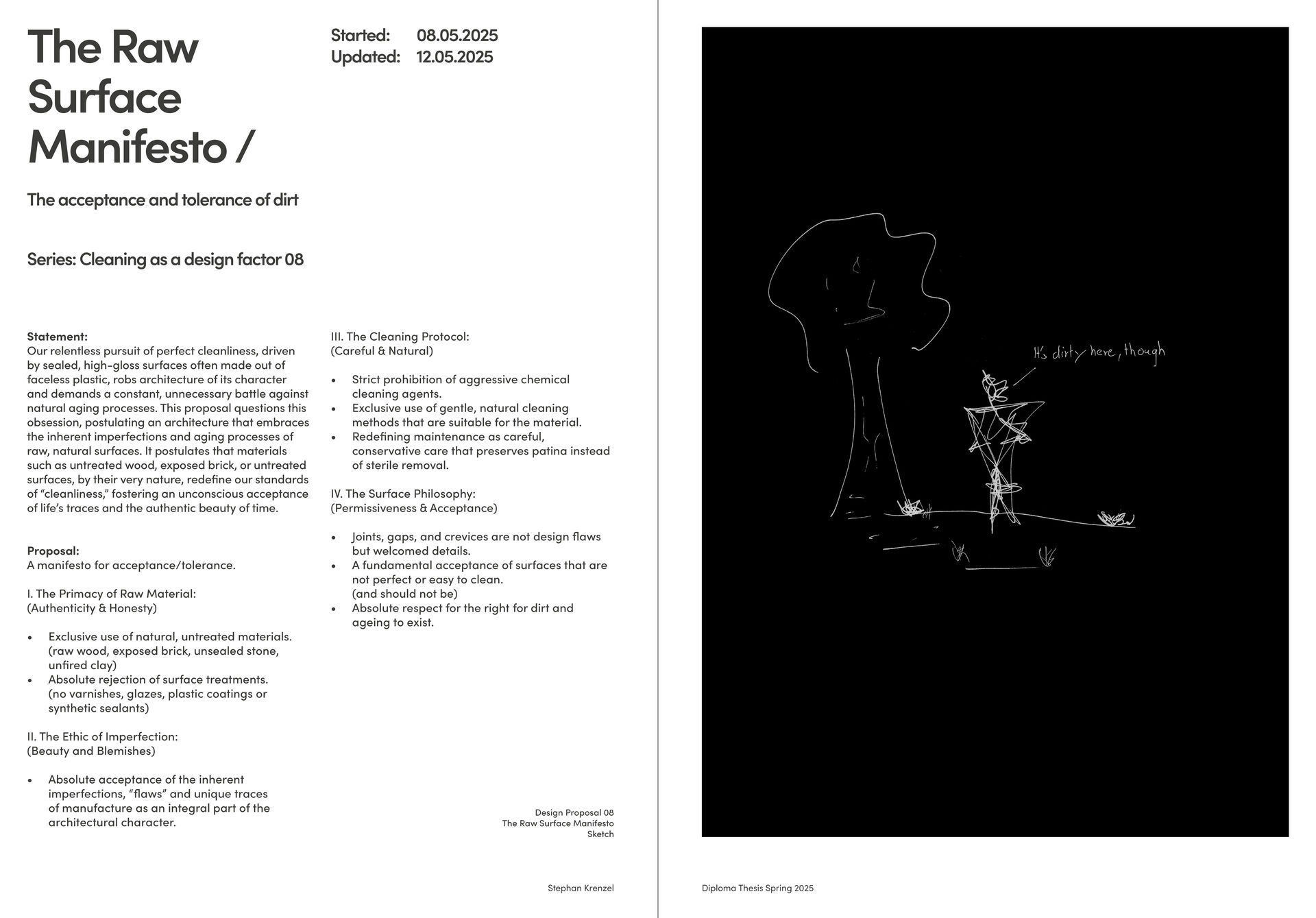
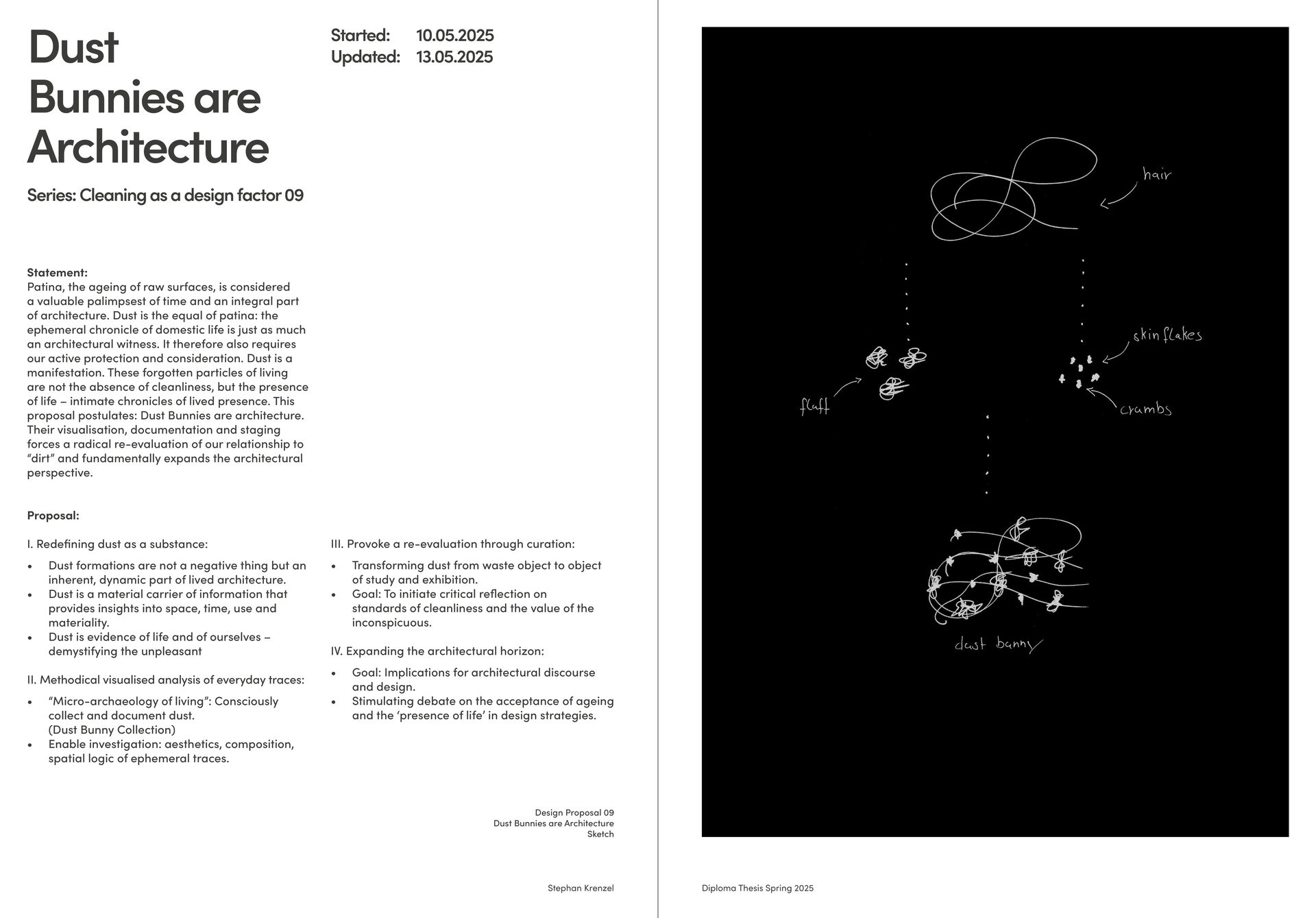
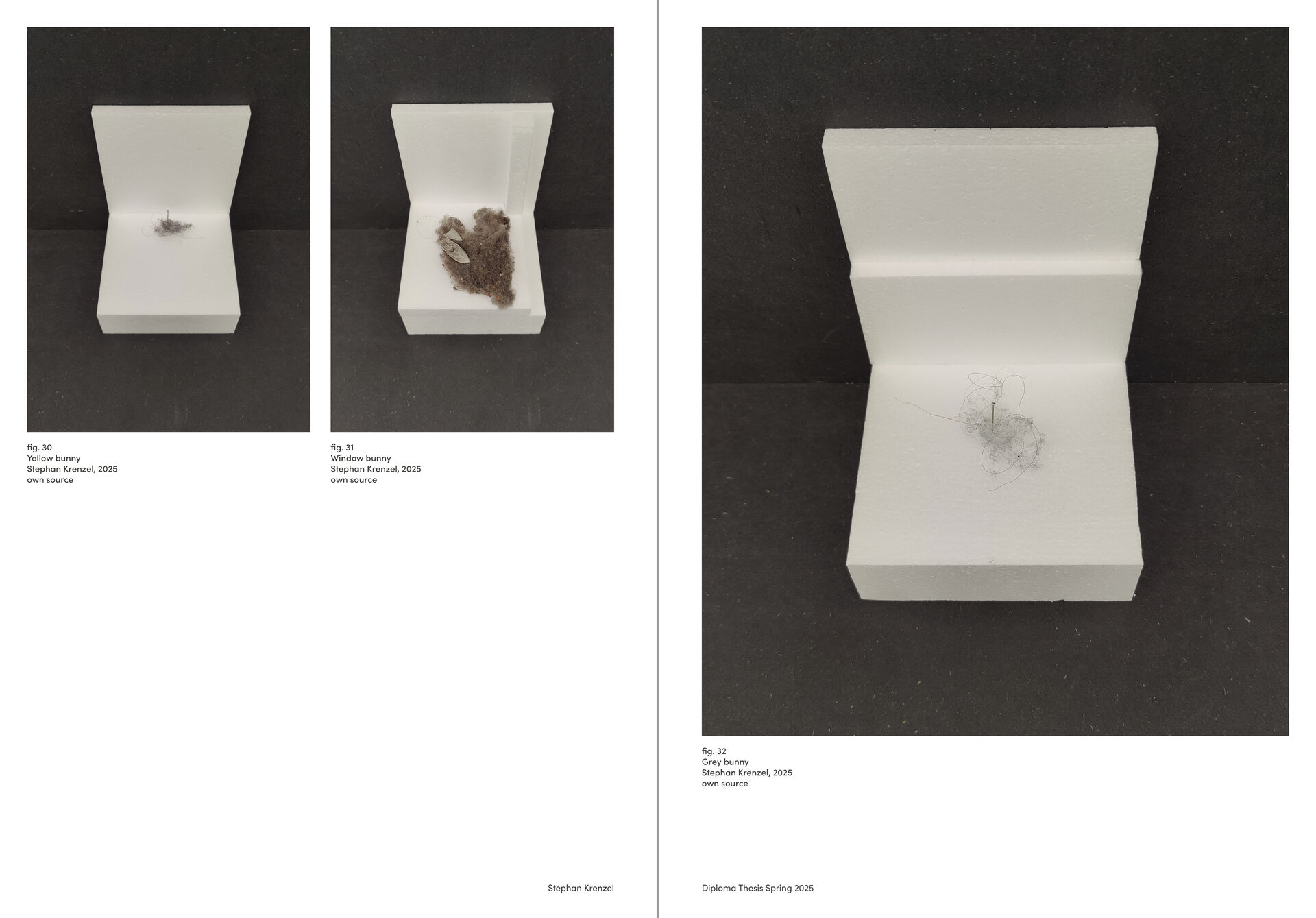
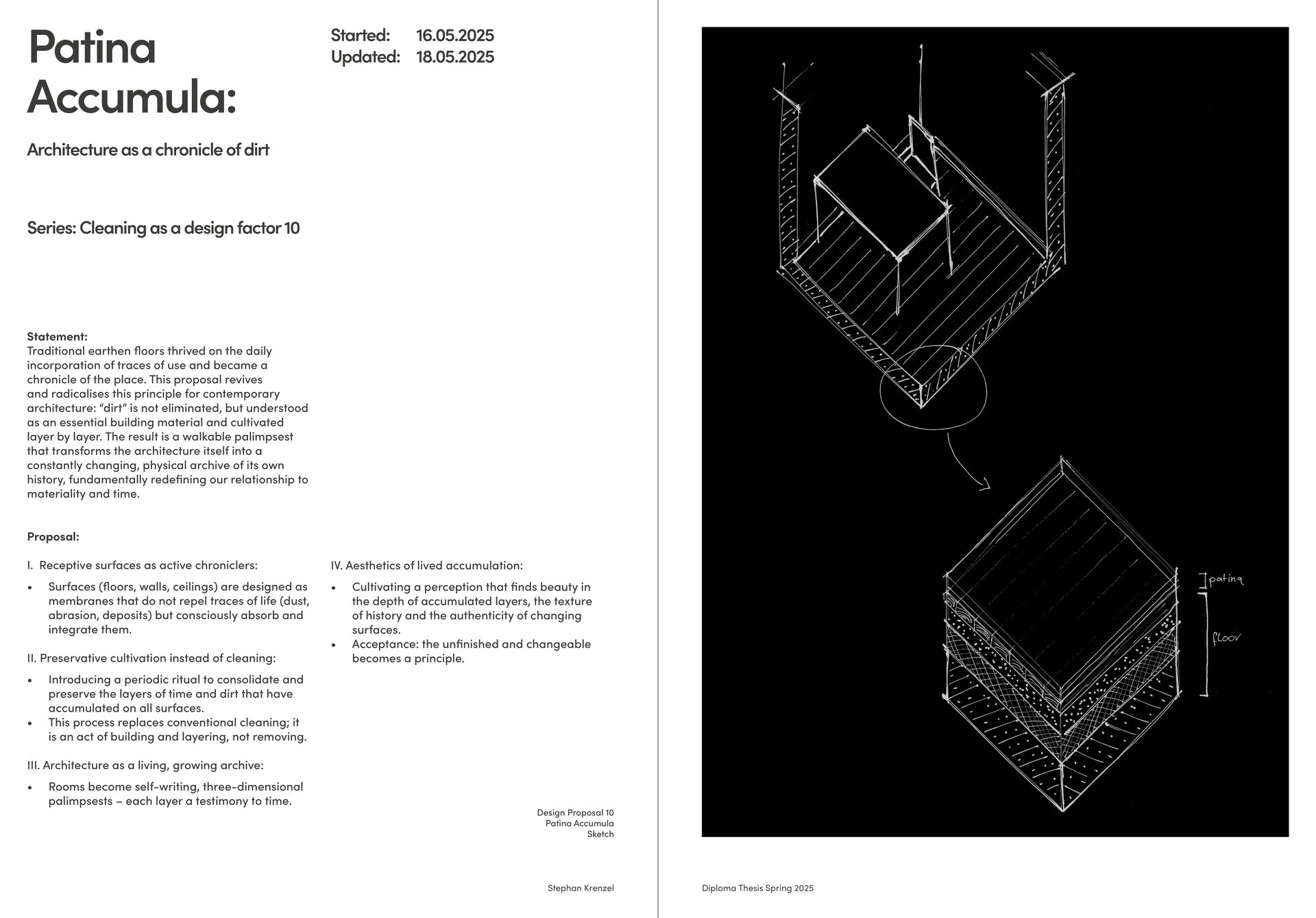
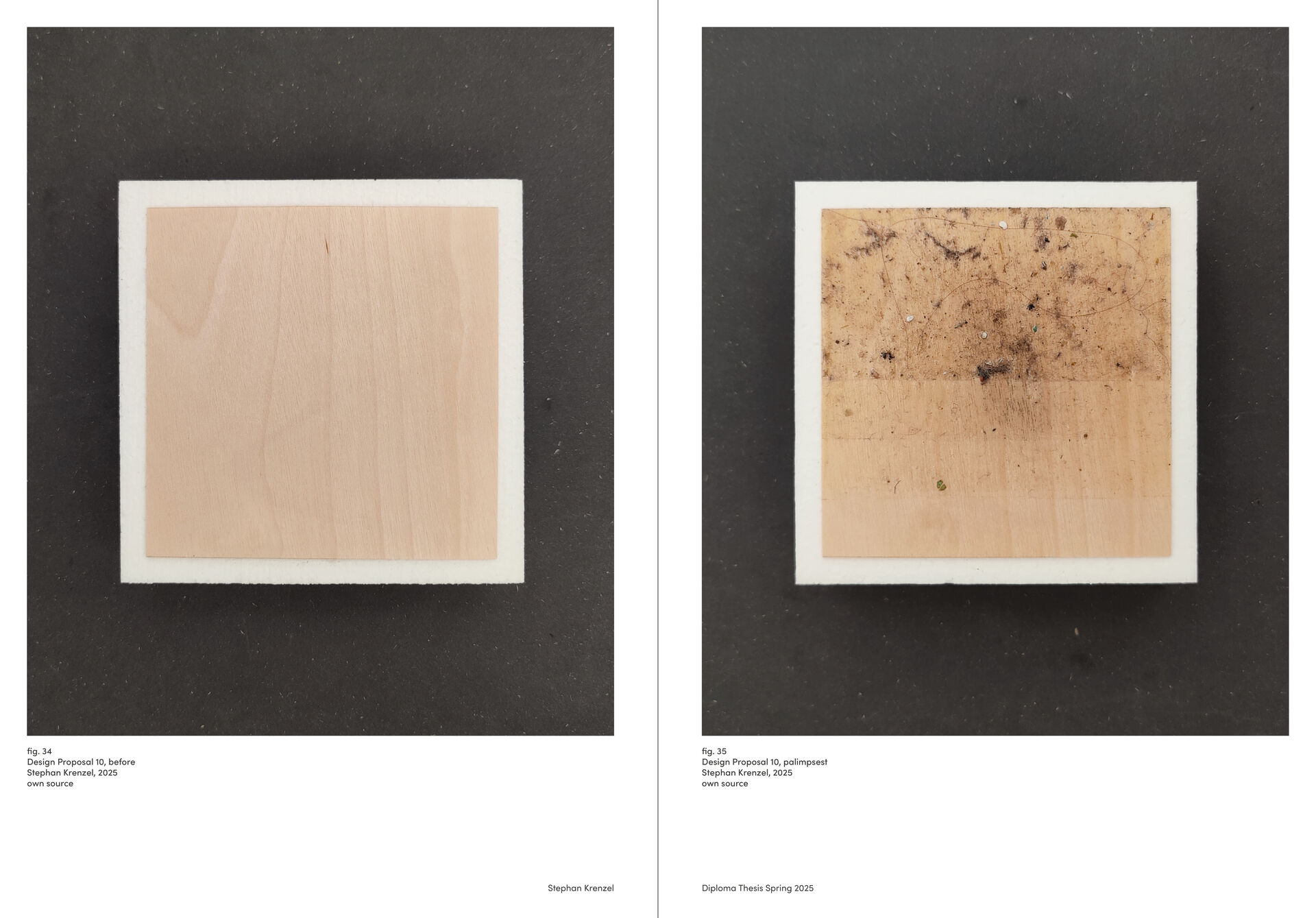
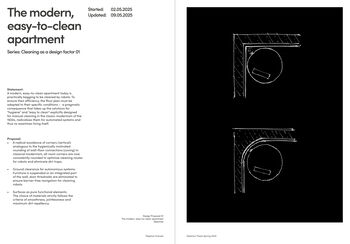
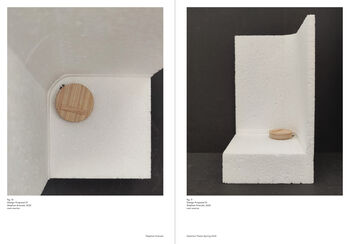
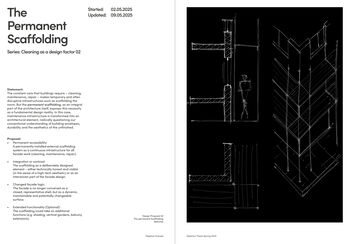
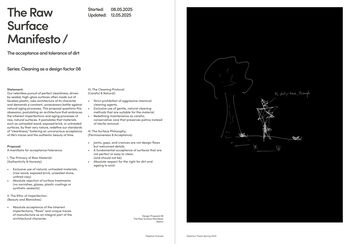
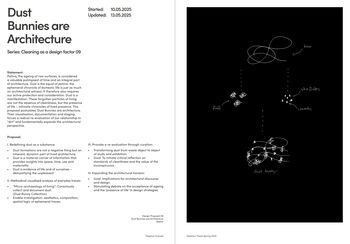
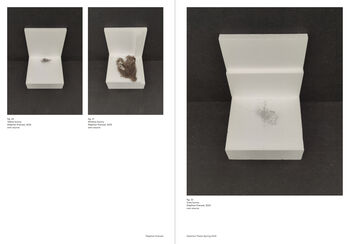
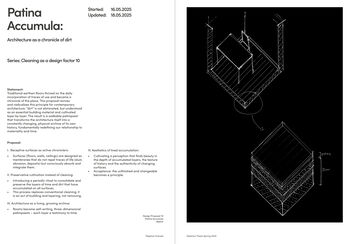
The structure of this work
The structure of this work in several volumes reflects the process-oriented, research-based nature of the investigation. It is not a finished, linear study, but rather a documentation of the process of searching, experimenting, reflecting.
Index – Introduction & Guide
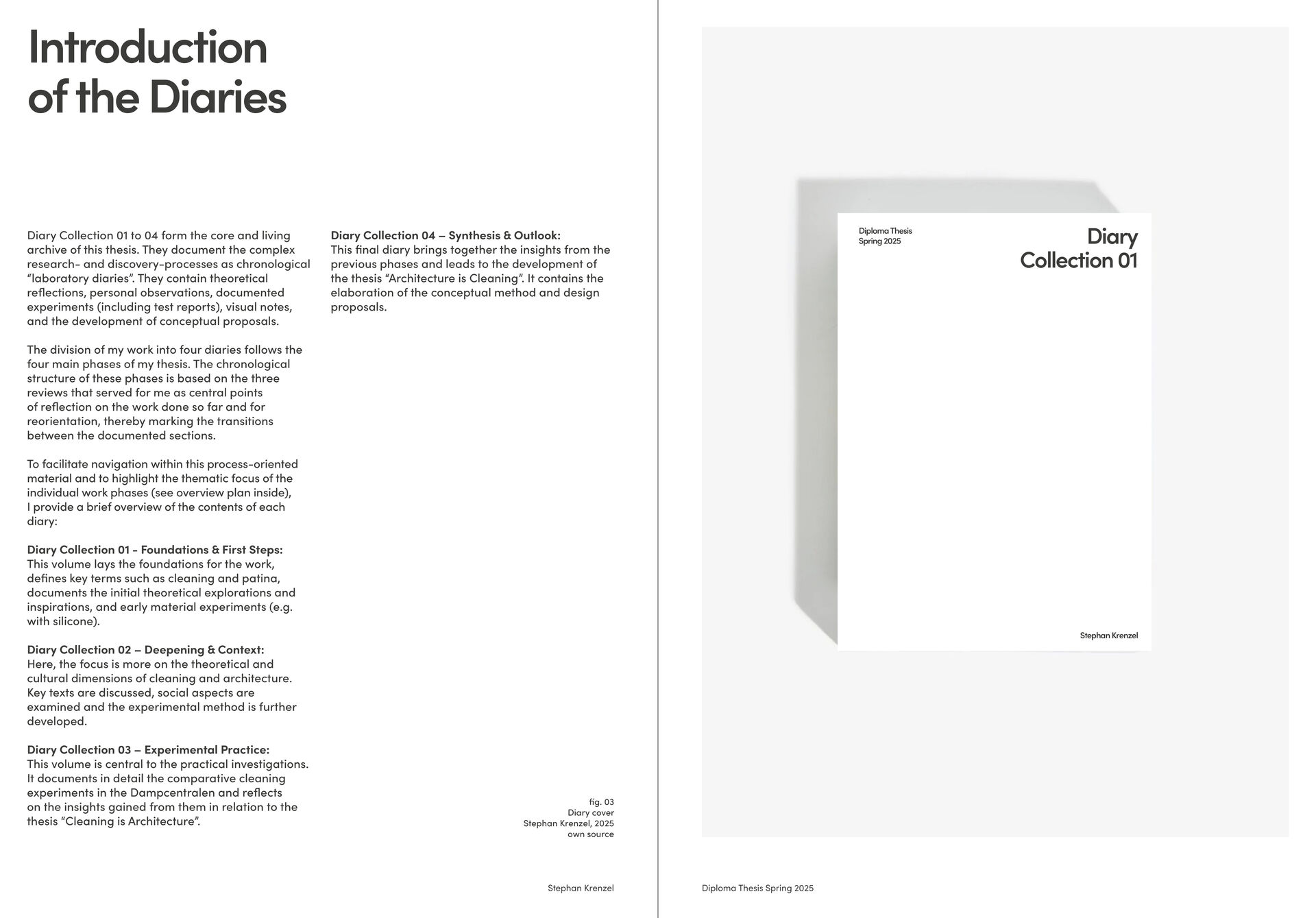
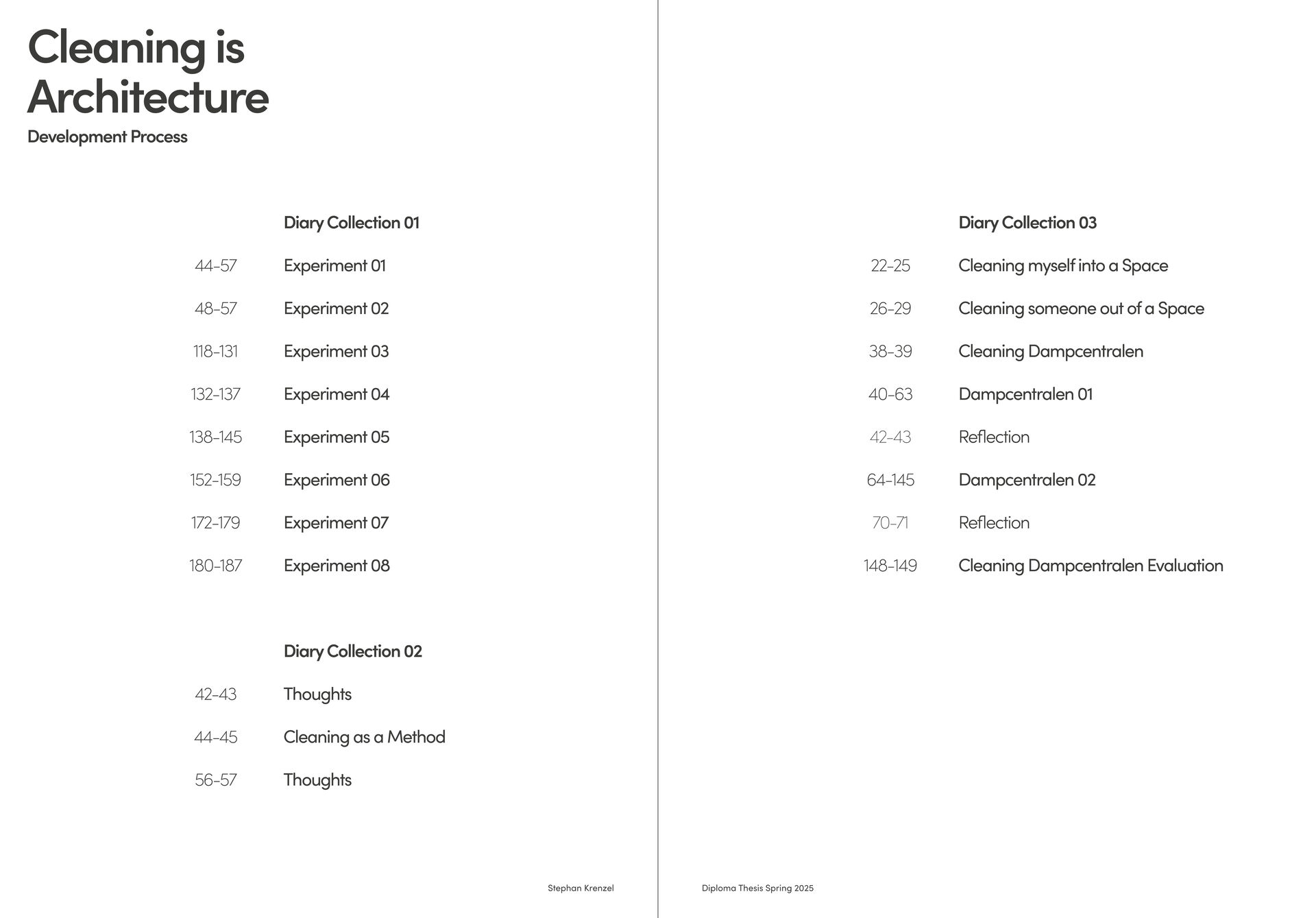
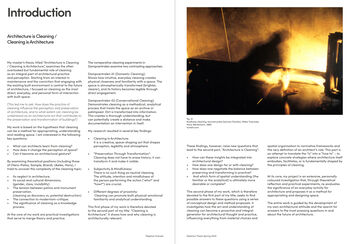
This first book serves as an introduction, sets out the conceptual framework, and acts as a detailed guide to the contents of the four diaries. It includes the abstract, research questions, and a general overview.

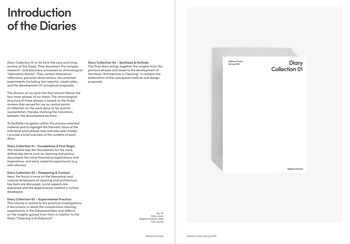
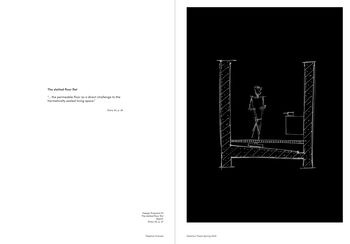
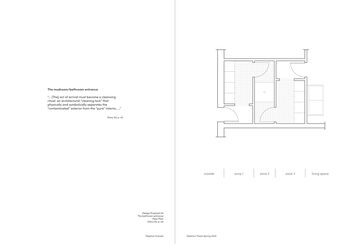
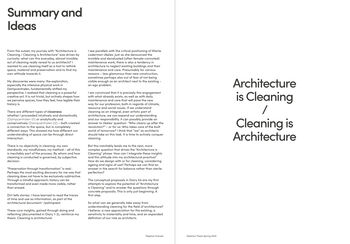
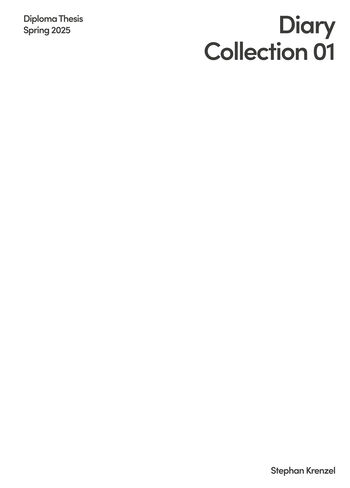
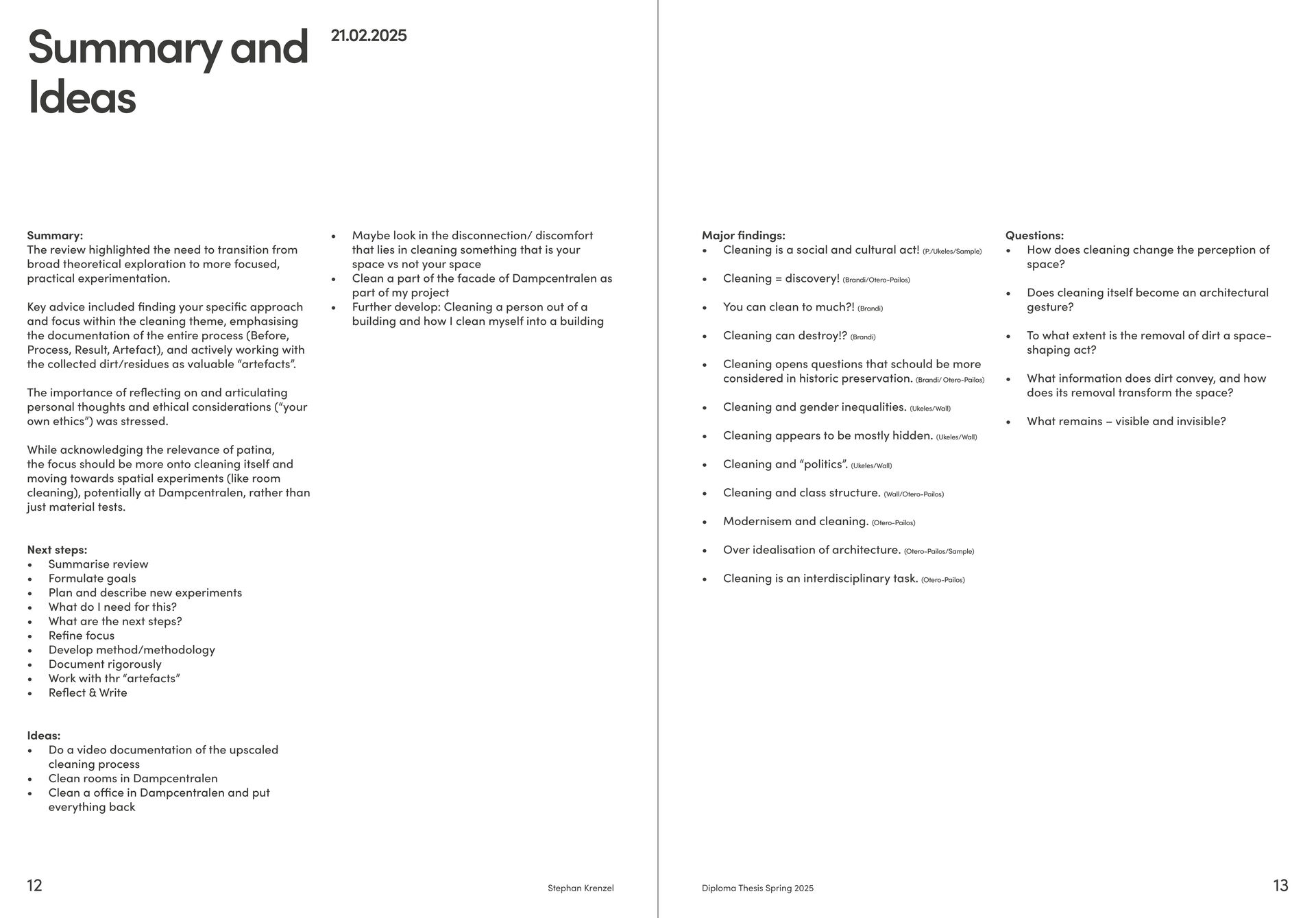
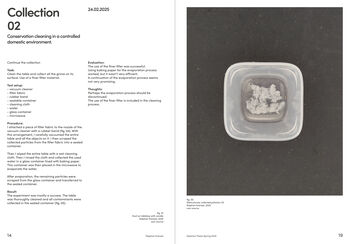
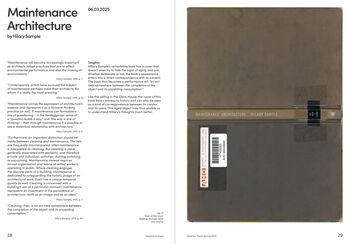
Diary Collection 01 – Foundations & First Steps
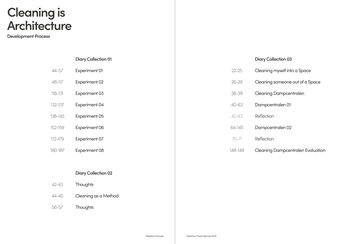
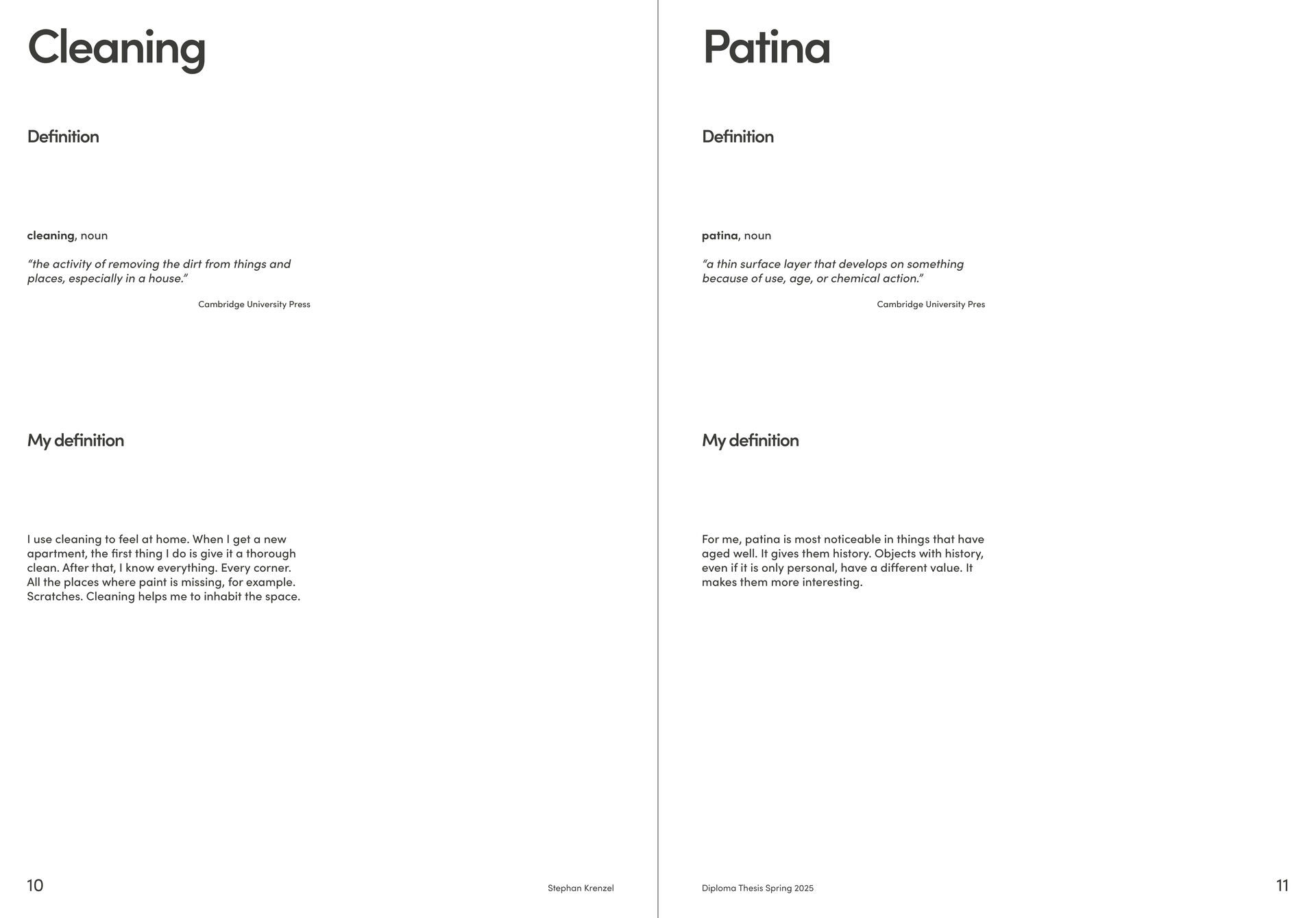
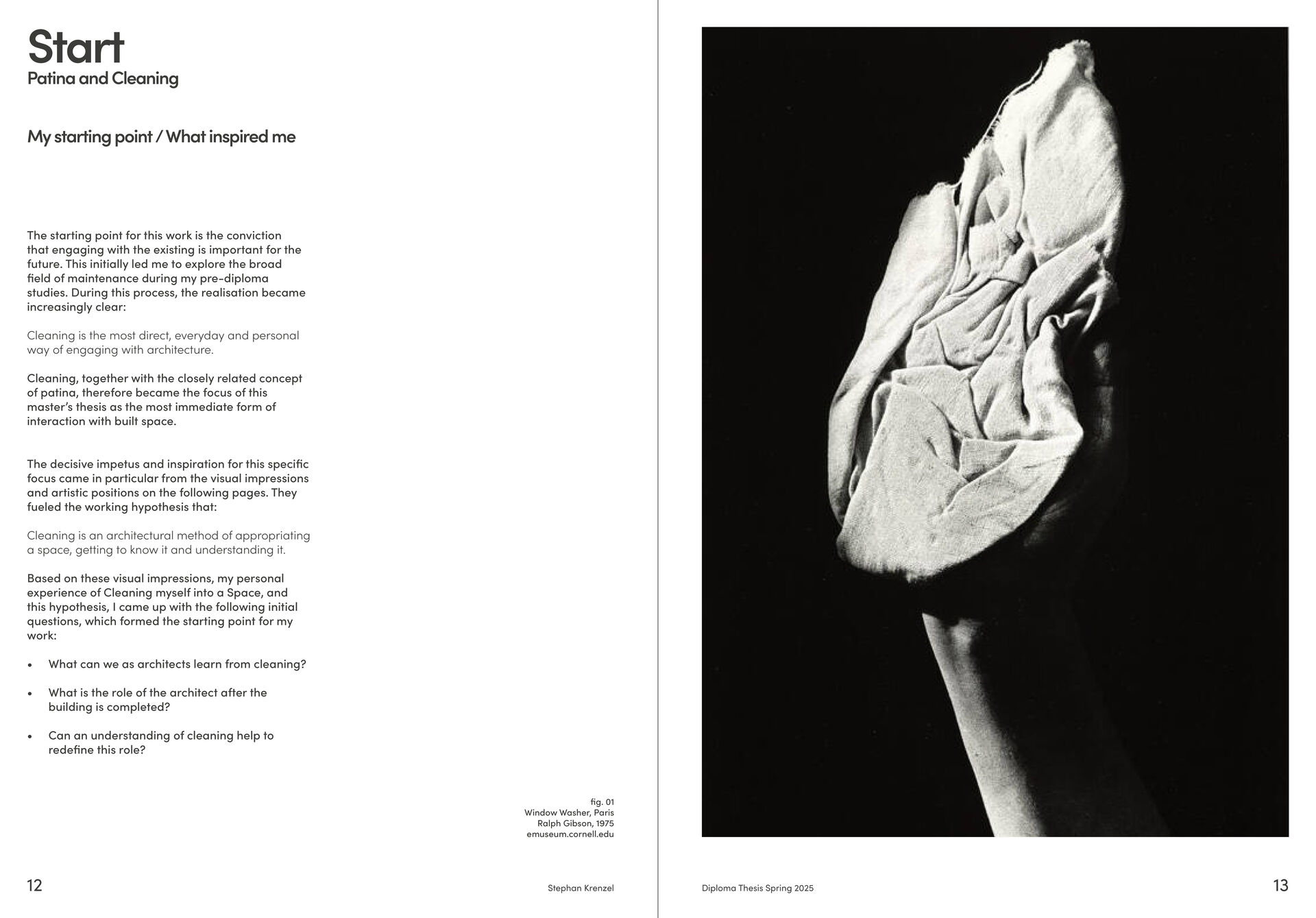
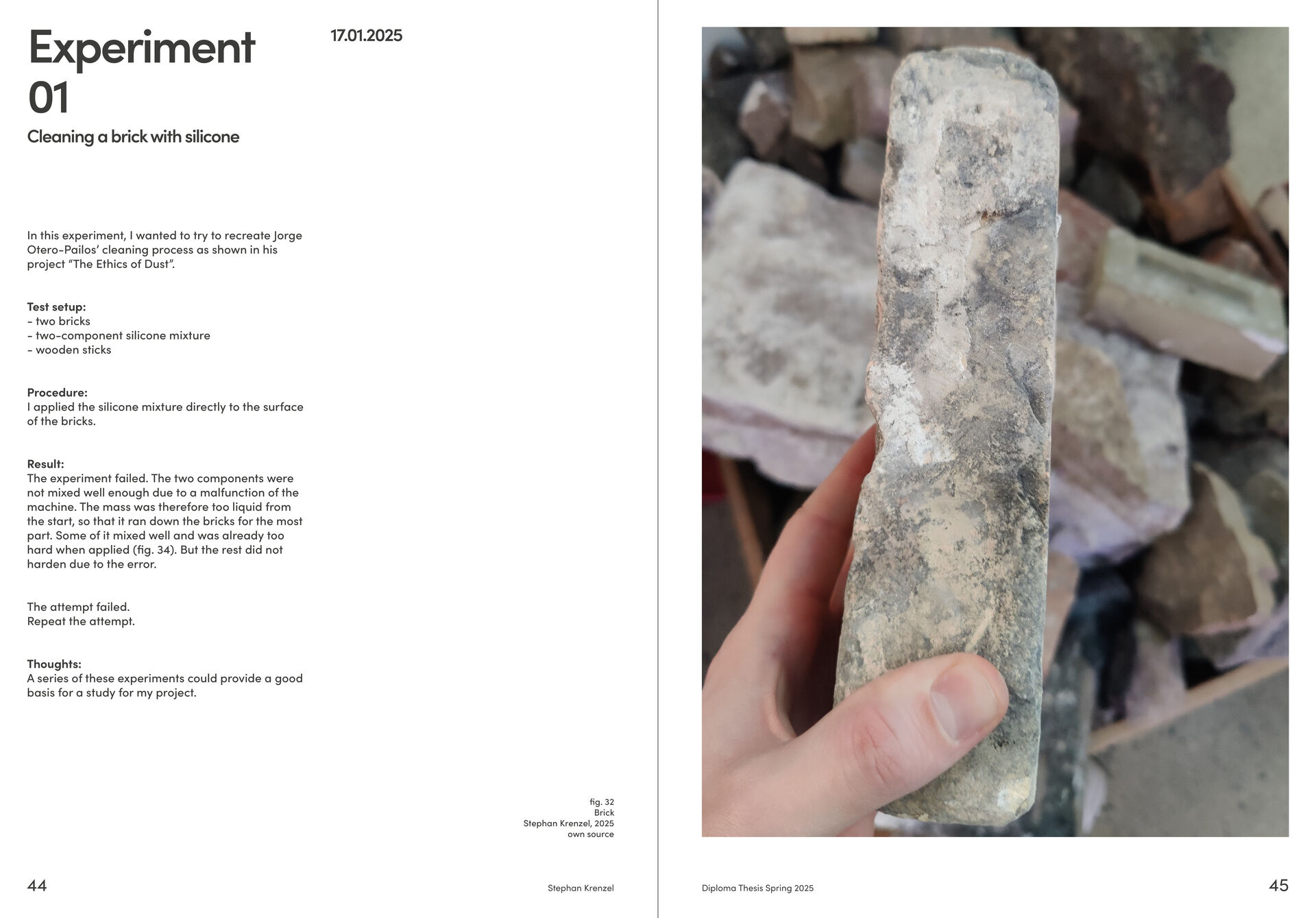
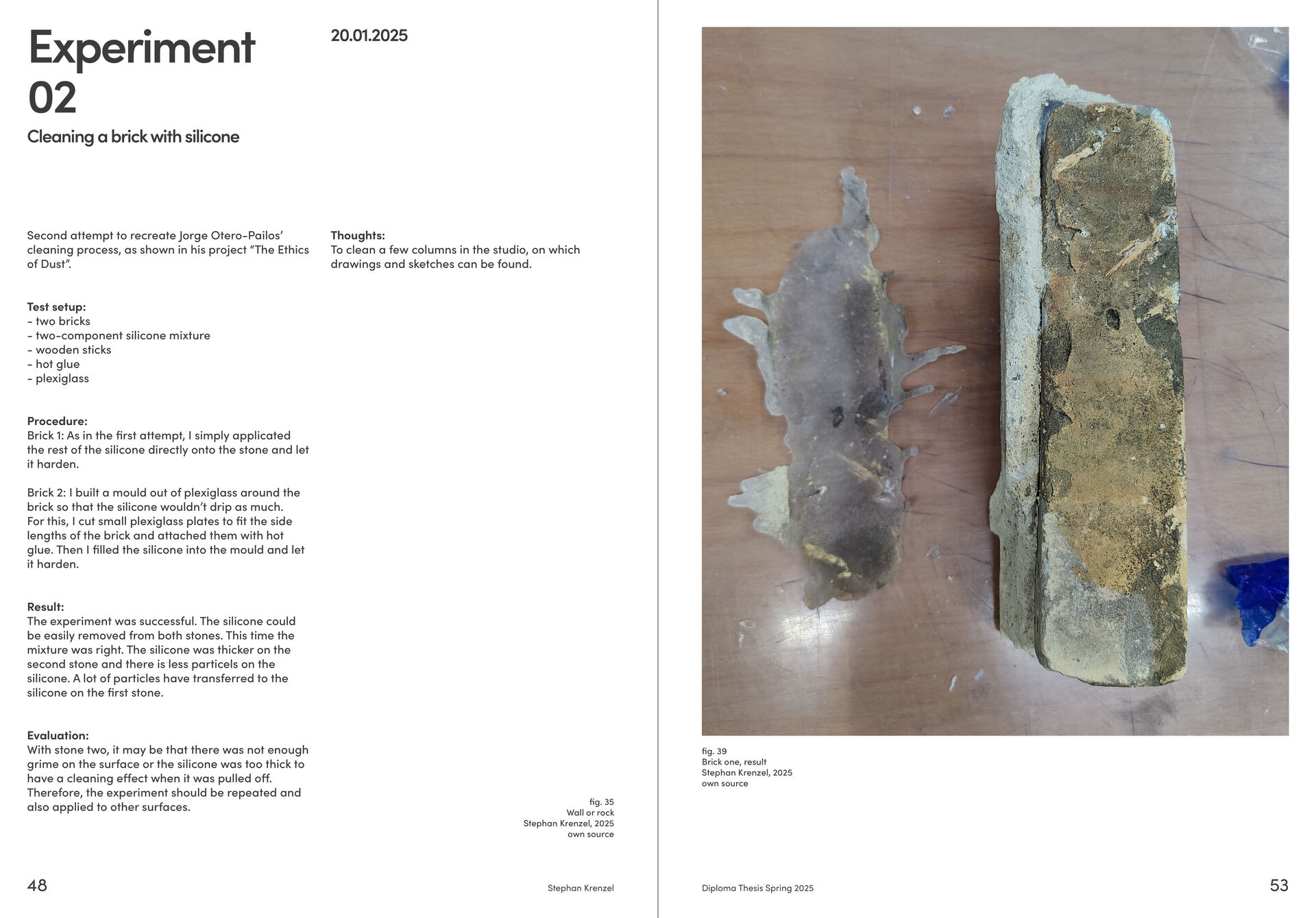
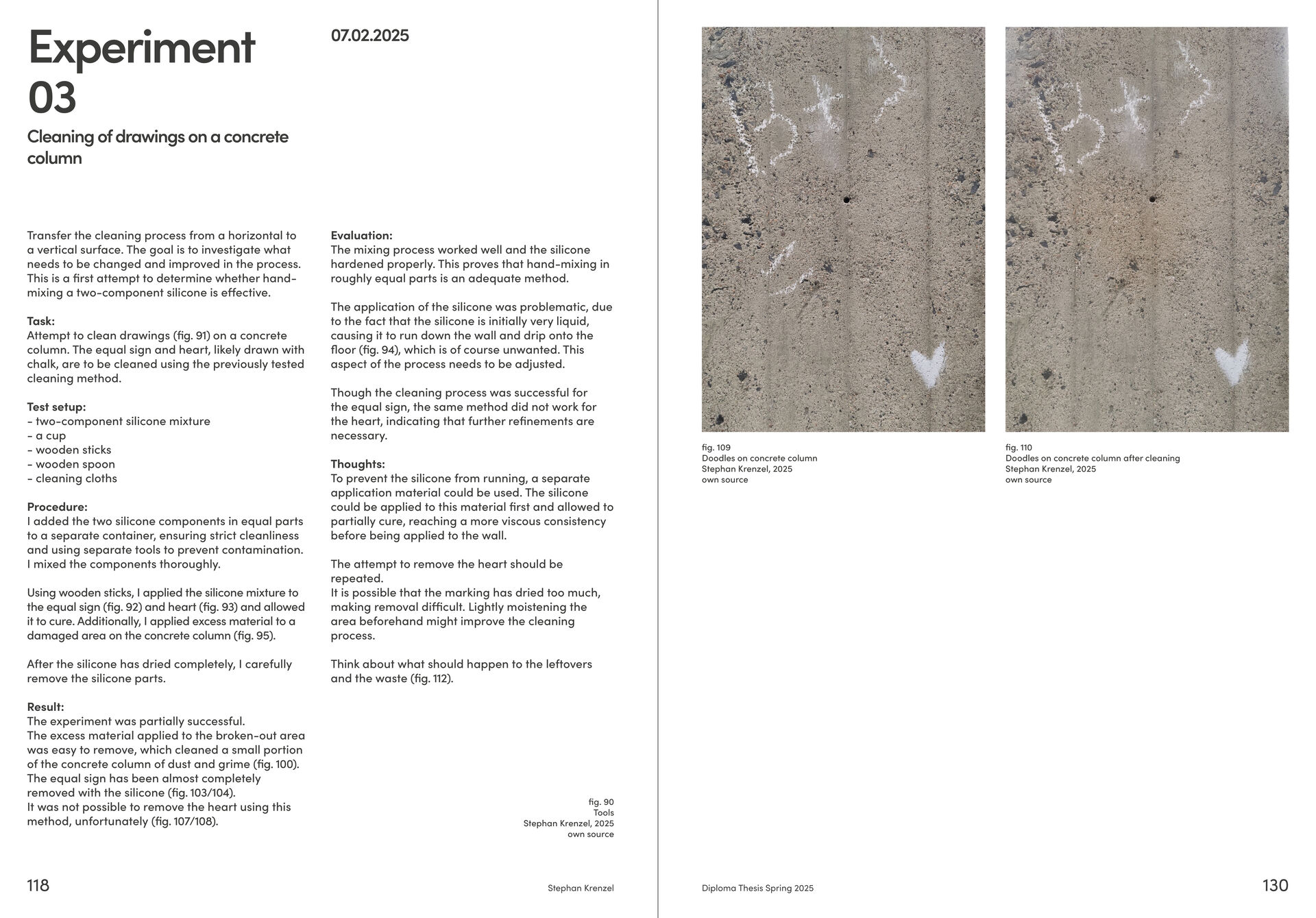
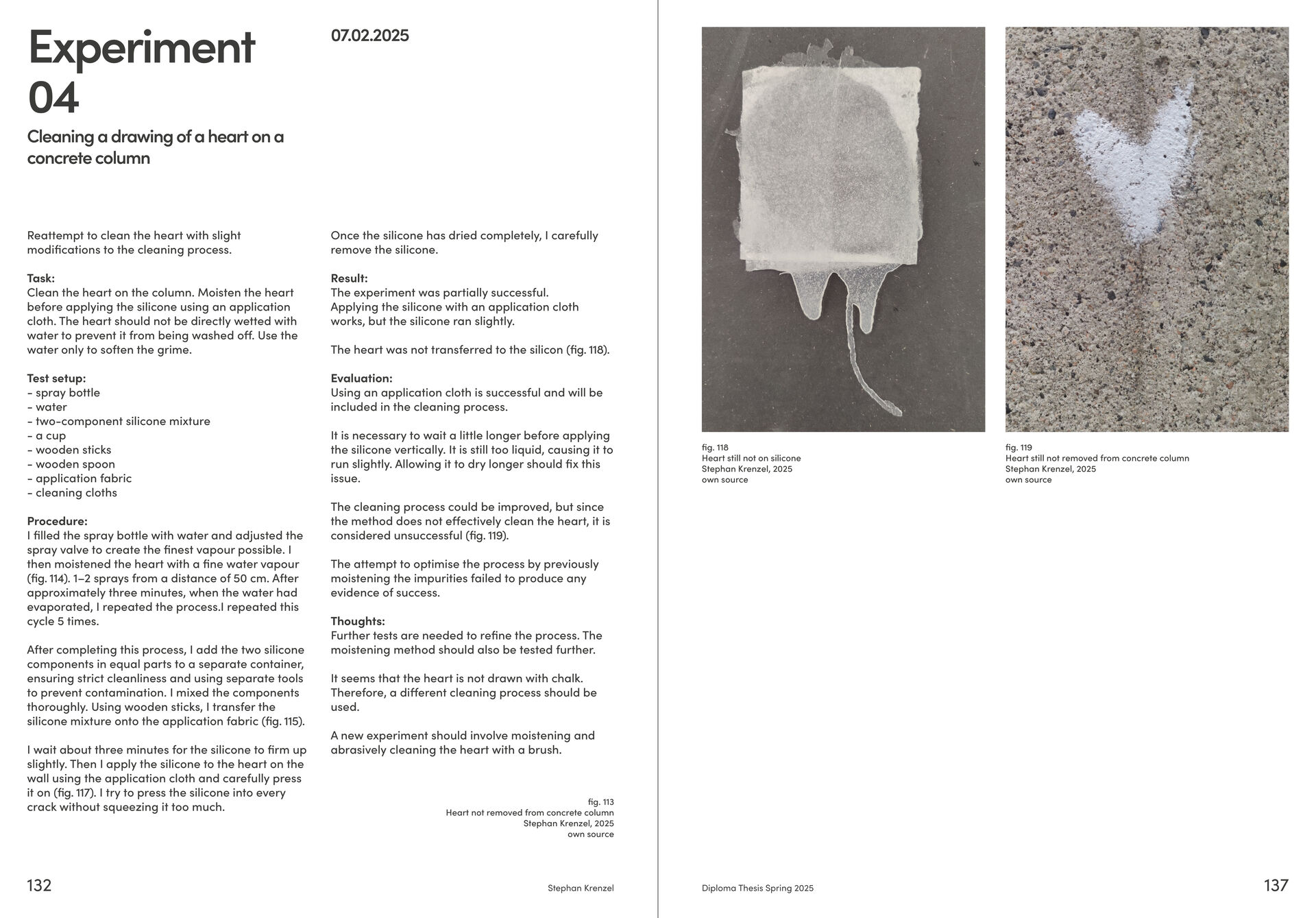
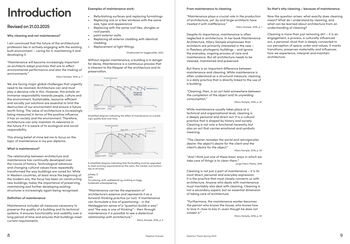
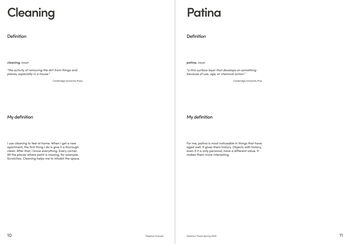
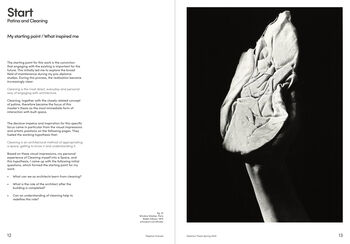
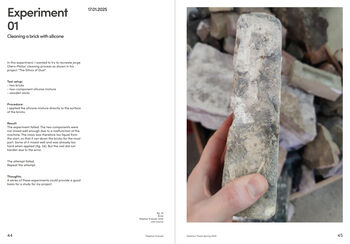
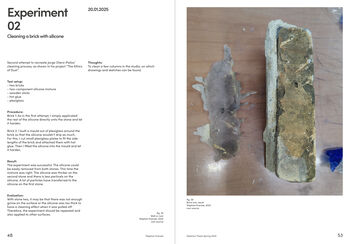
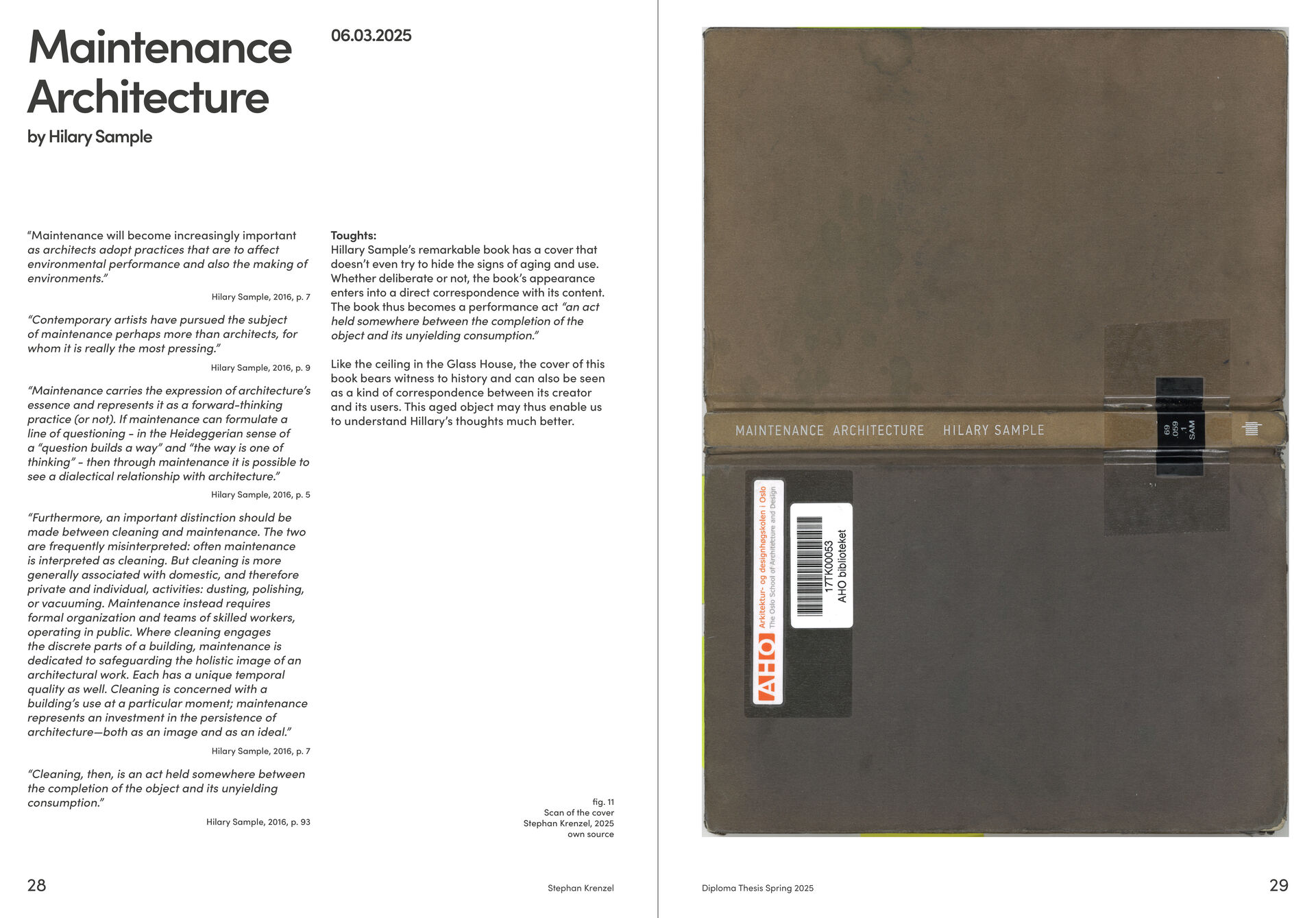
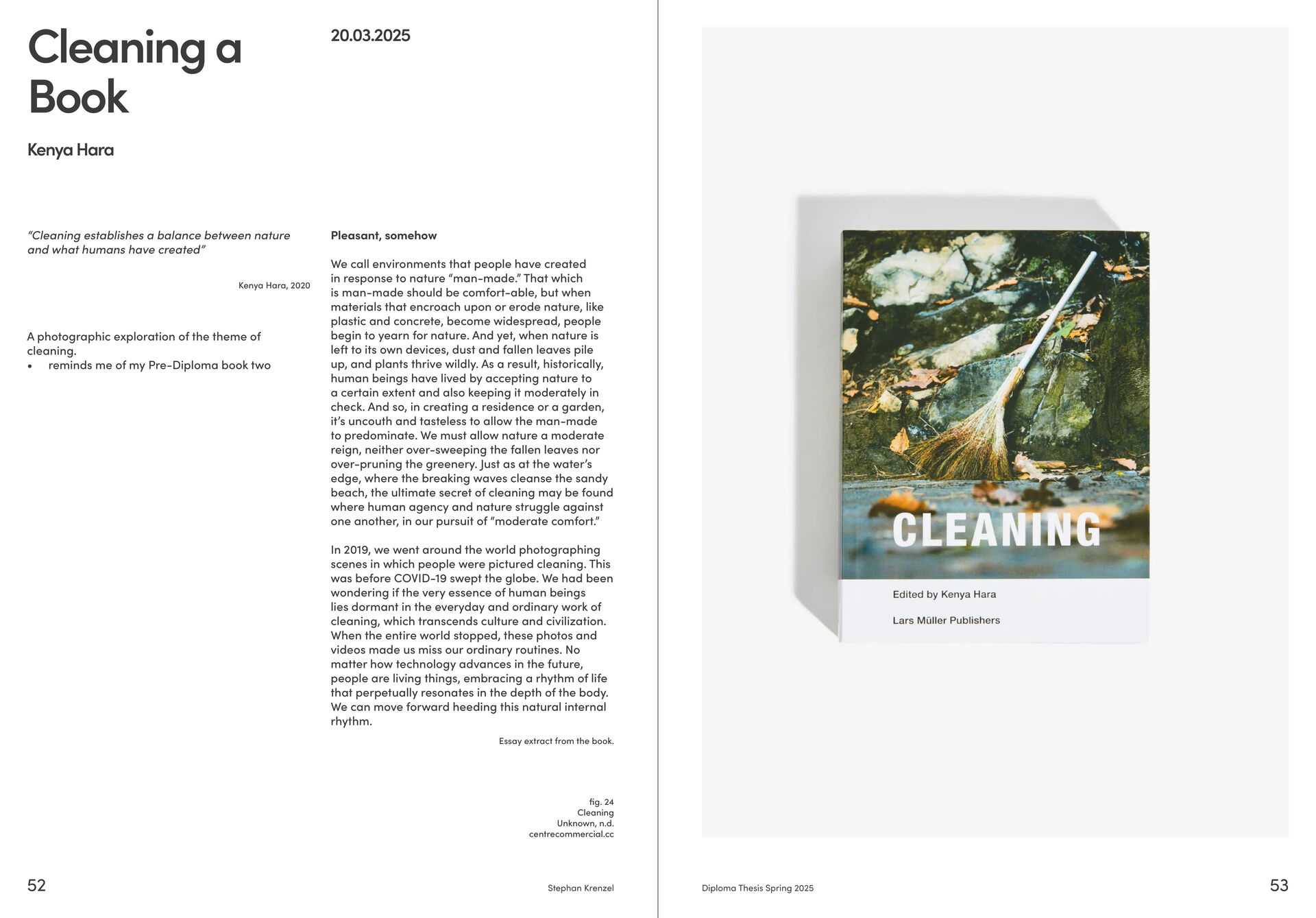
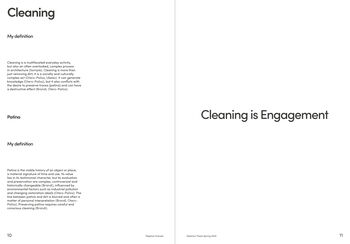
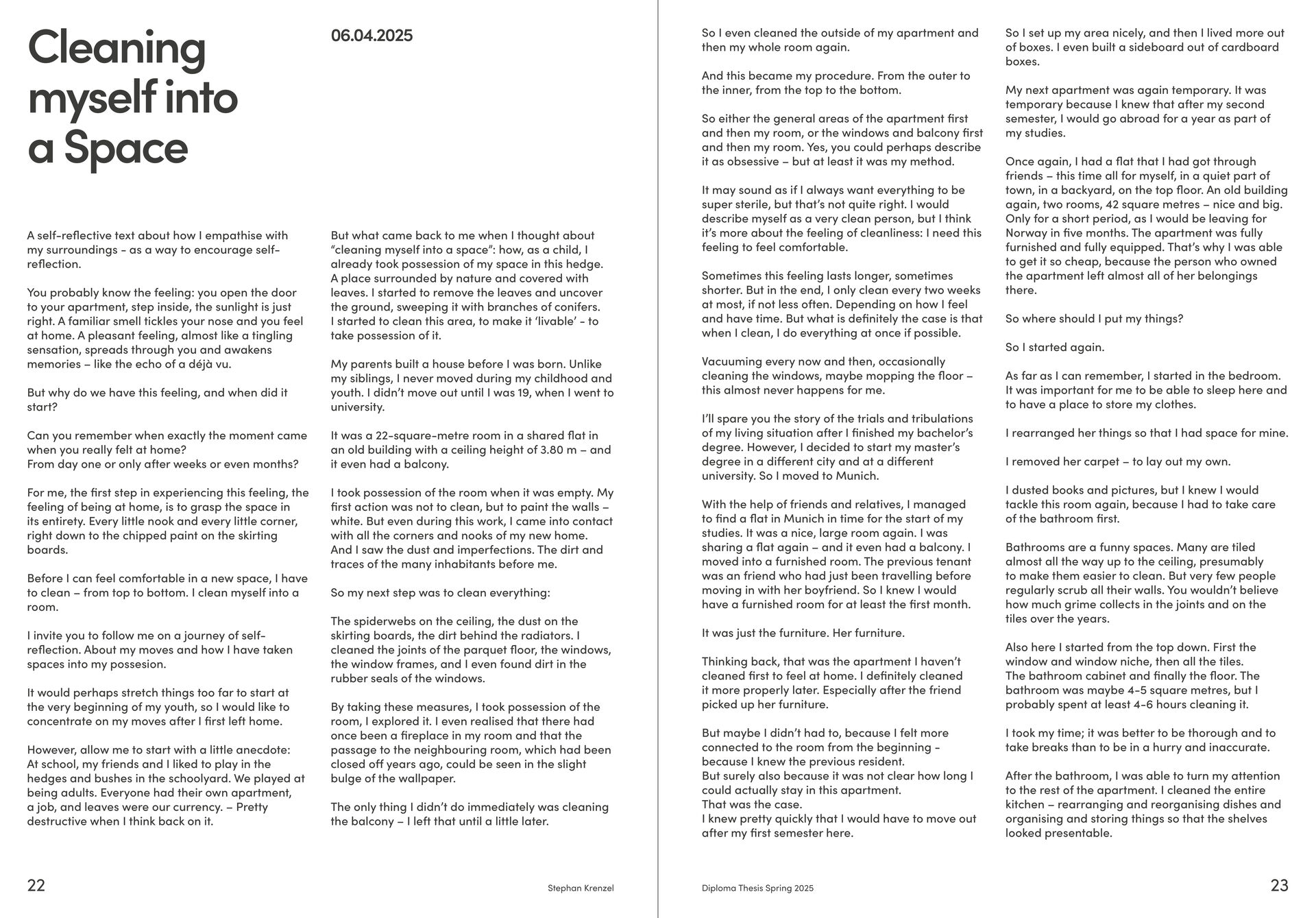
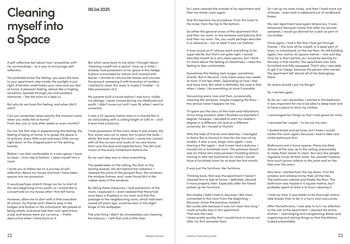
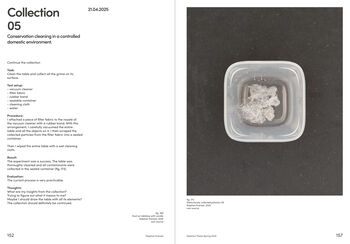
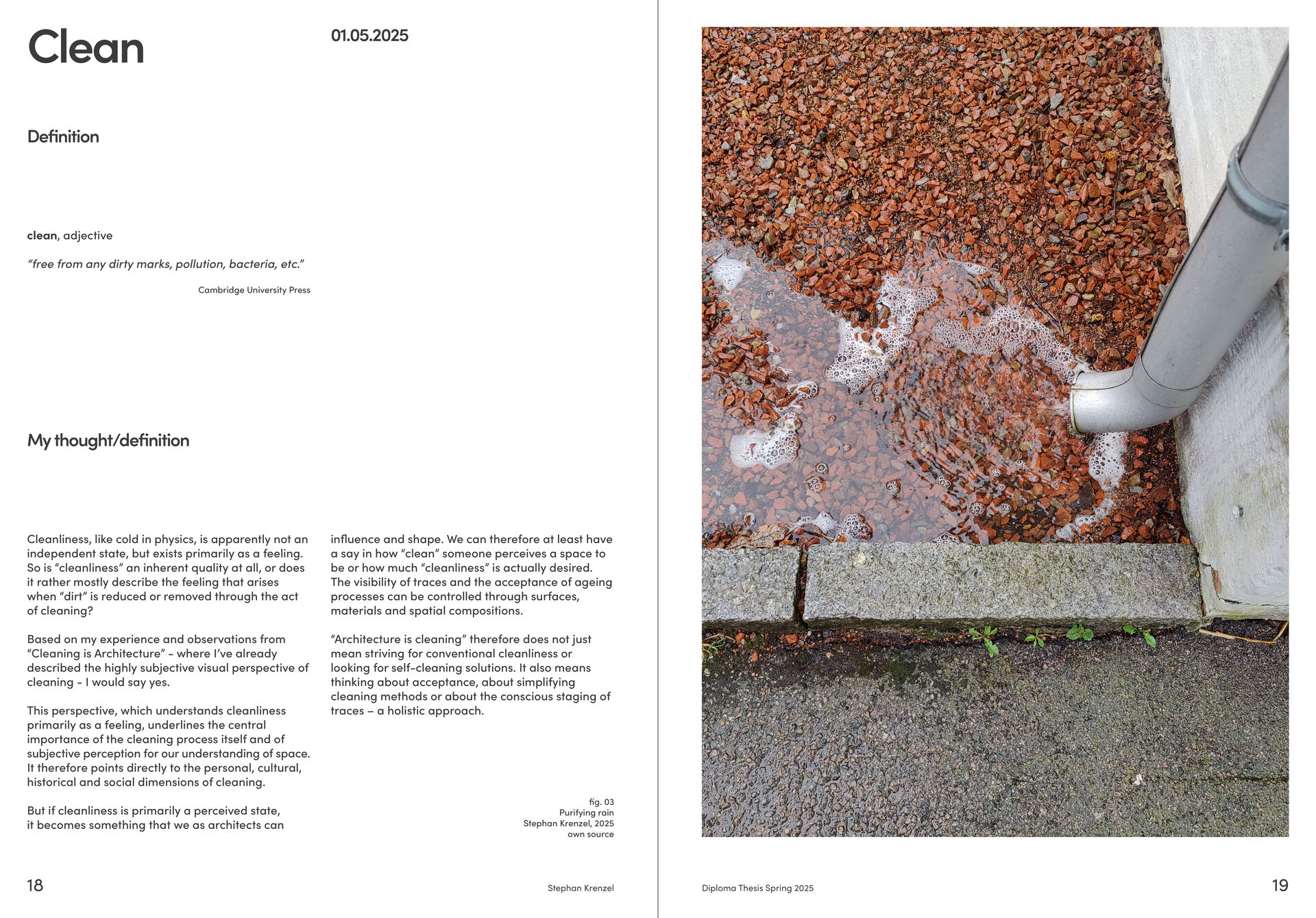
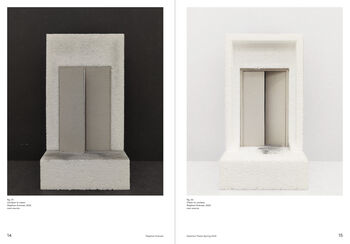
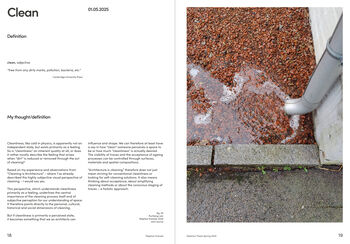
This volume lays the foundations for the work, defines key terms such as cleaning and patina, documents the initial theoretical explorations and inspirations, and early material experiments (e.g. with silicone).
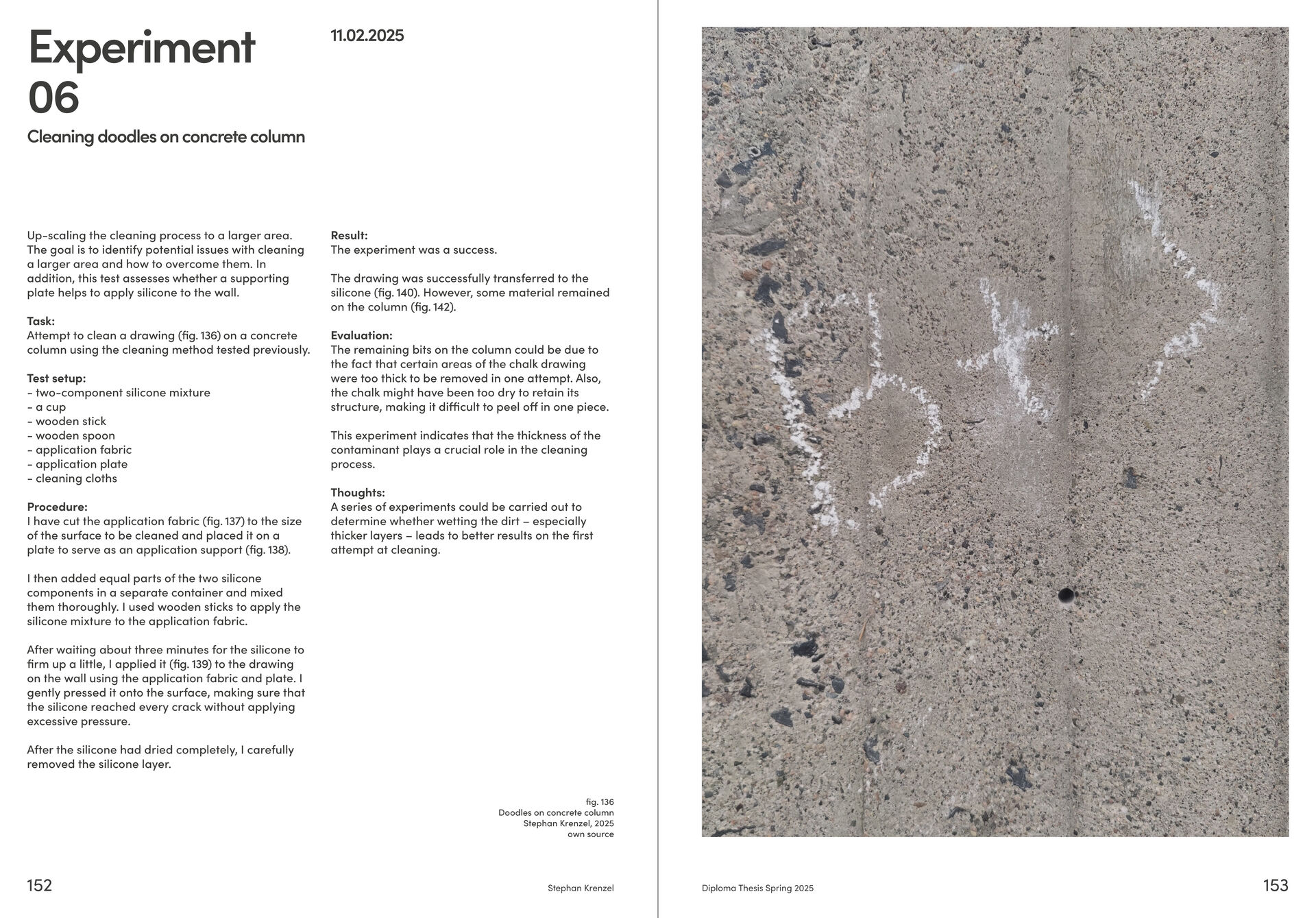
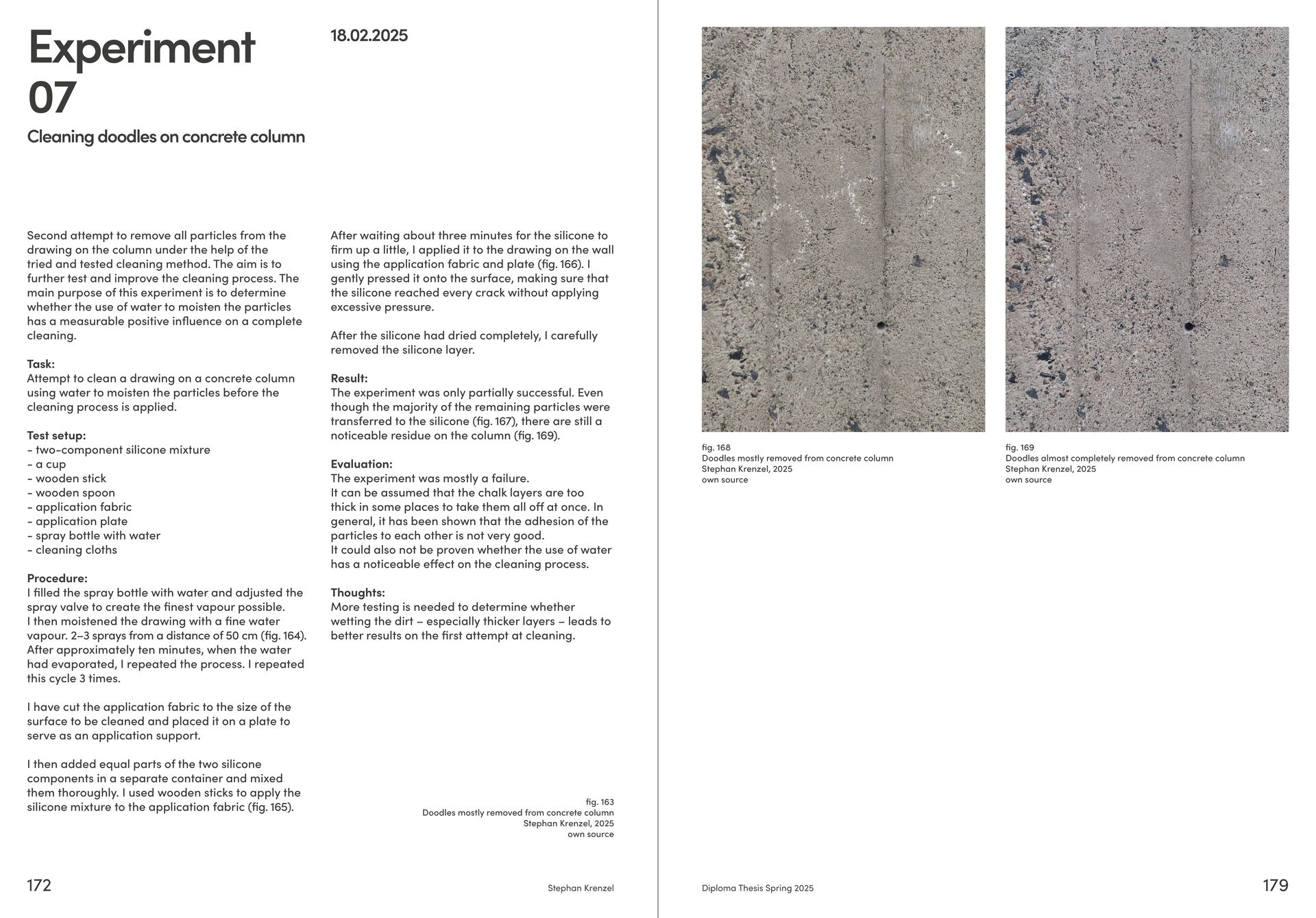
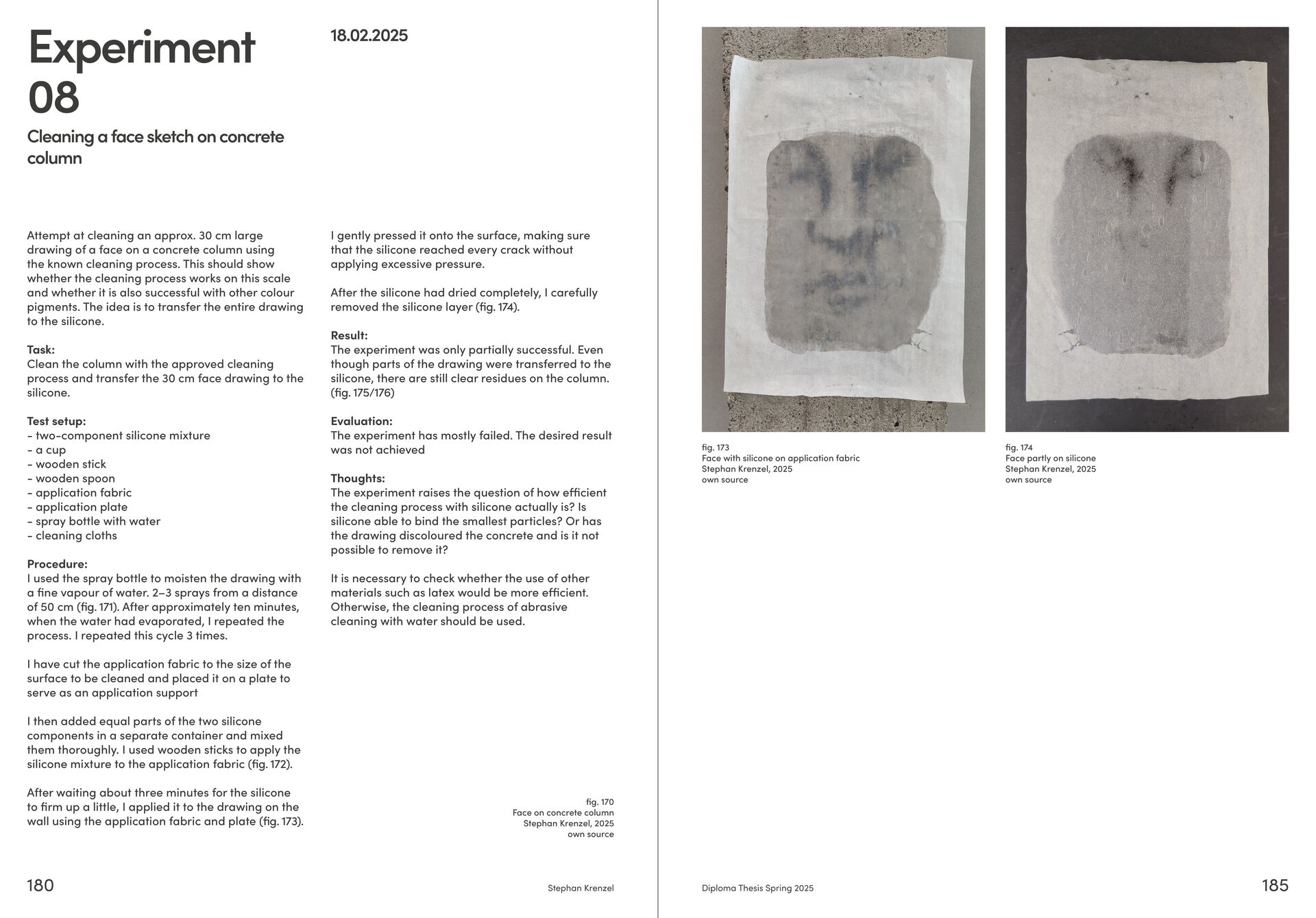
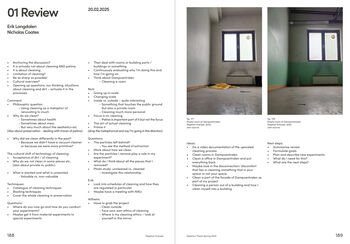
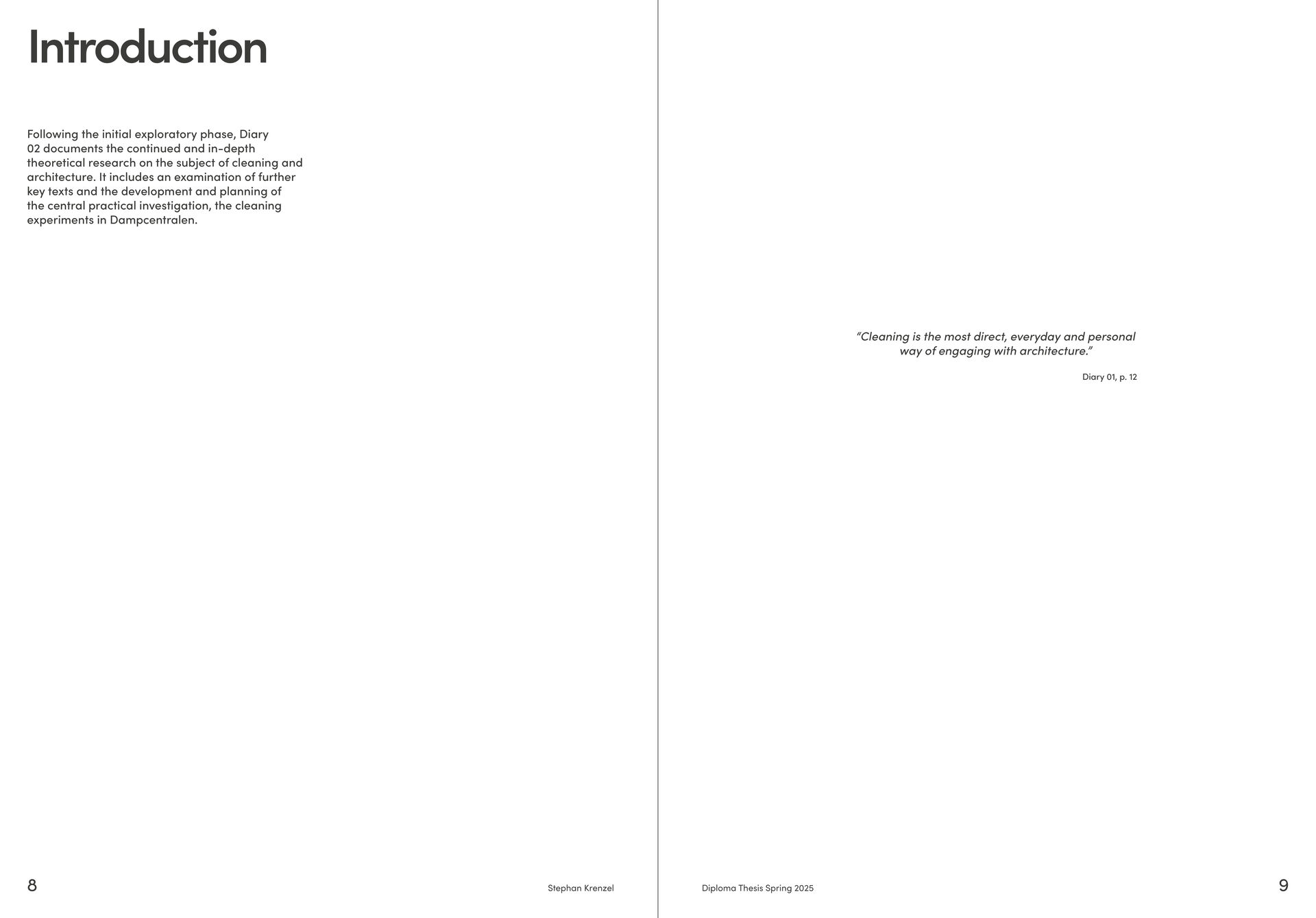
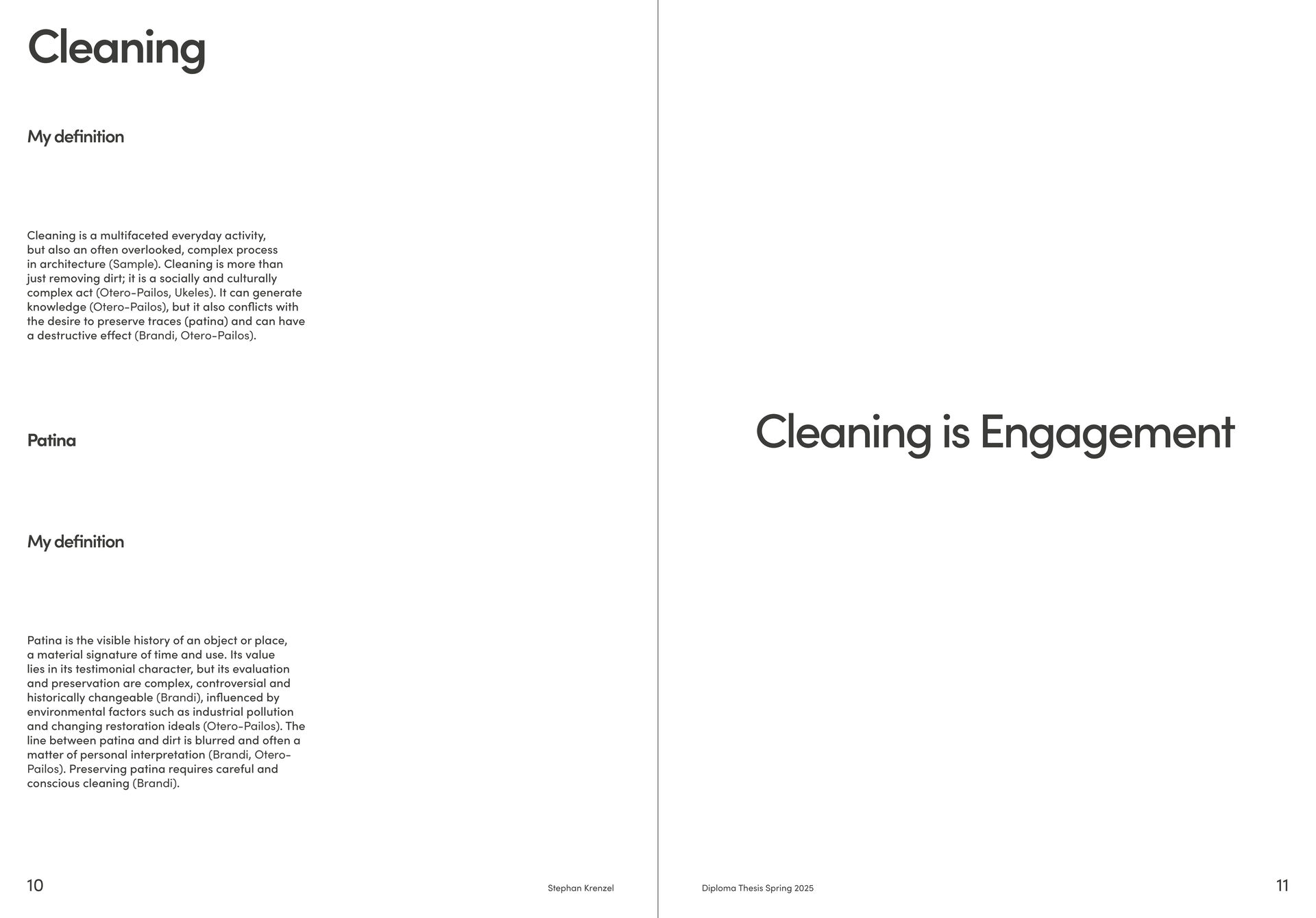
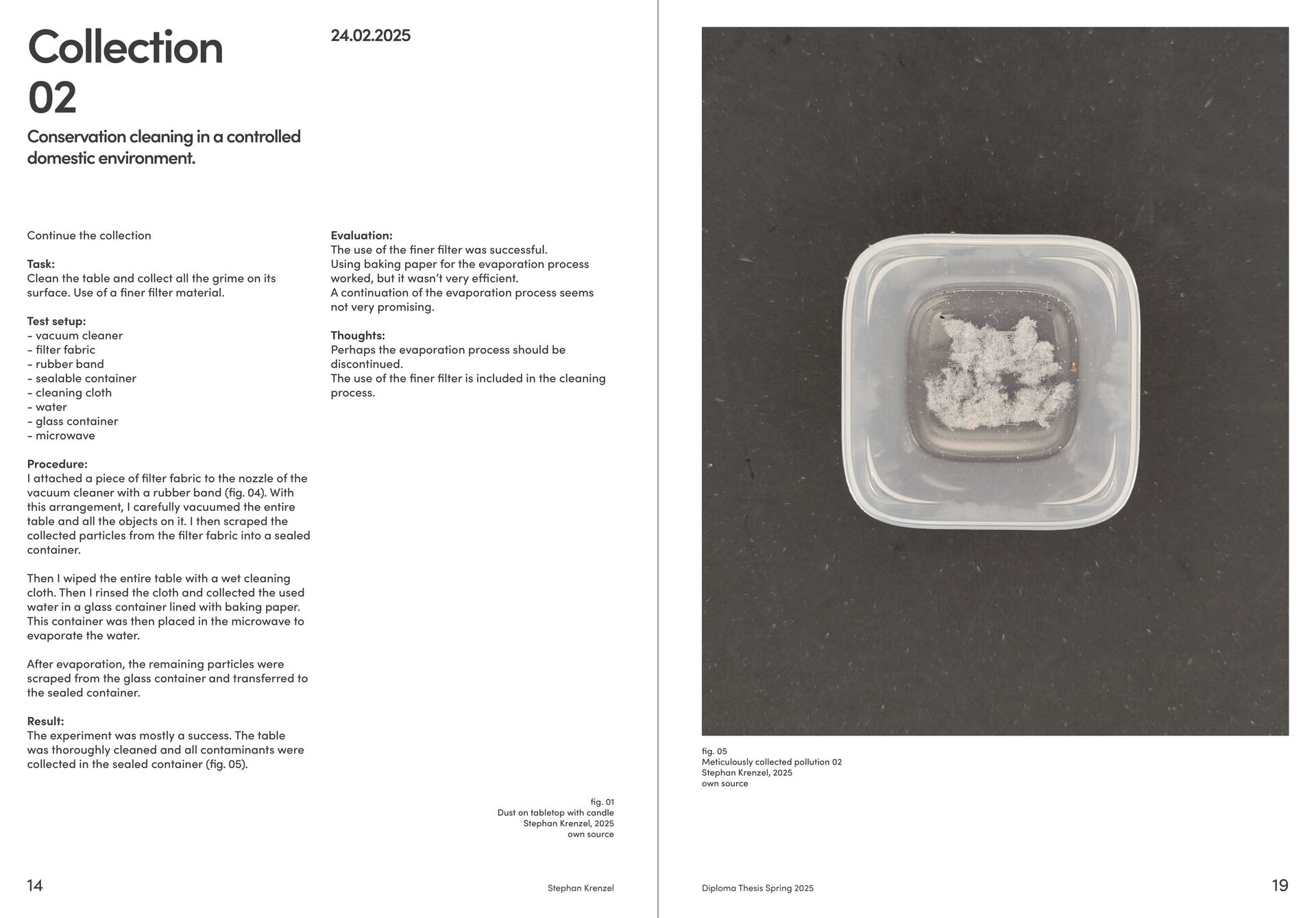
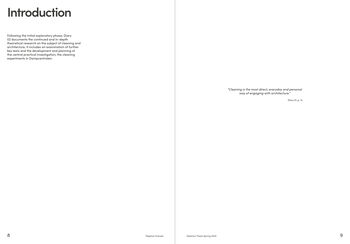
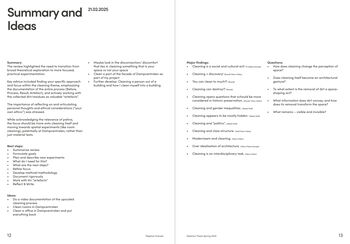
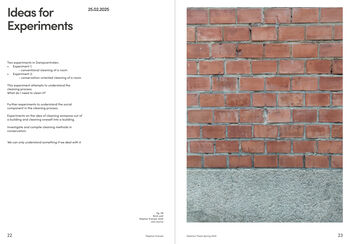
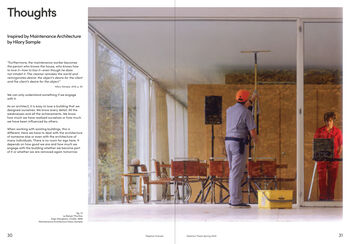
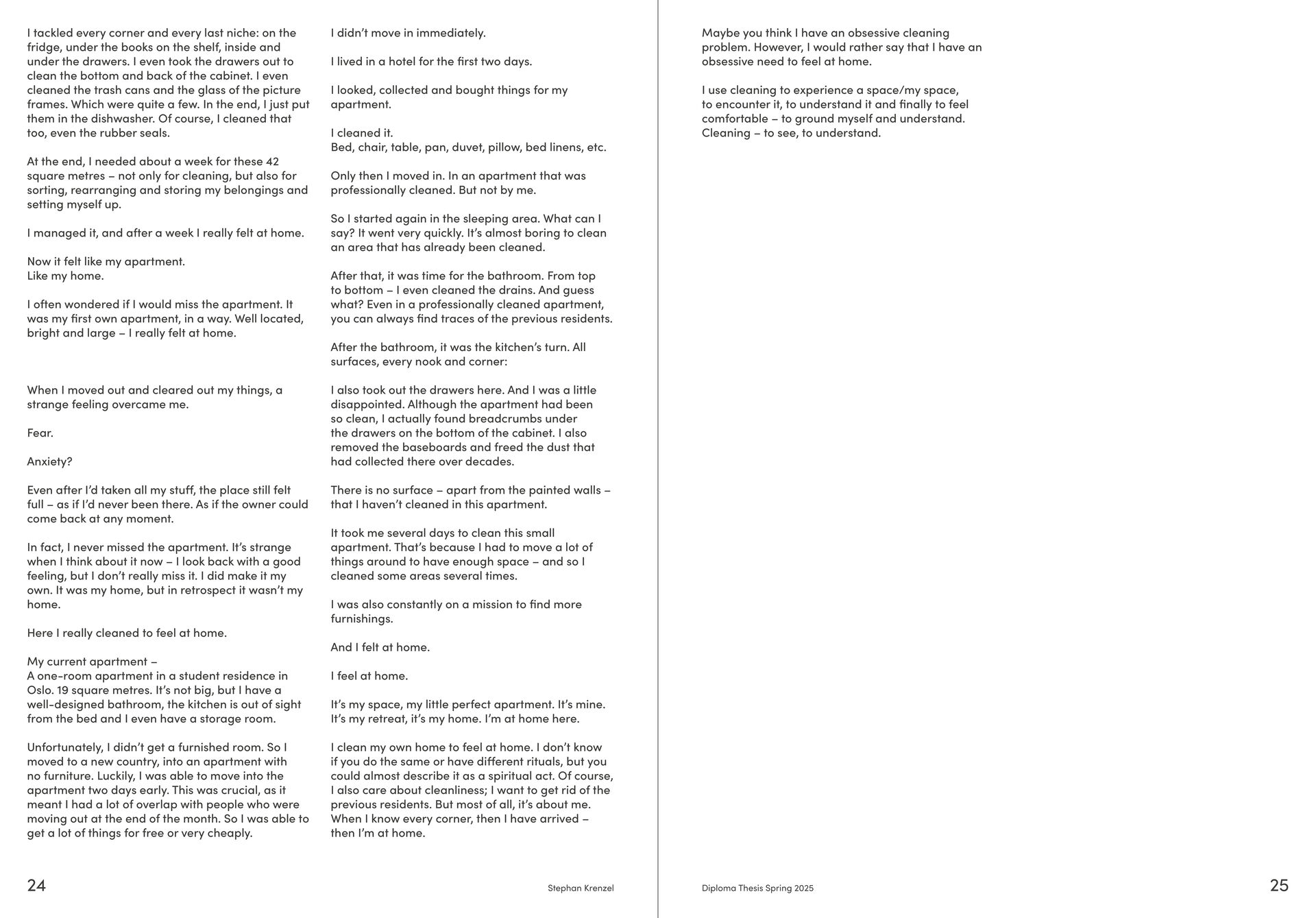
Diary Collection 02 – Deepening & Context
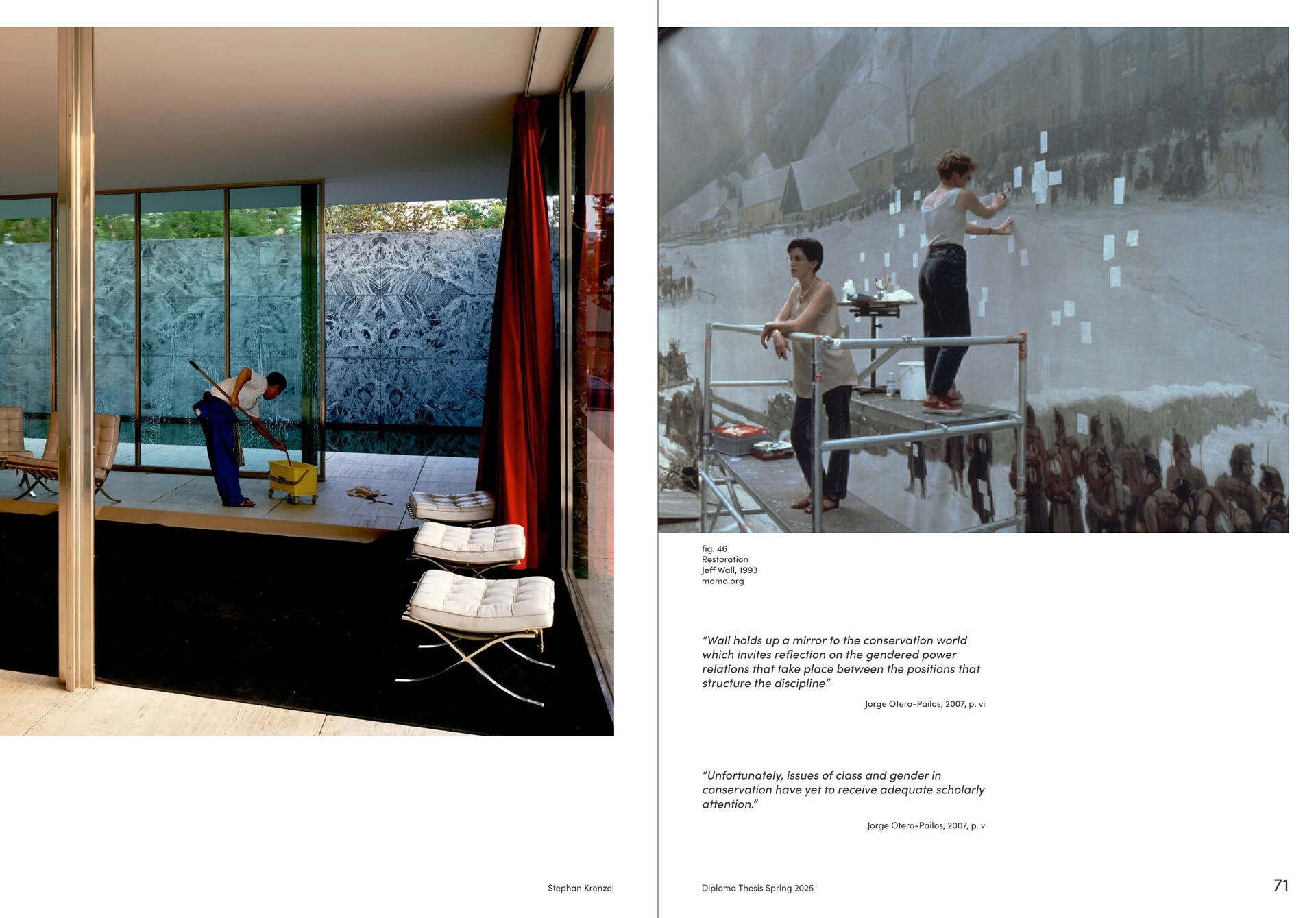
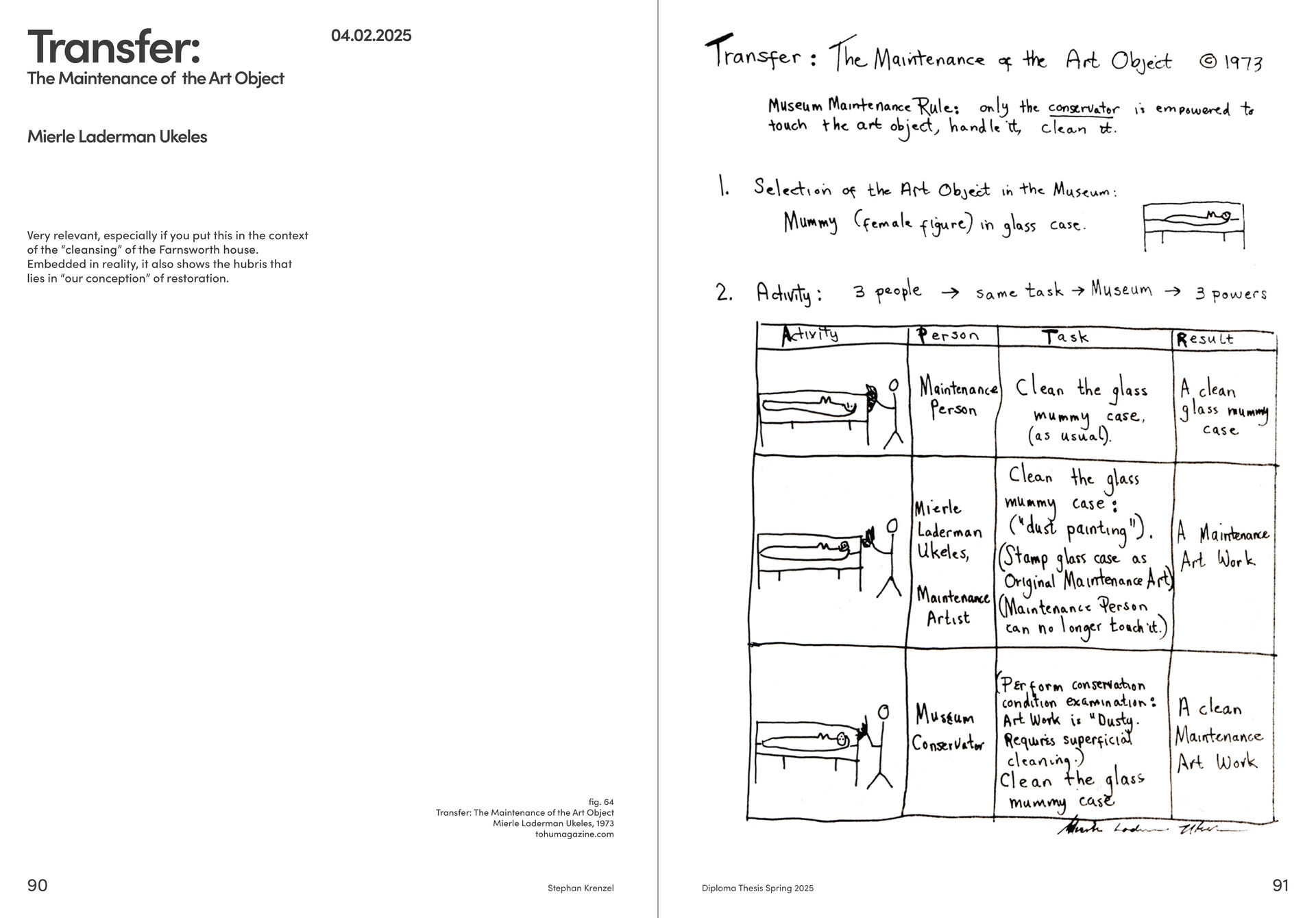
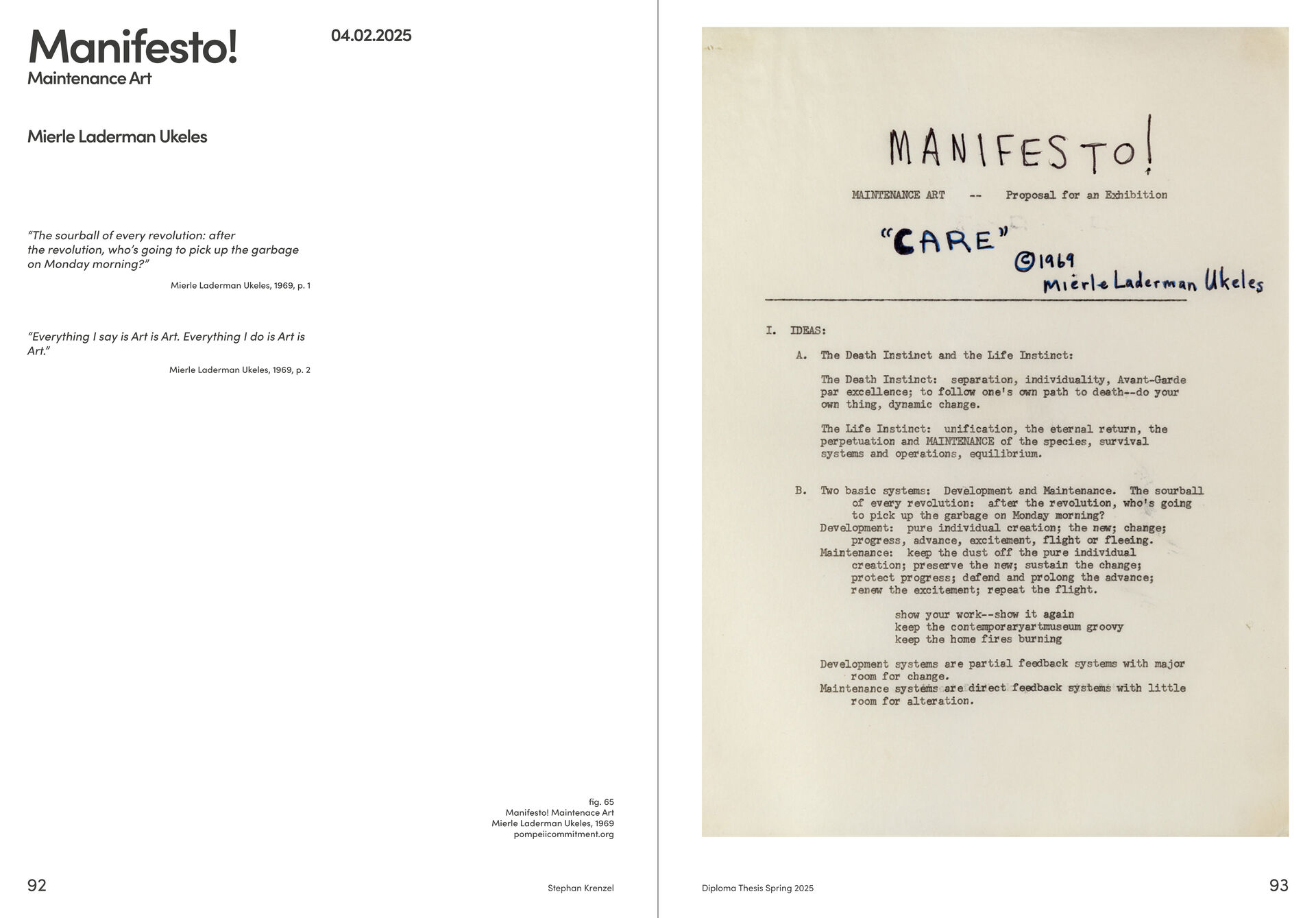
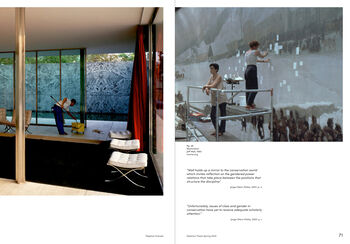
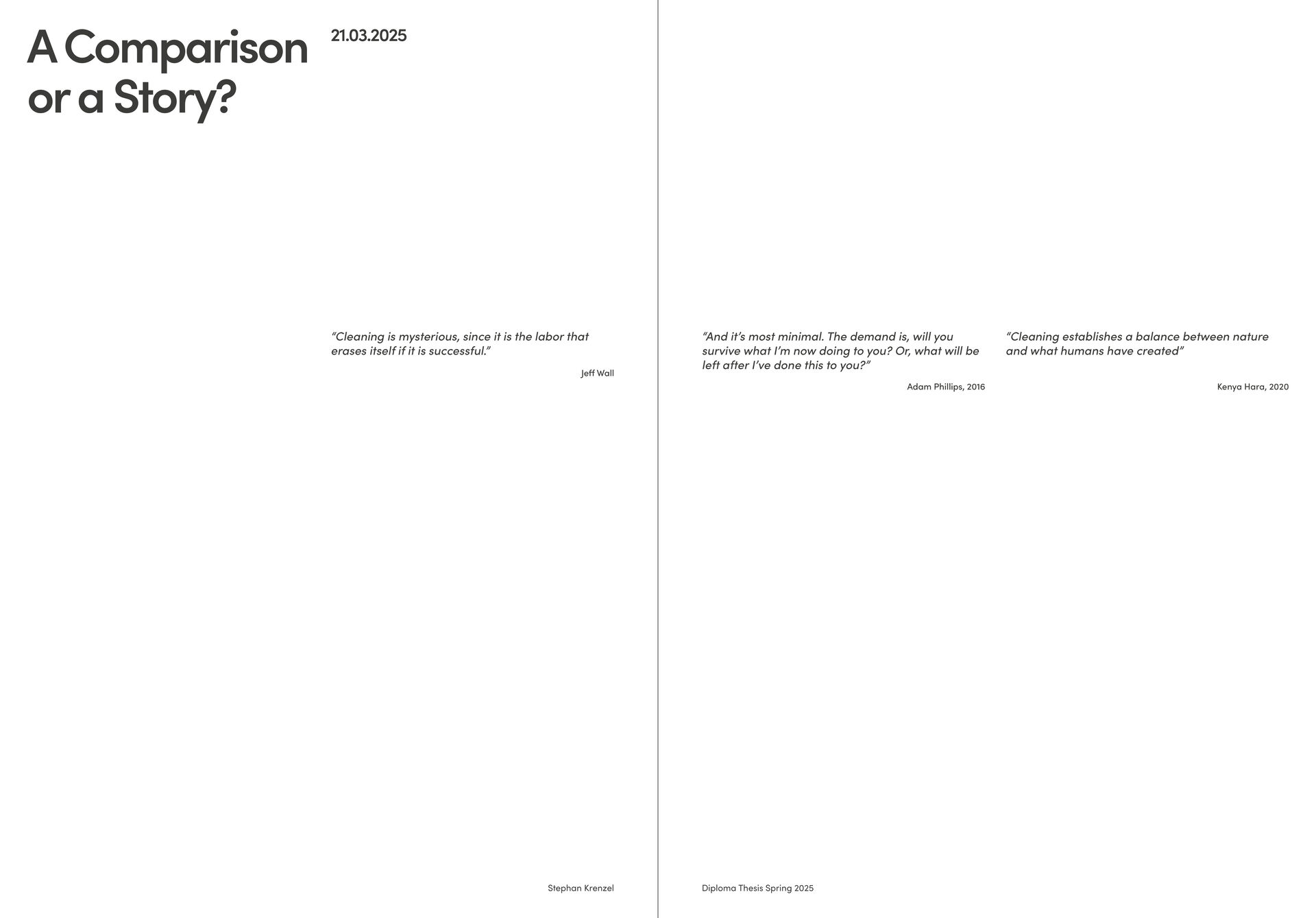
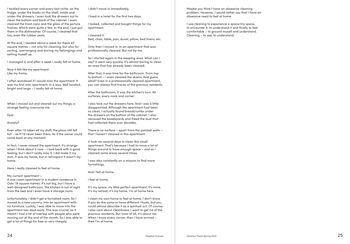
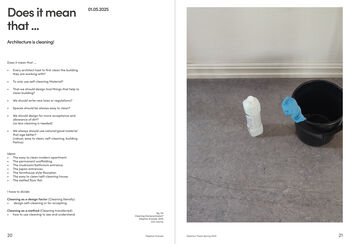
Here, the focus is more on the theoretical and cultural dimensions of cleaning and architecture. Key texts are discussed, social aspects are examined and the experimental method is further developed.
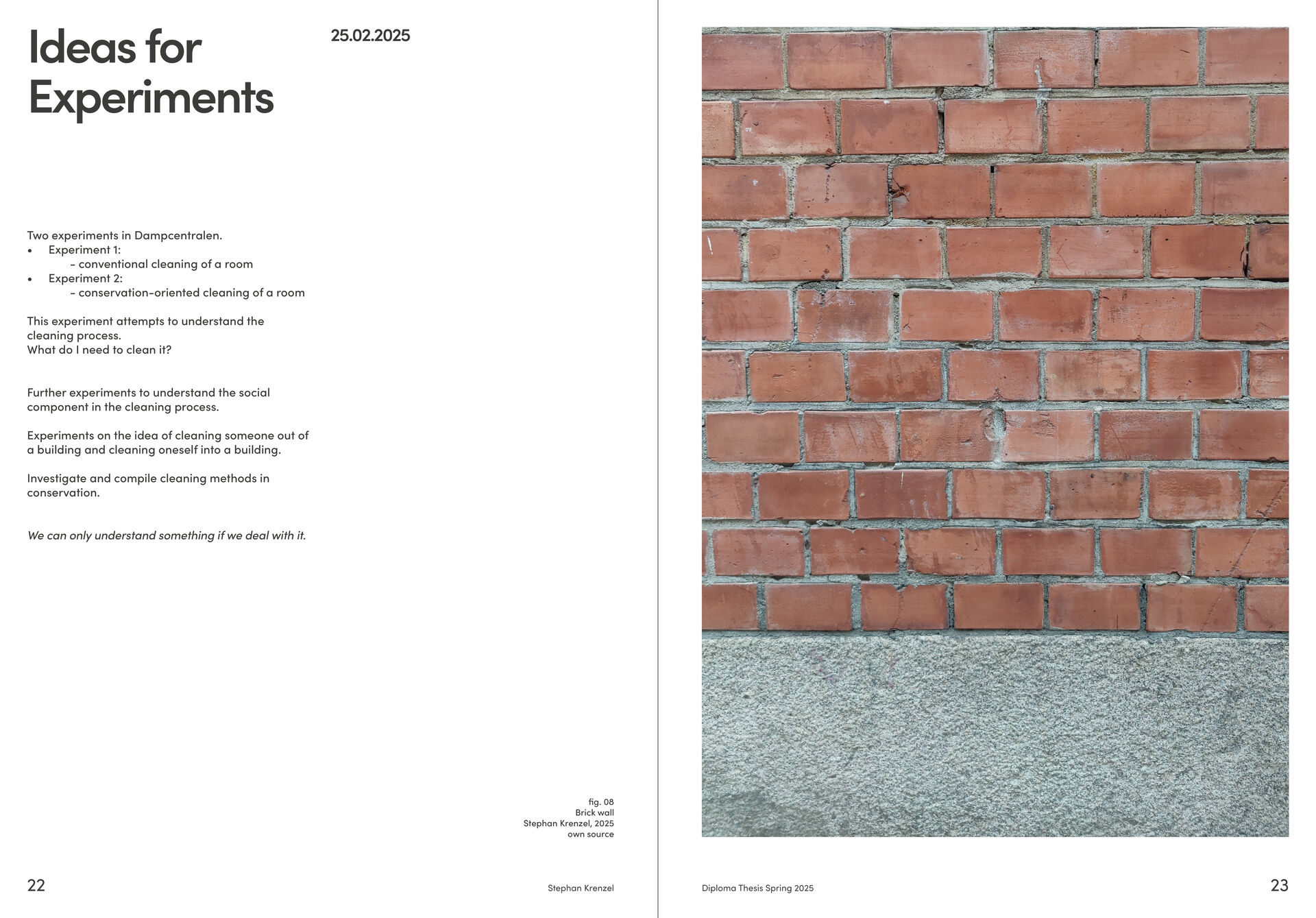
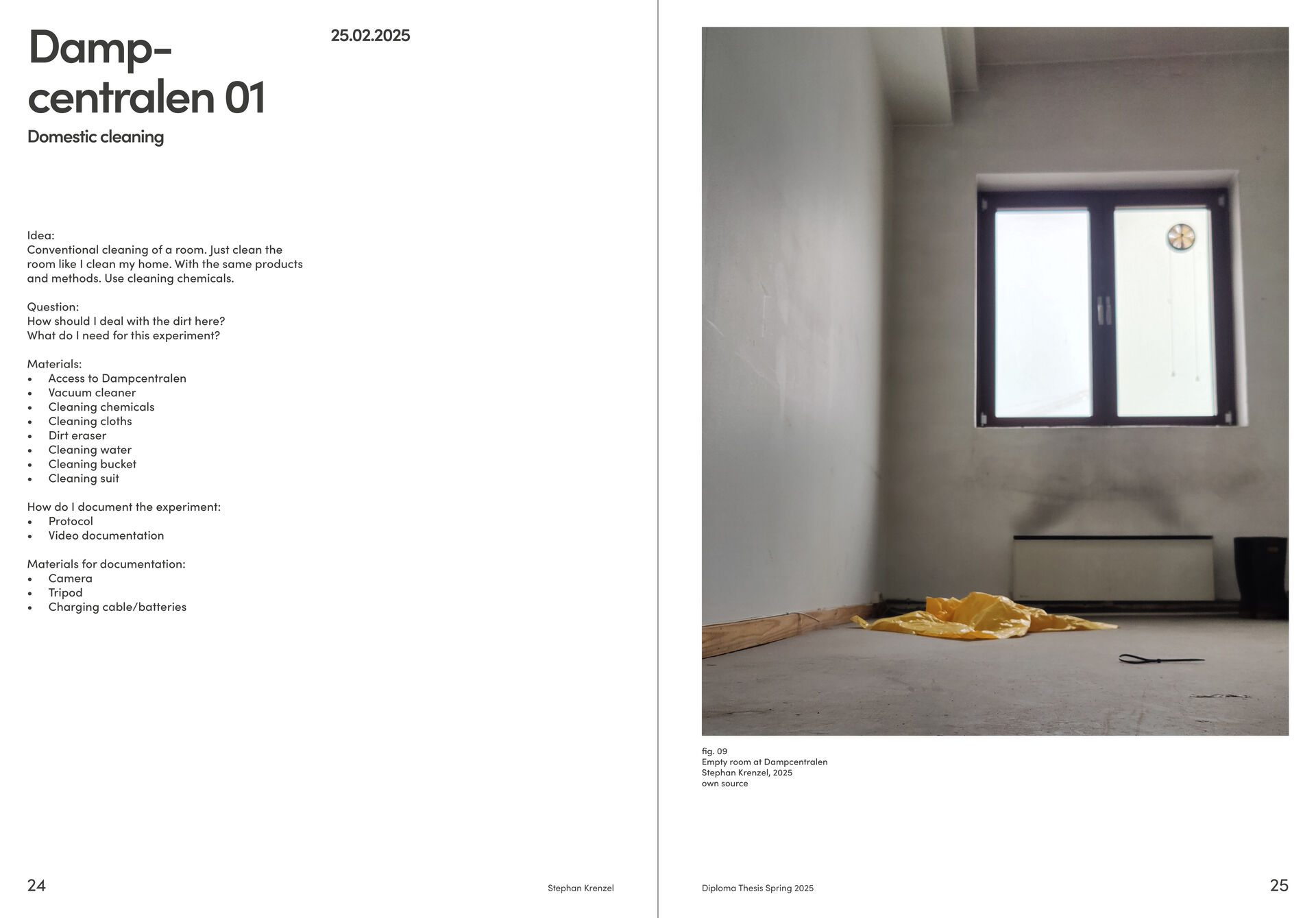
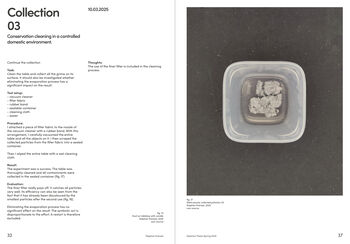
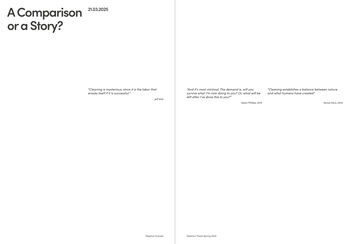
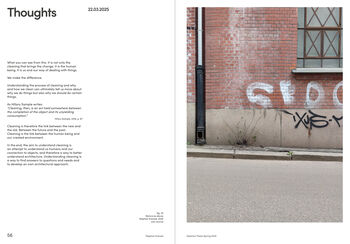
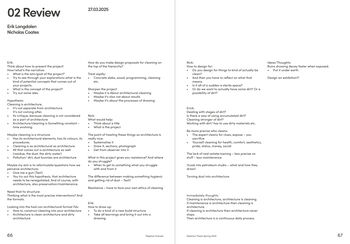
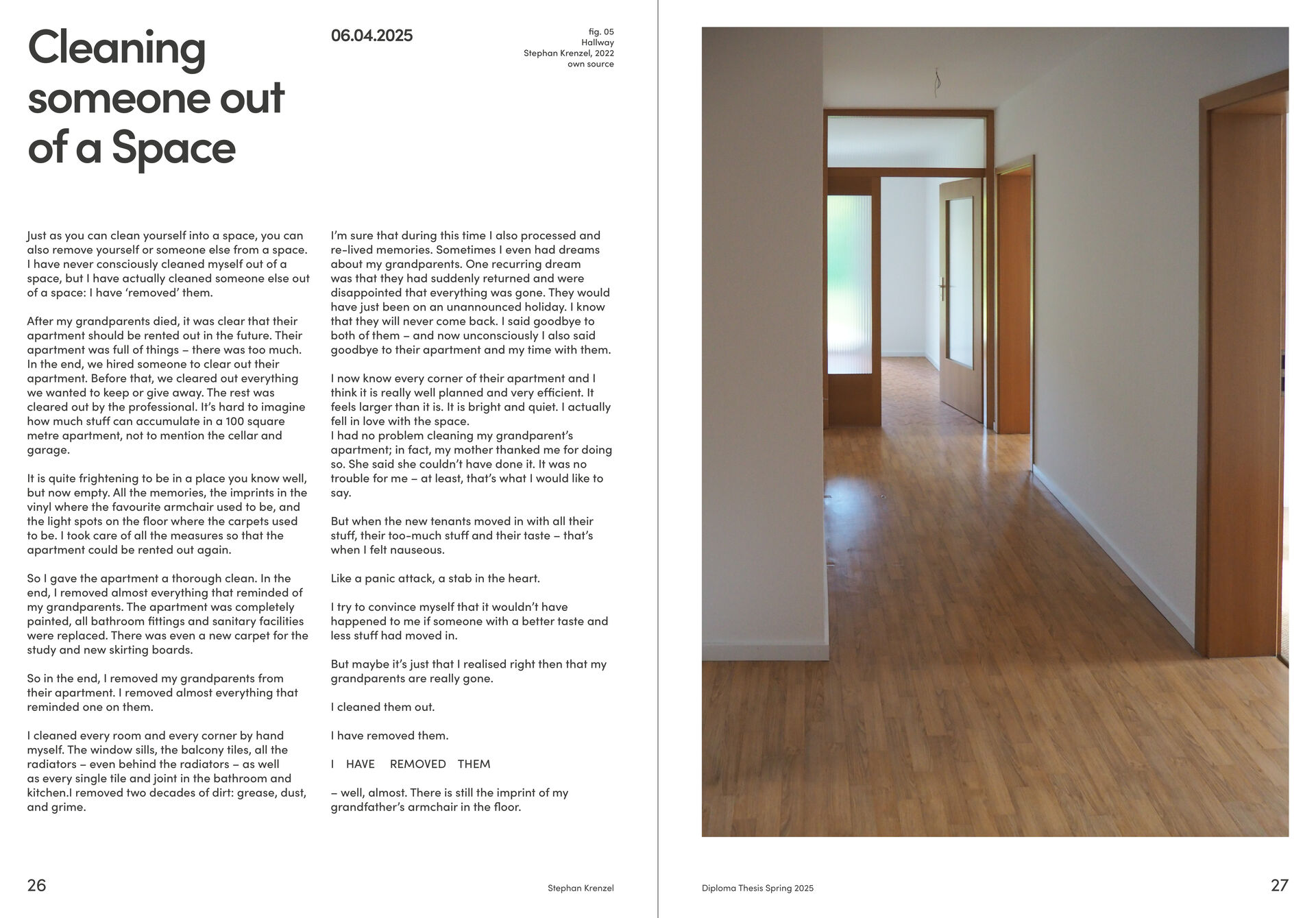
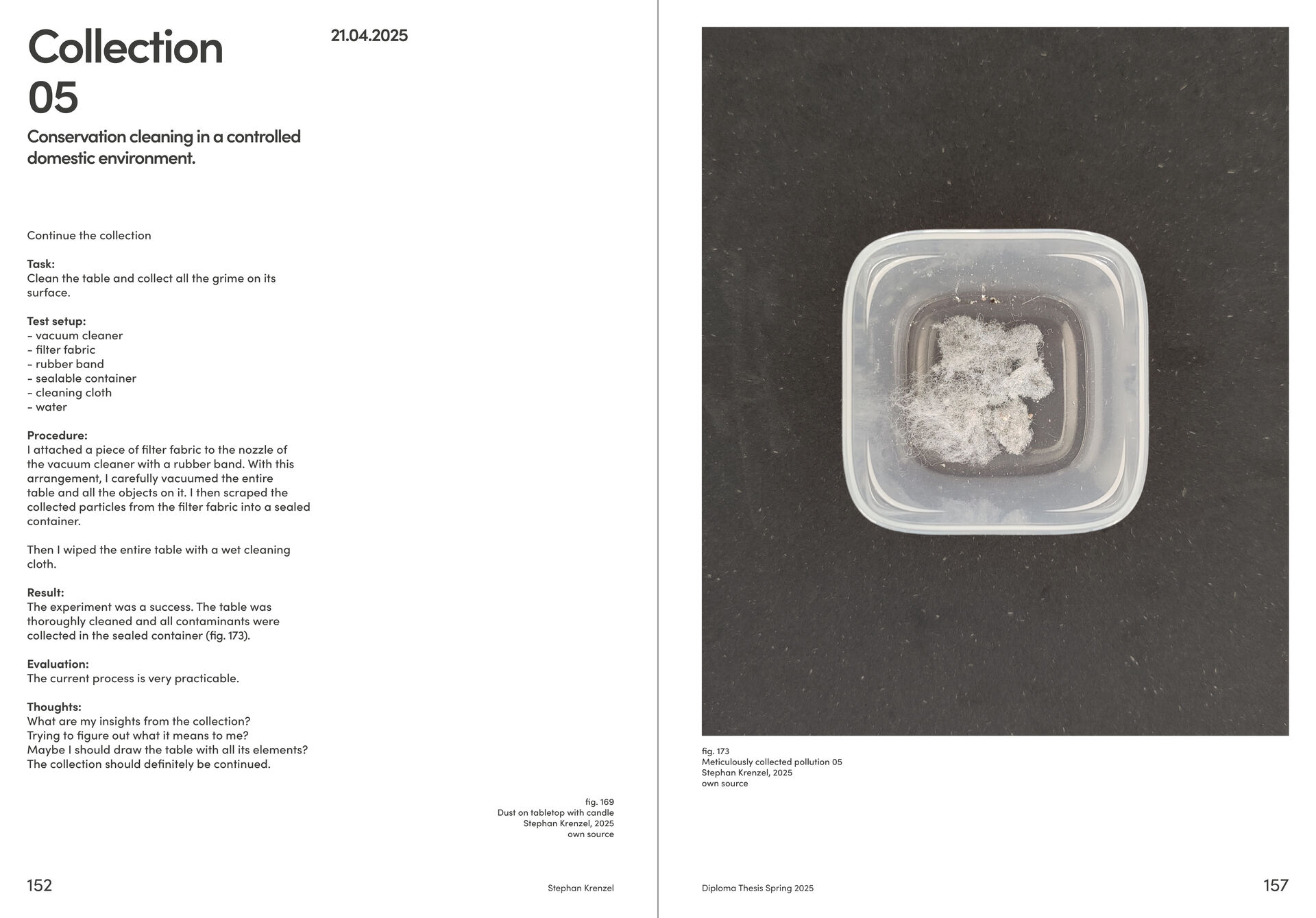
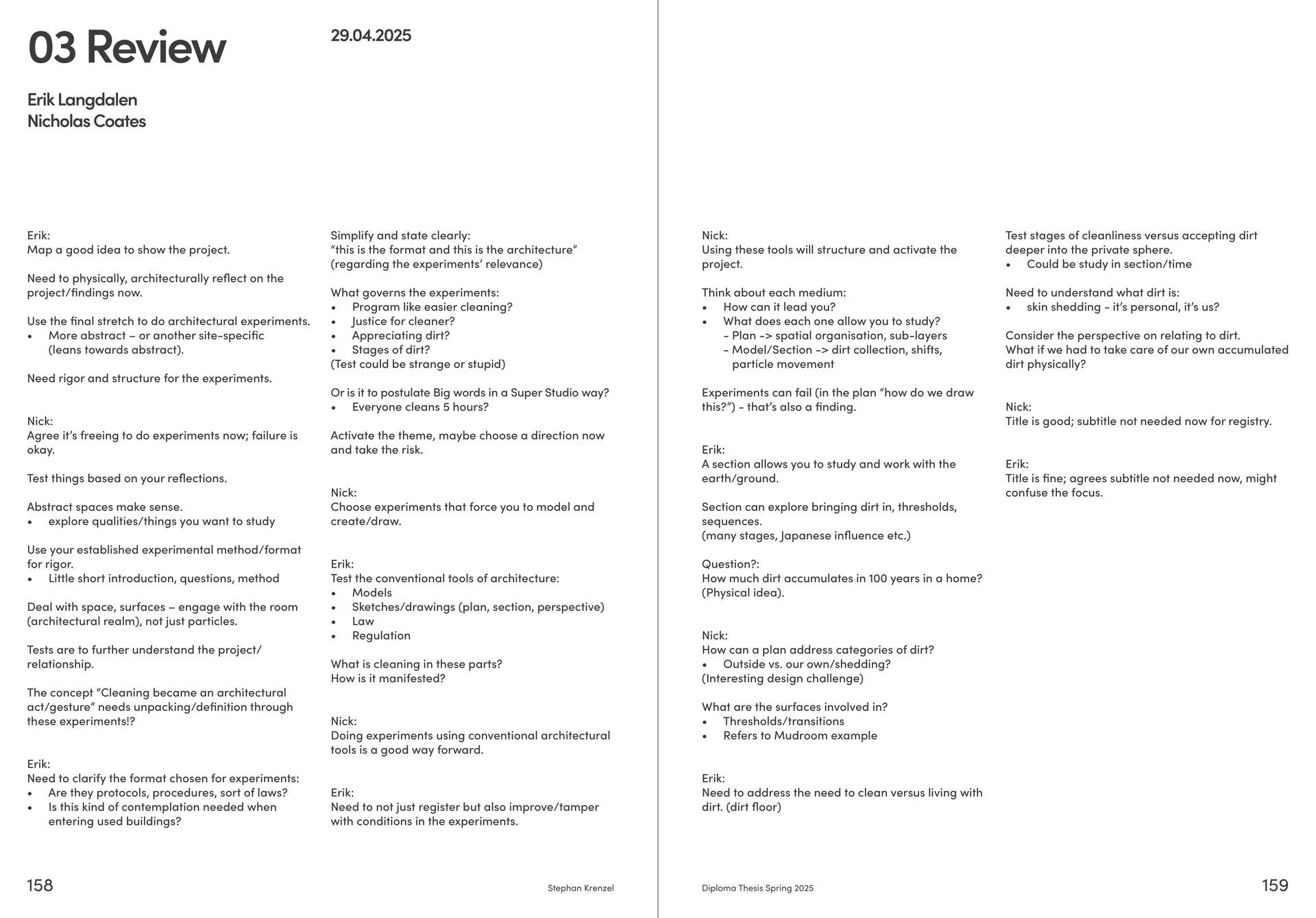
Diary Collection 03 – Experimental Practice
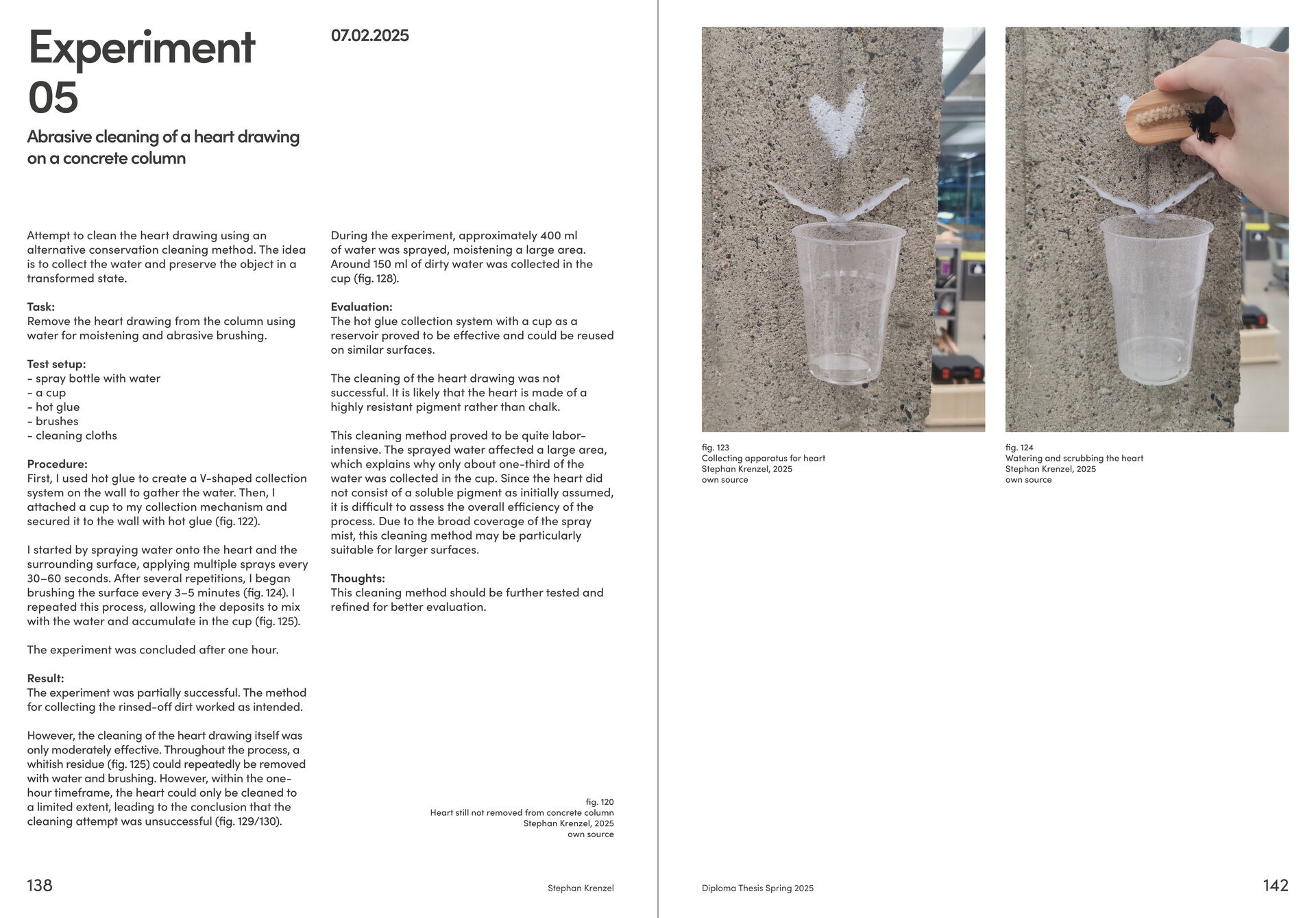
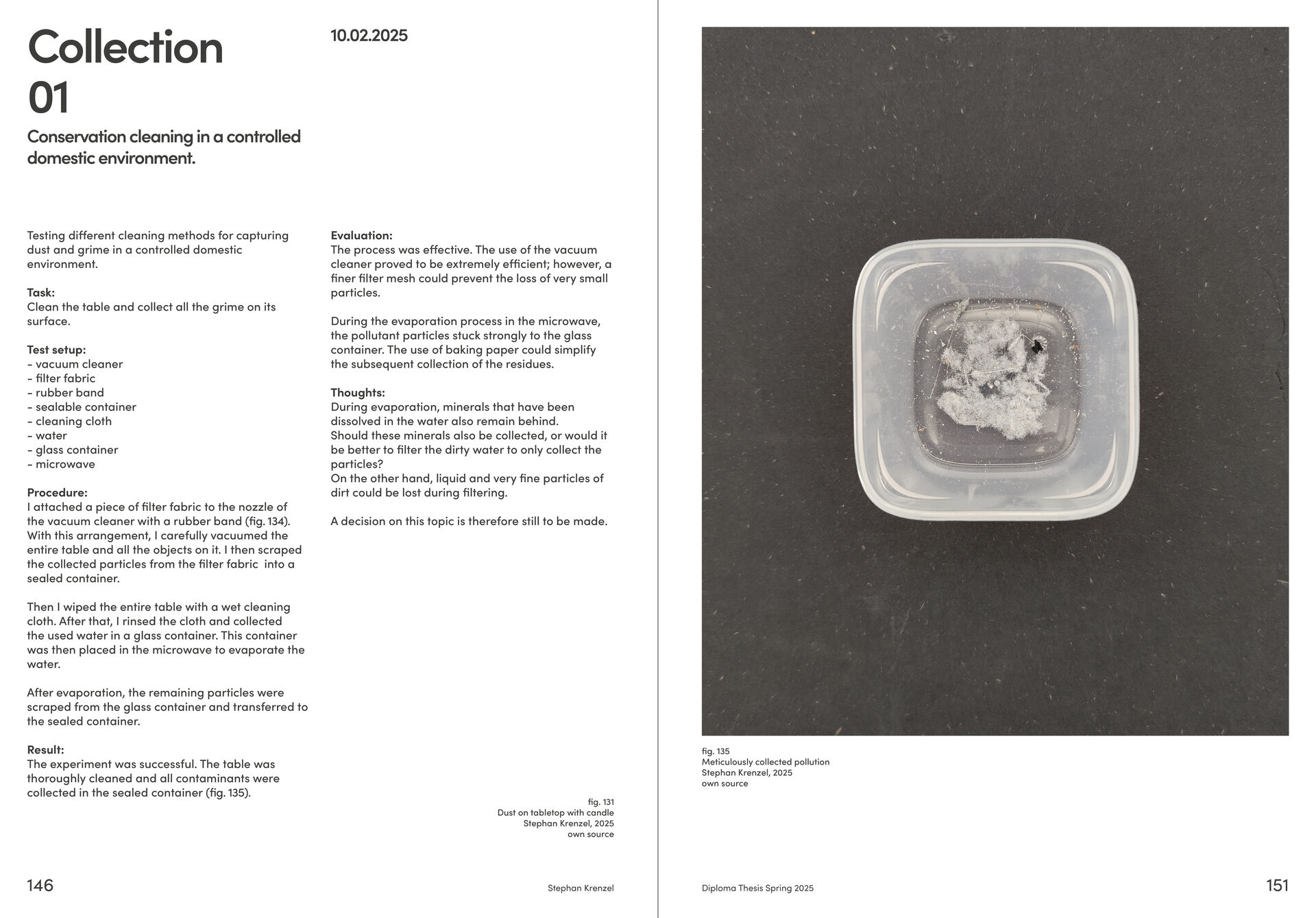
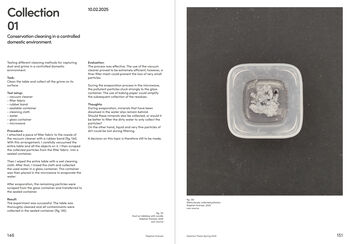
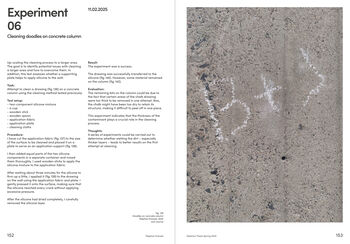
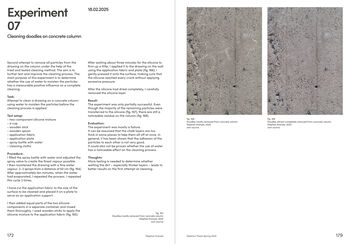
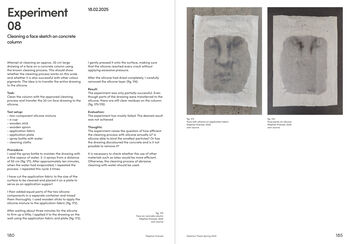
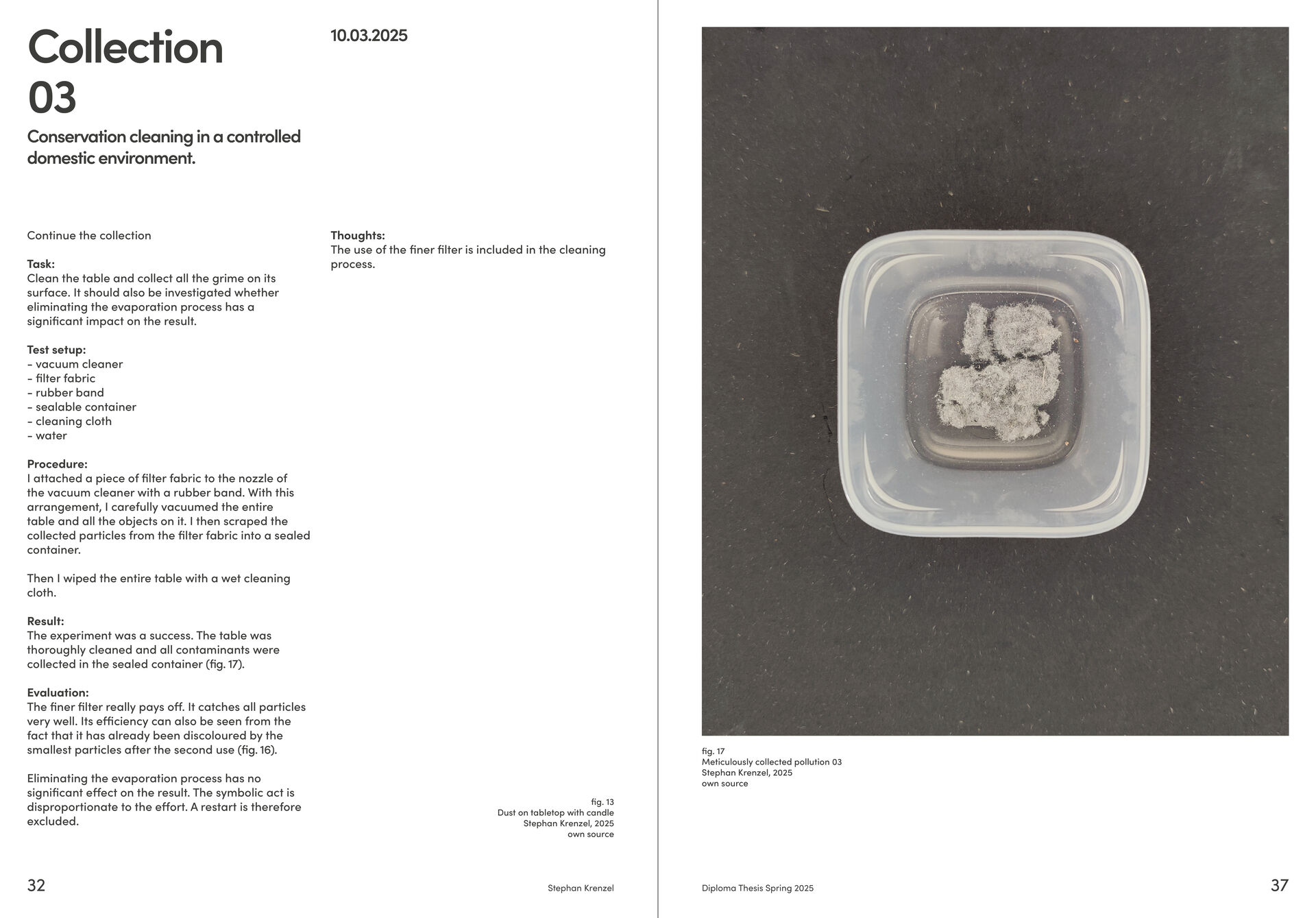
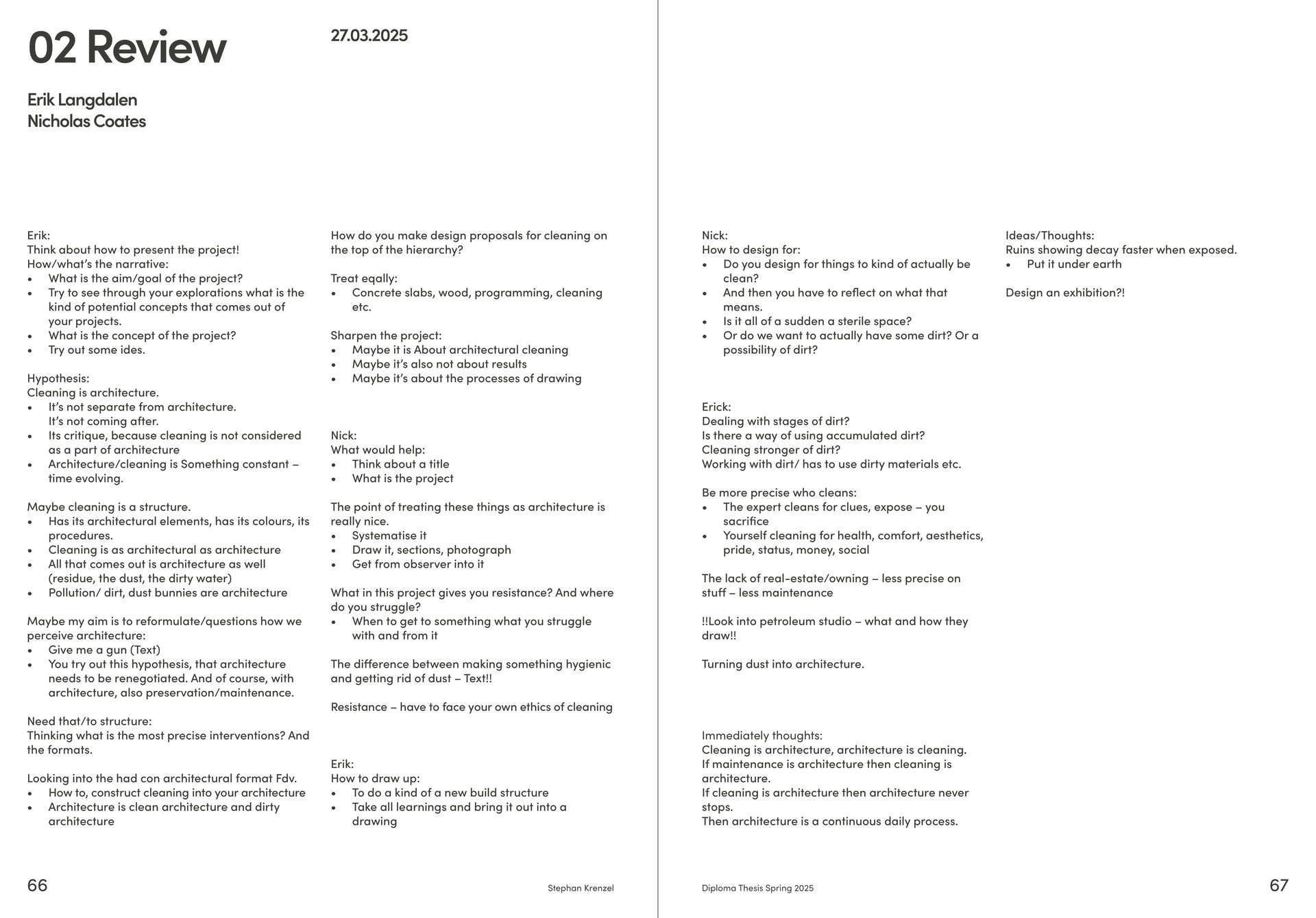
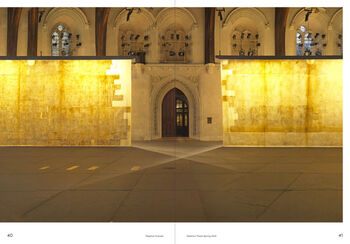
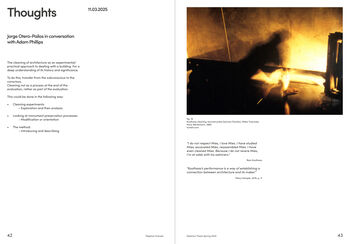
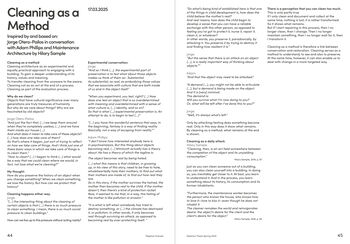
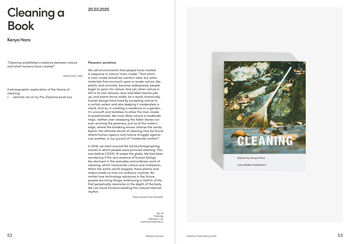
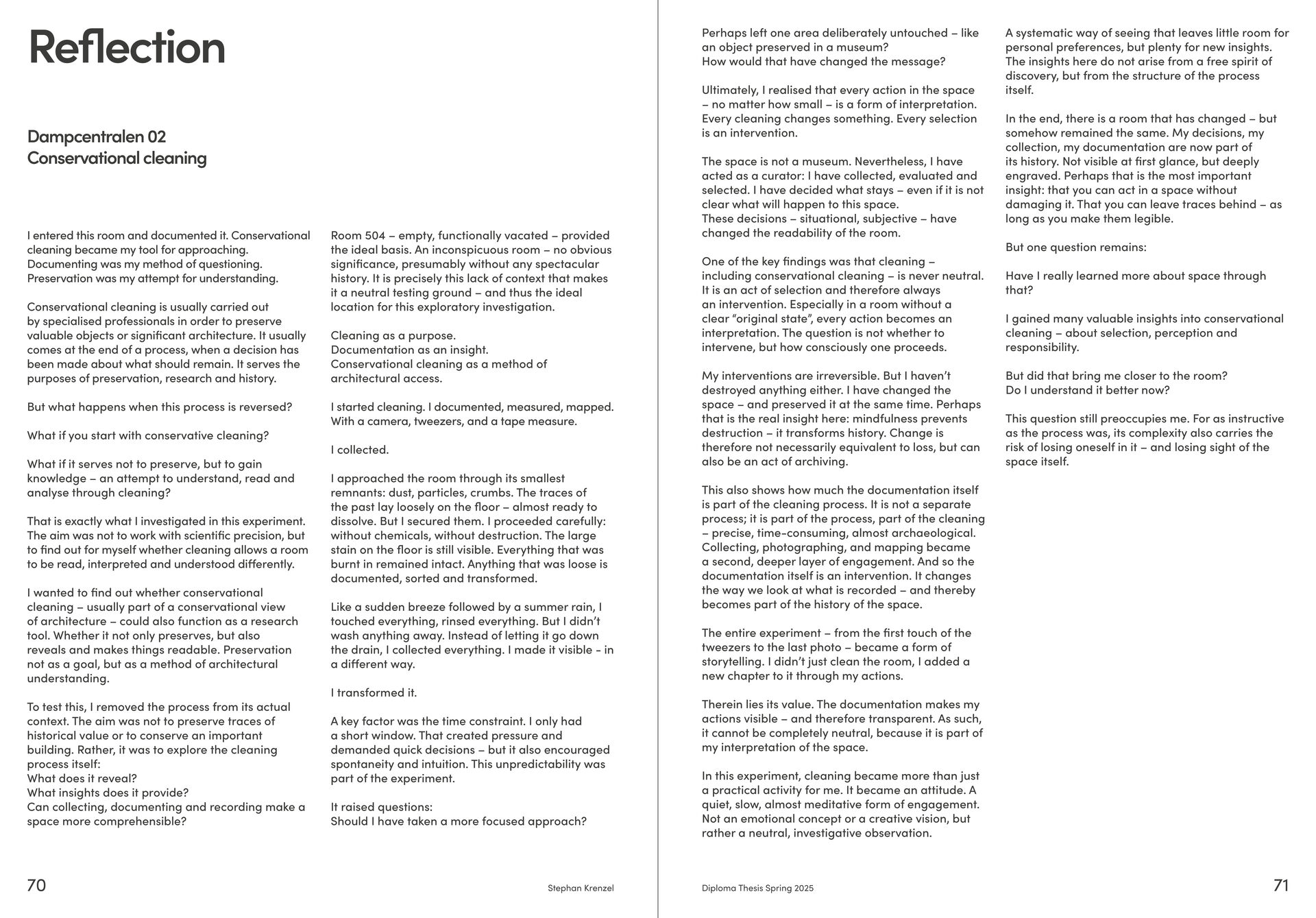
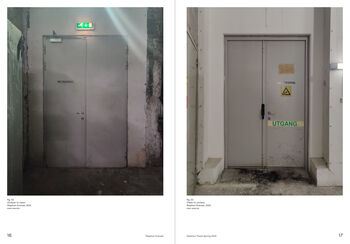
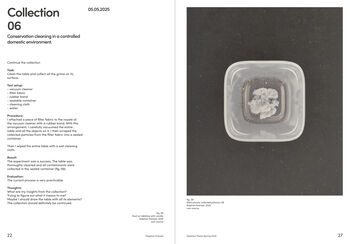
This volume is central to the practical investigations. It documents in detail the comparative cleaning experiments in the Dampcentralen and reflects on the insights gained from them in relation to the thesis “Cleaning is Architecture”. (see the videos above)
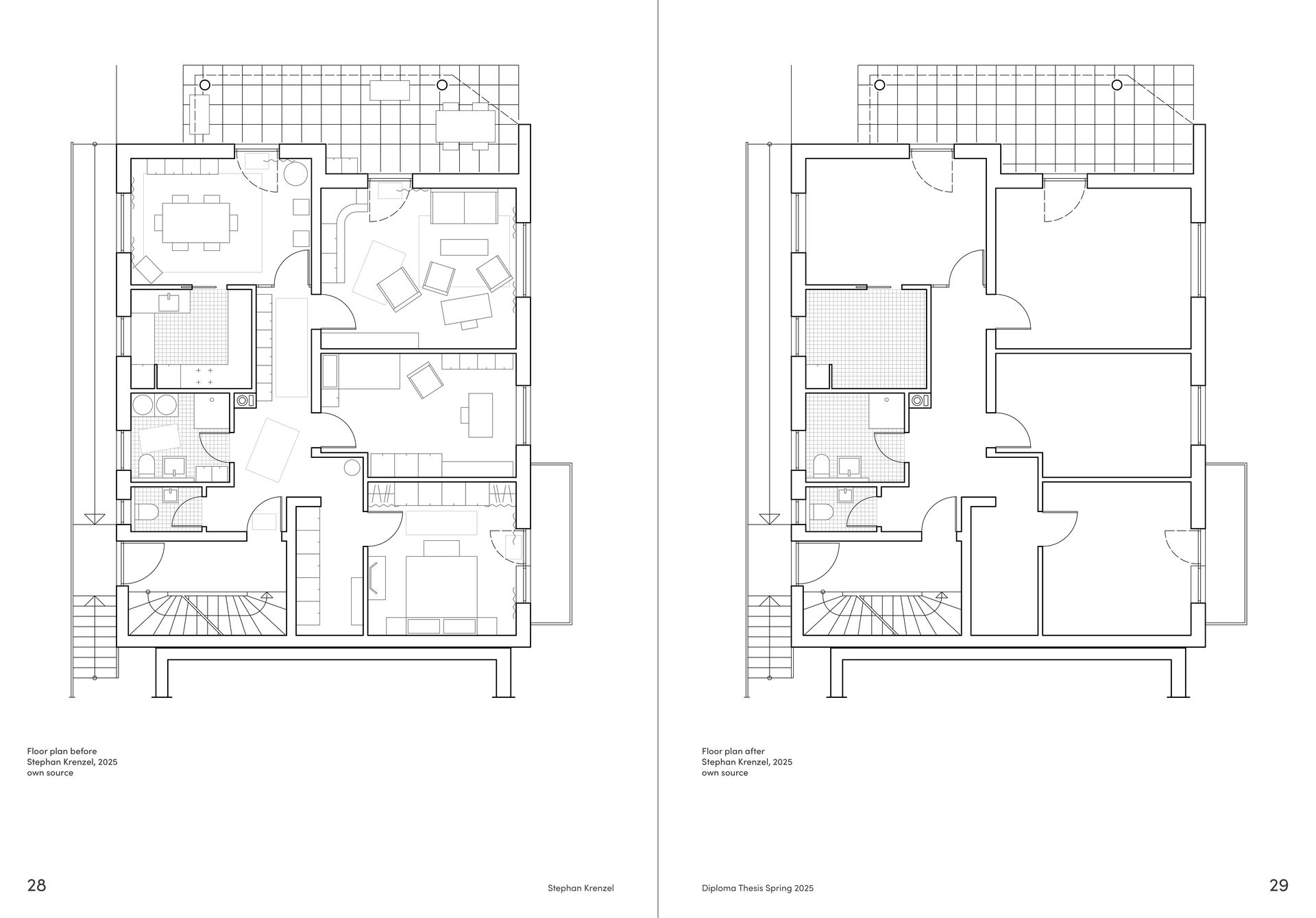
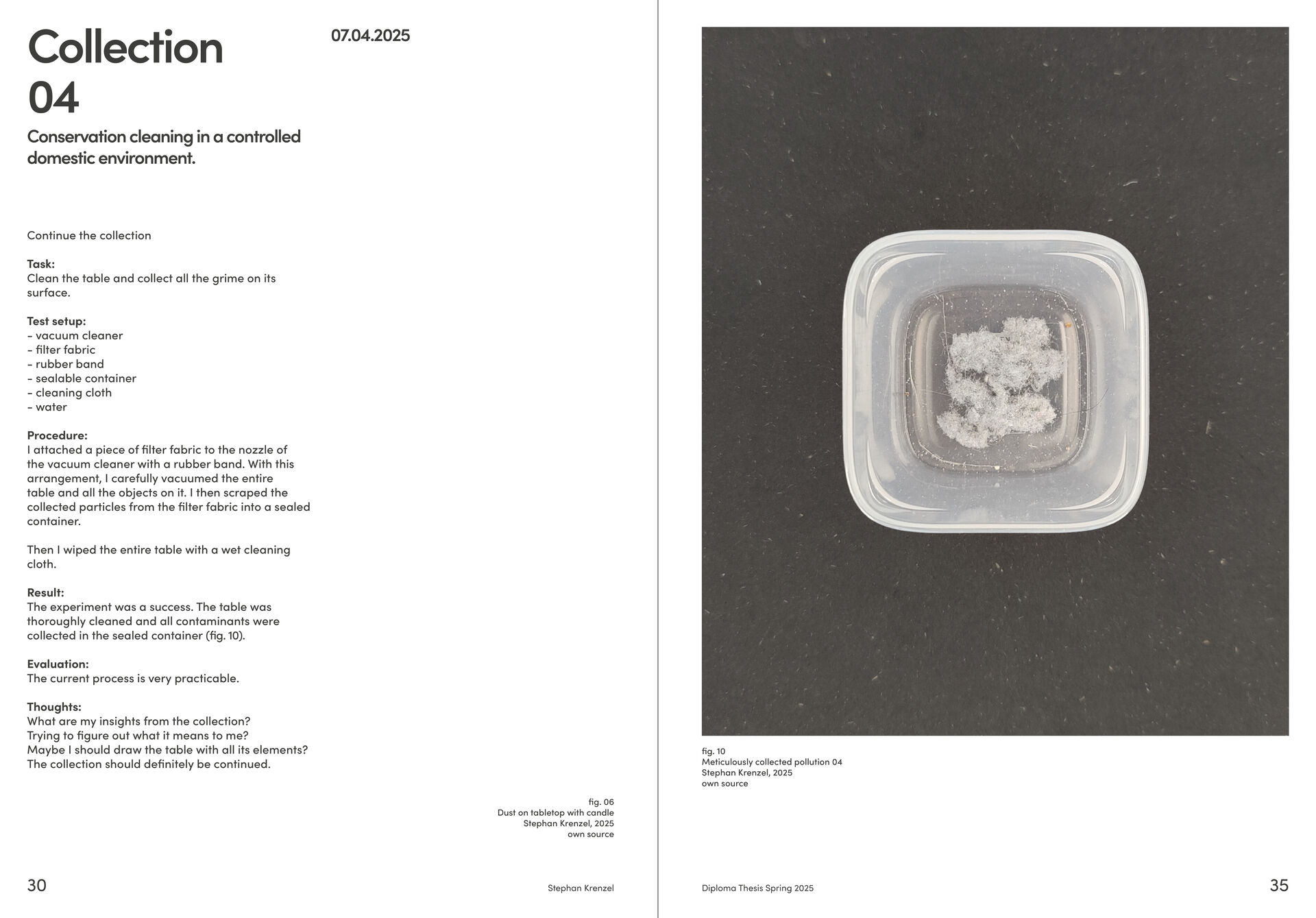
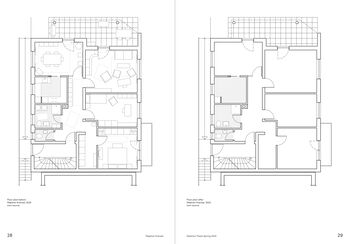
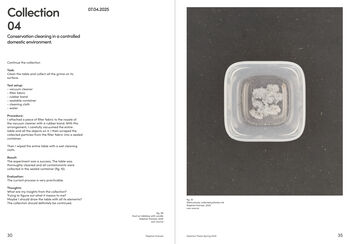
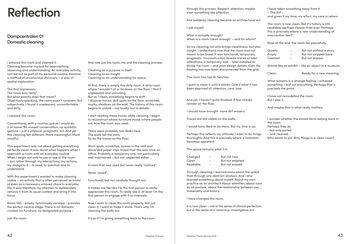
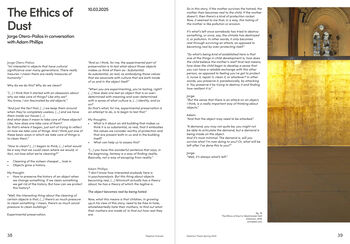
Diary Collection 04 – Synthesis & Outlook
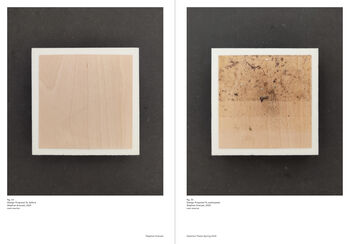
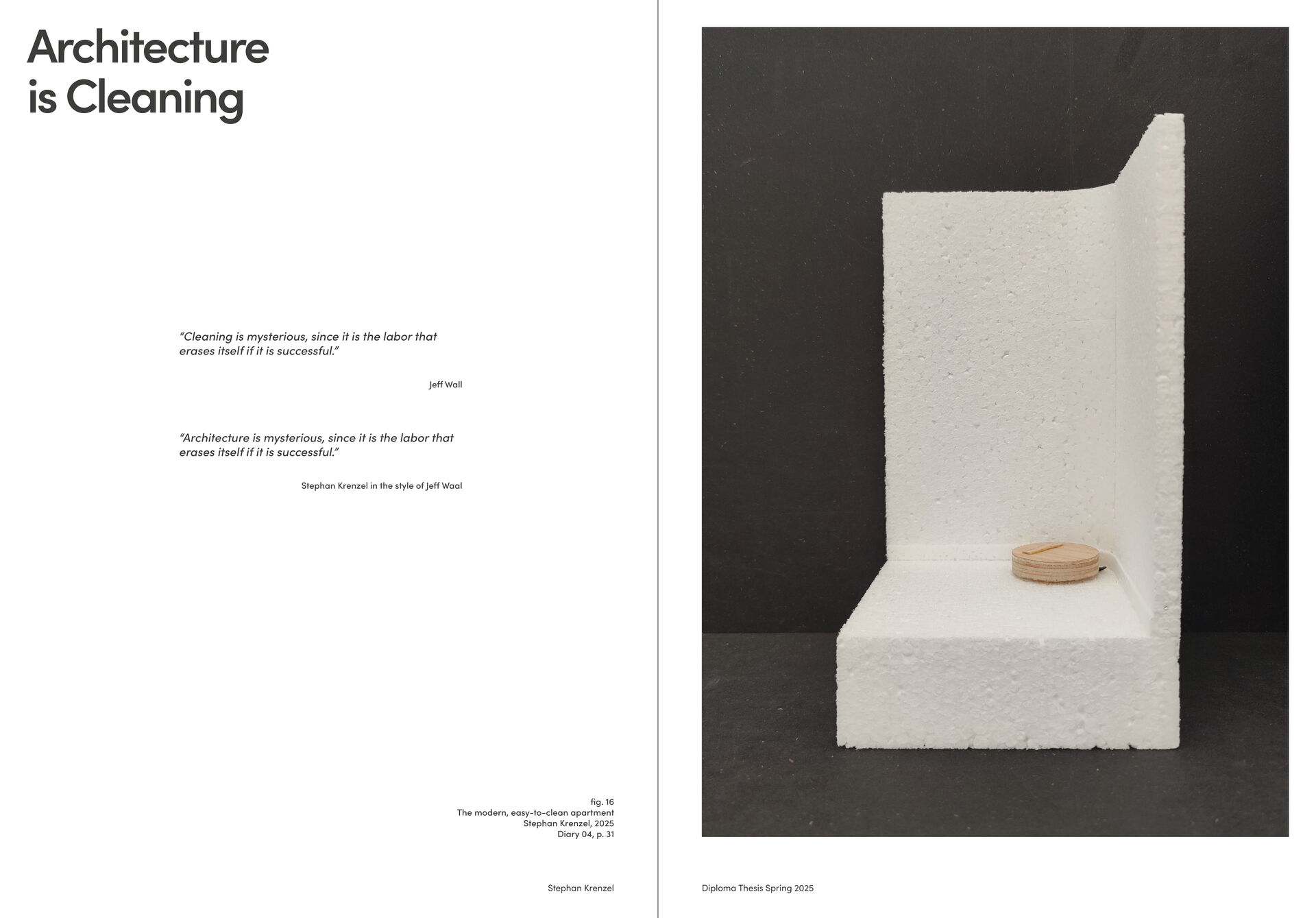
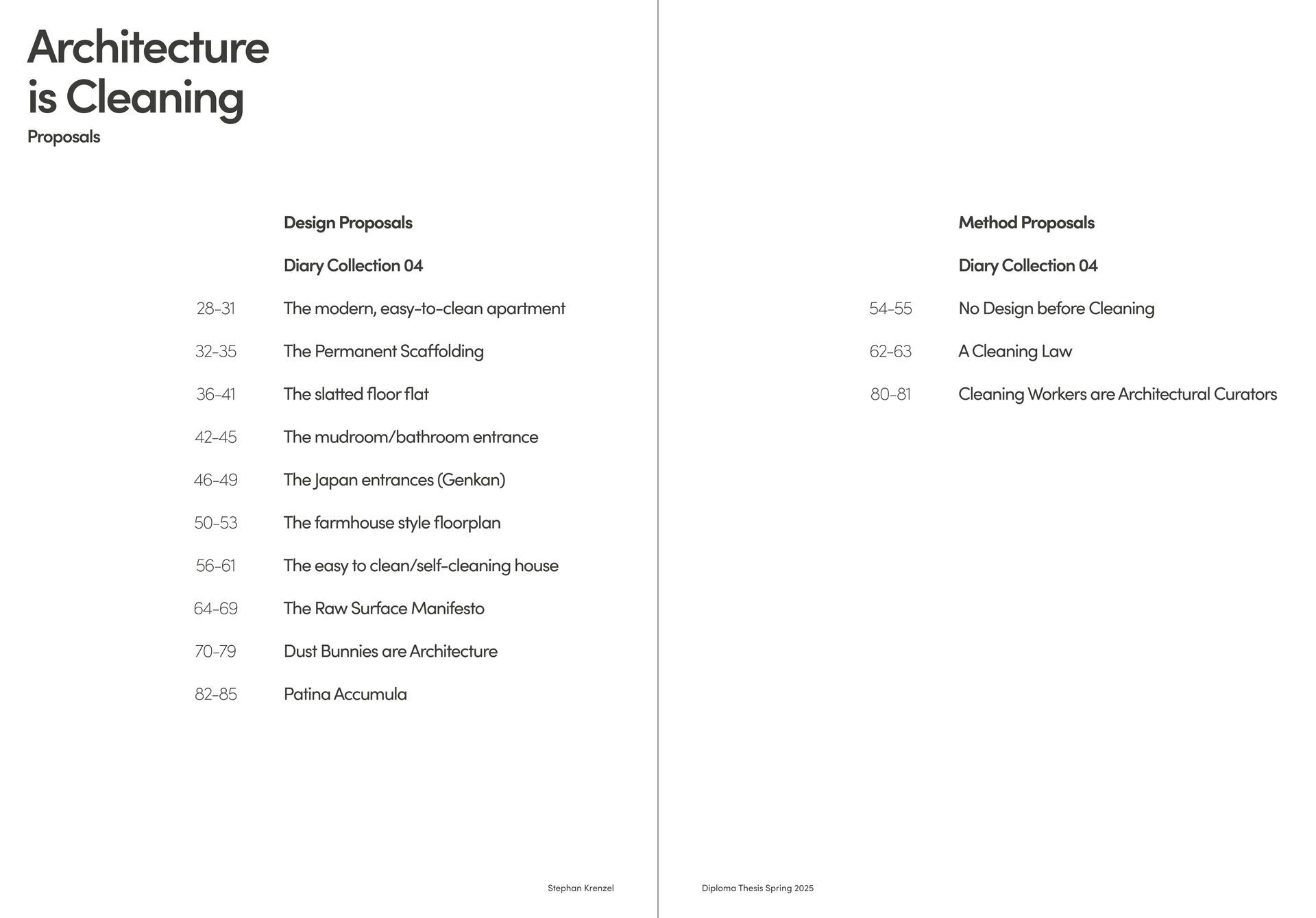
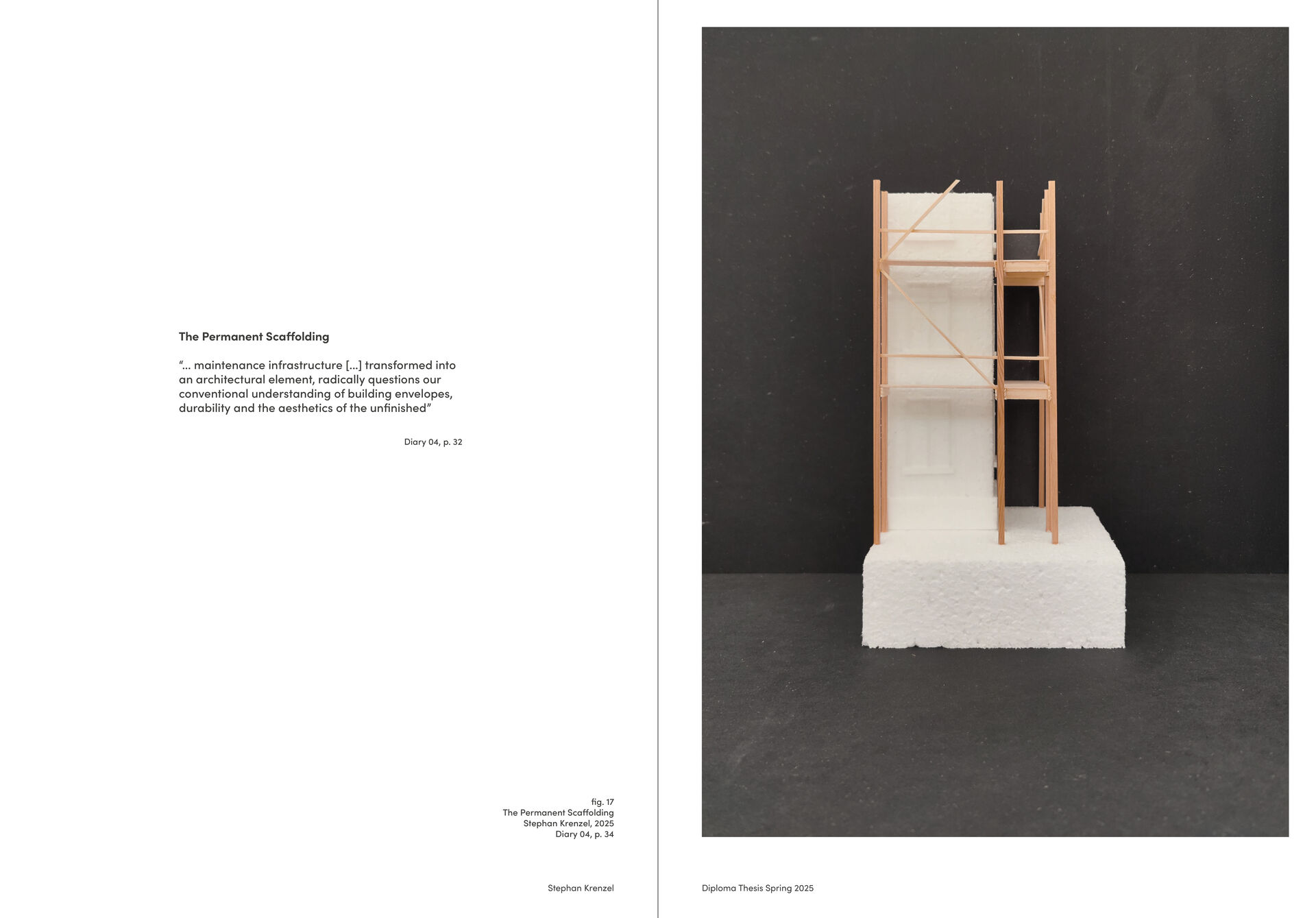
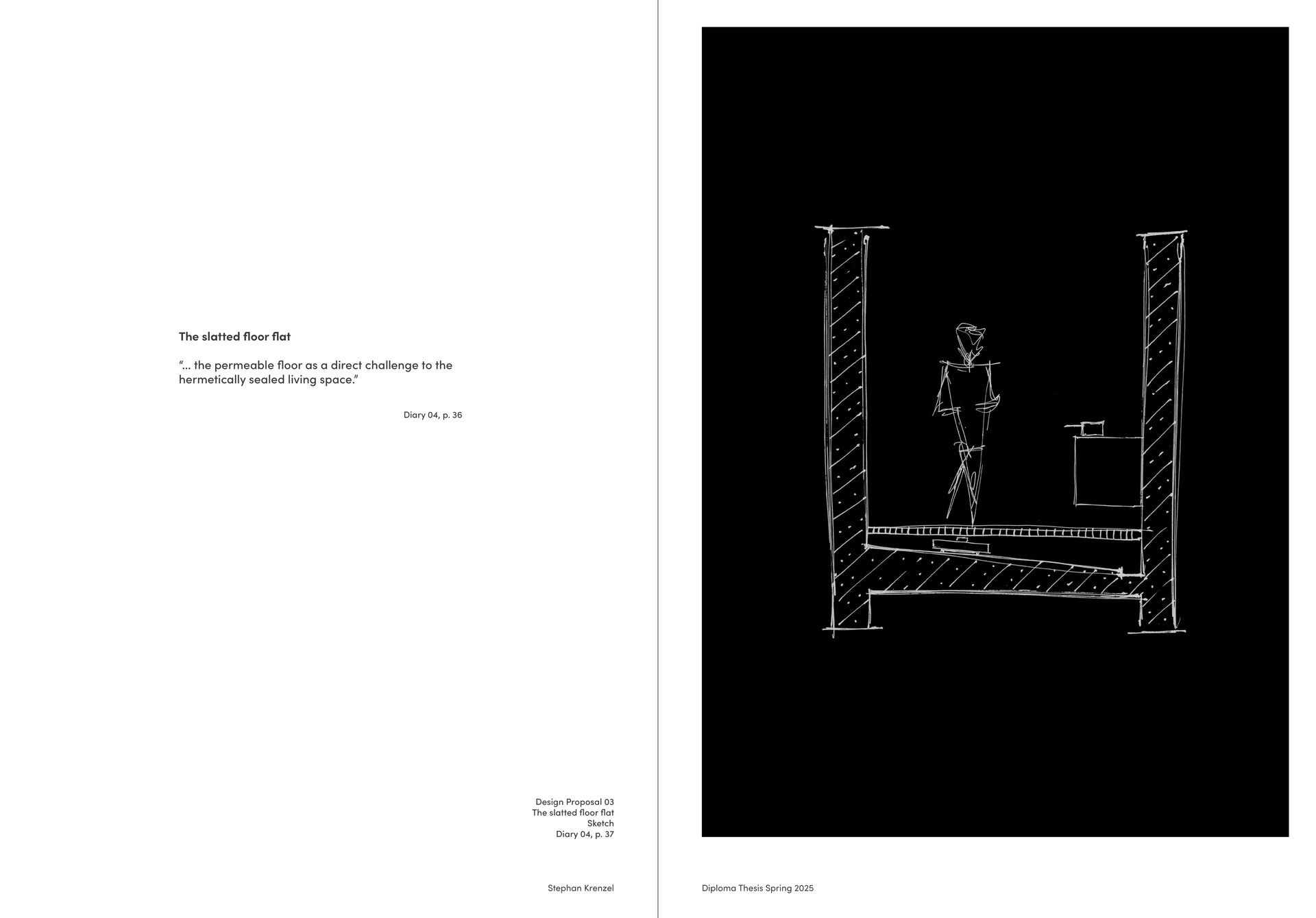
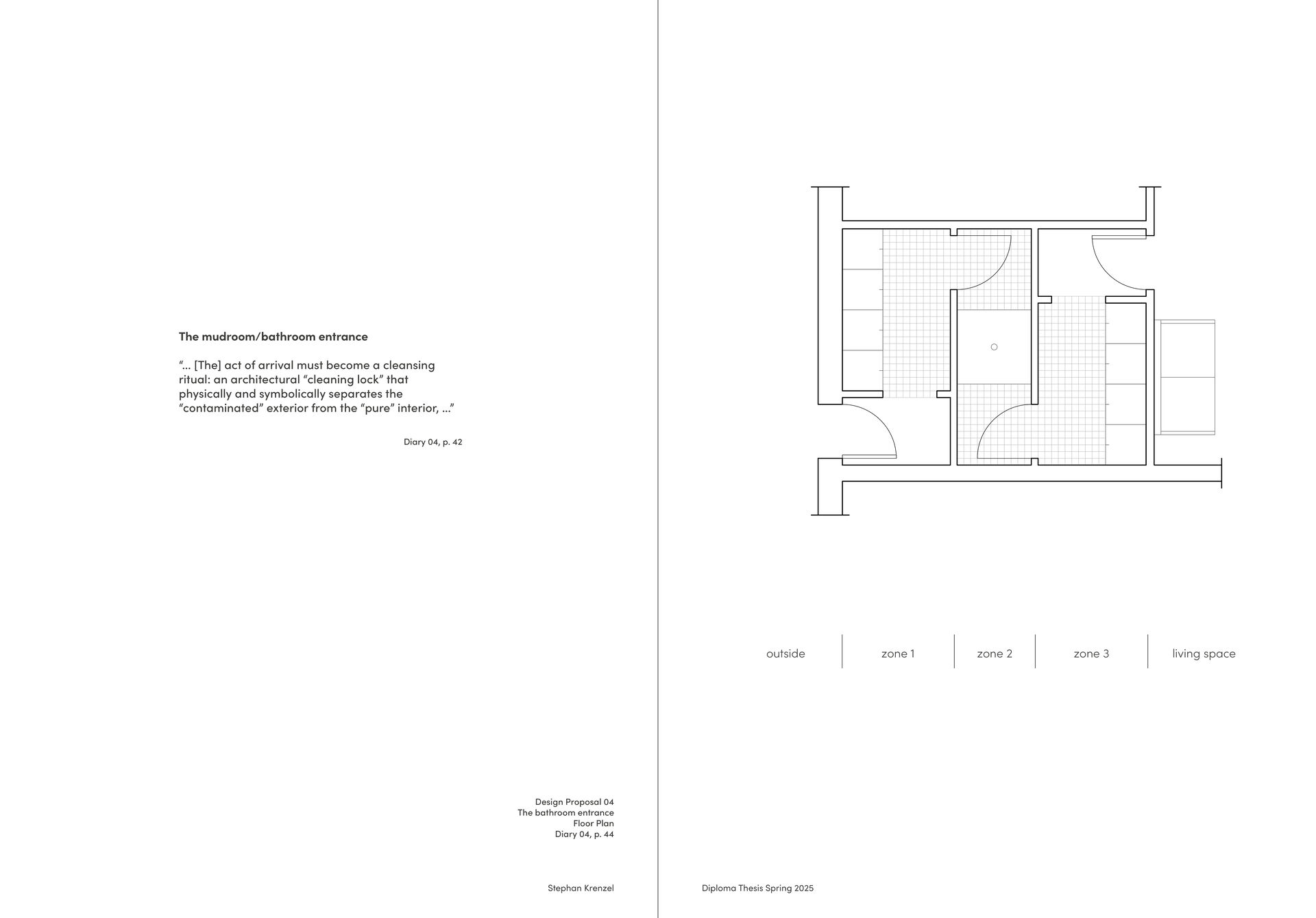
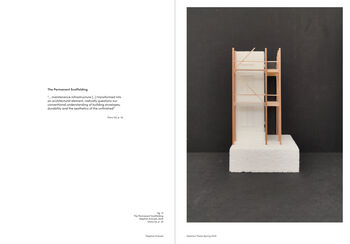
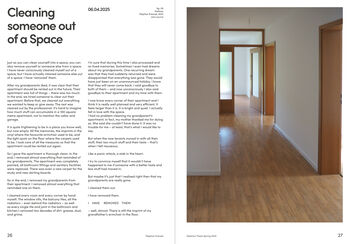
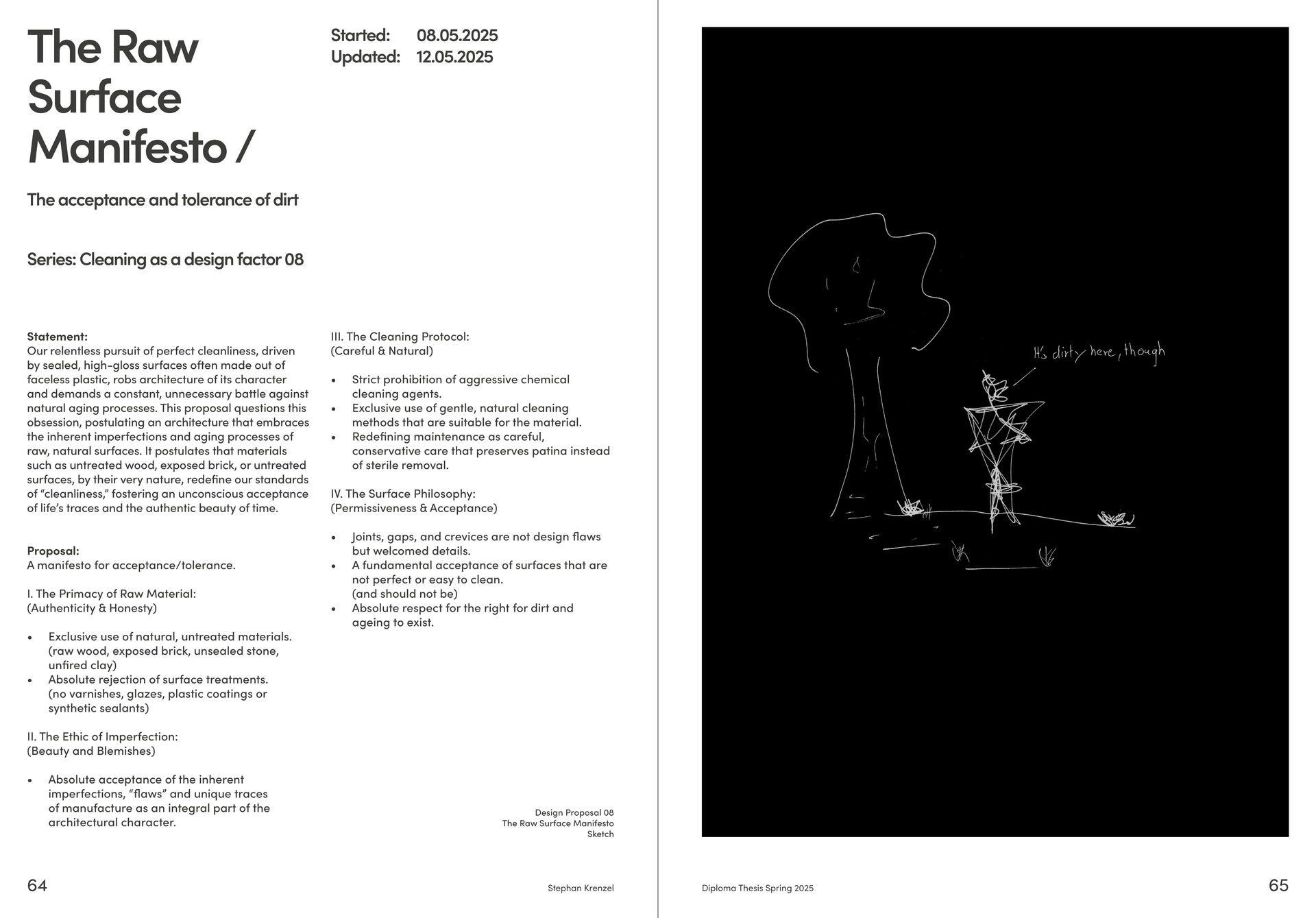
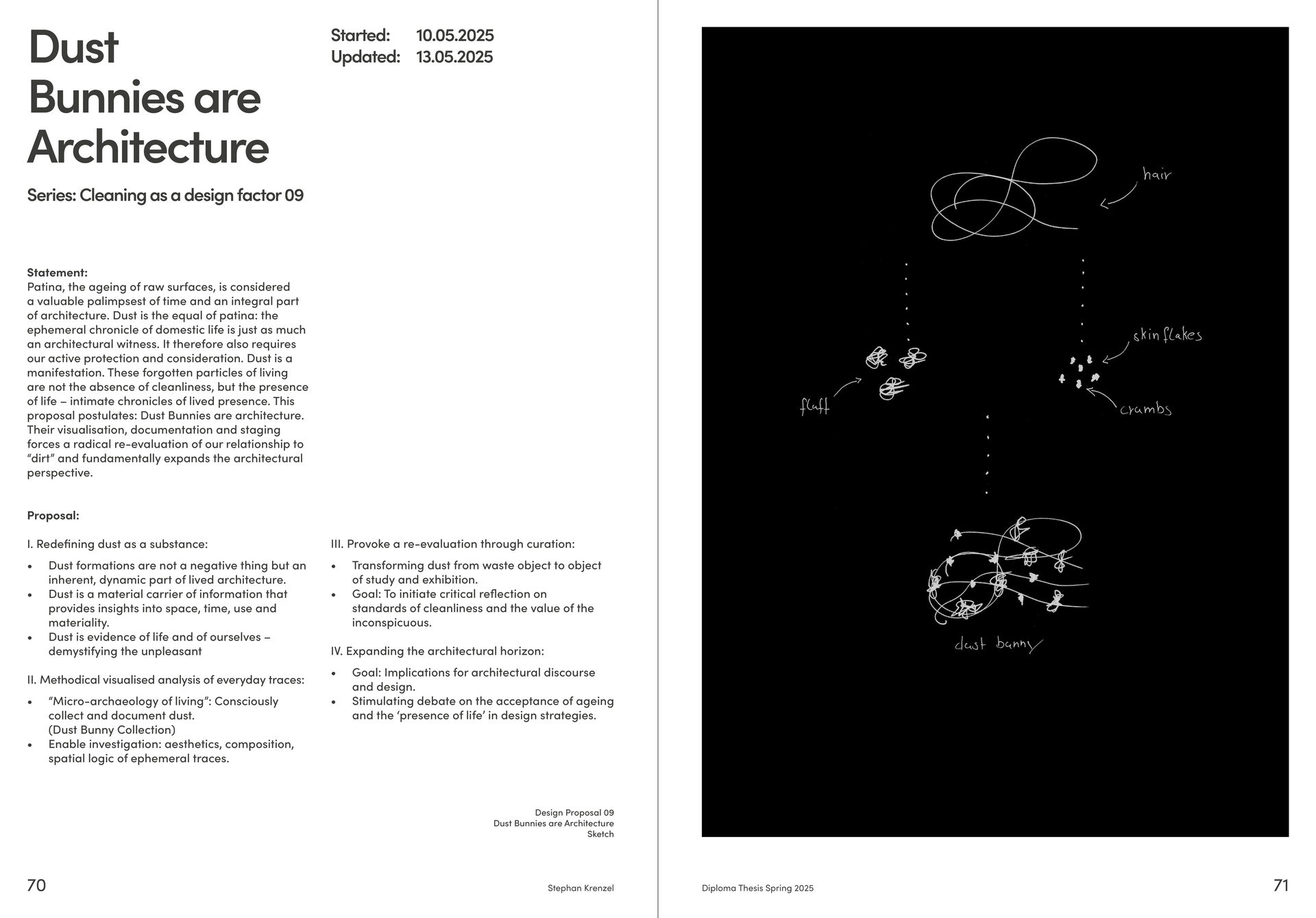
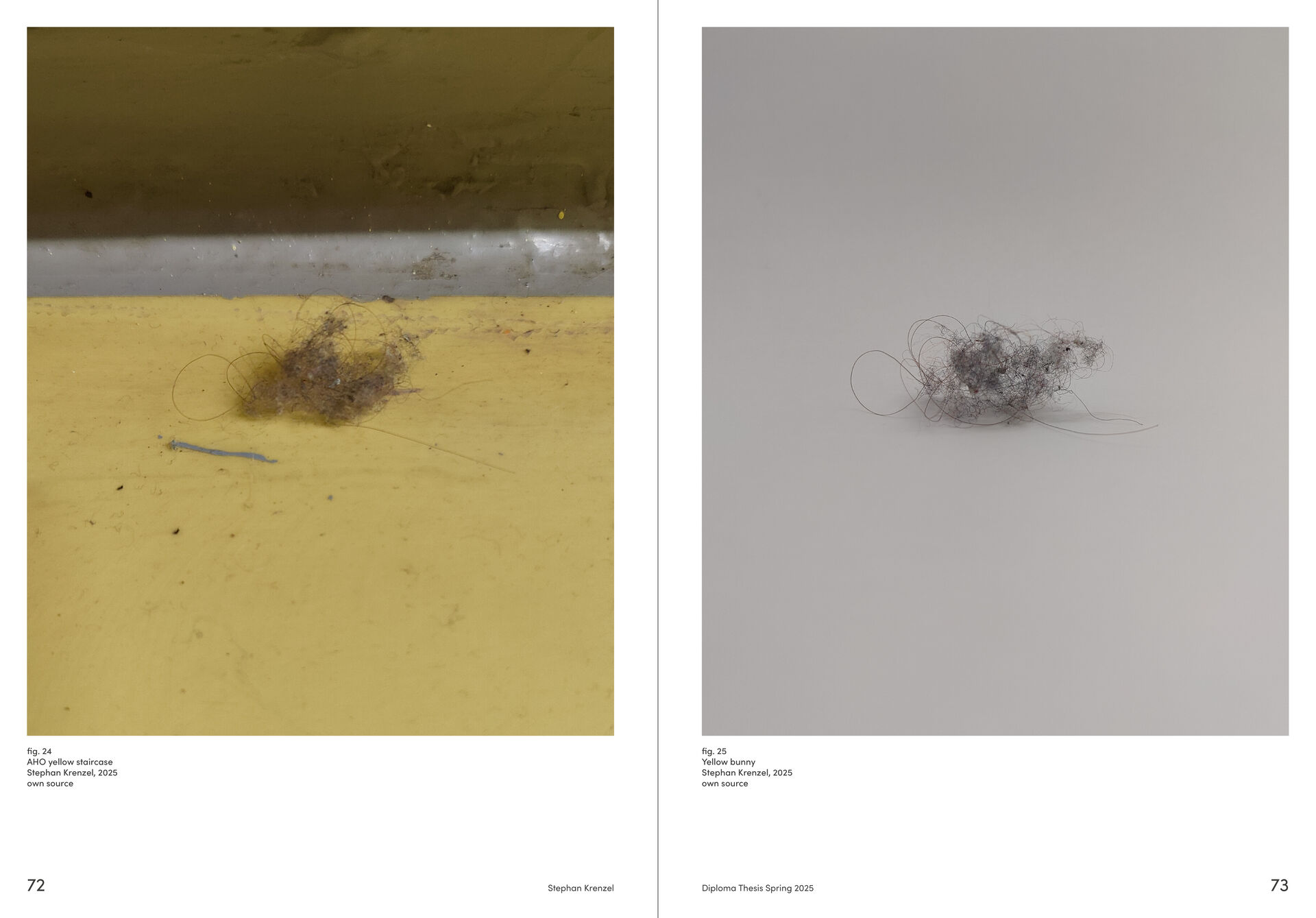
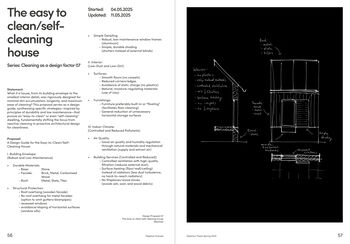
This final diary brings together the insights from the previous phases and leads to the development of the thesis “Architecture is Cleaning”. It contains the elaboration of the conceptual method and design proposals. (see the proposals above)
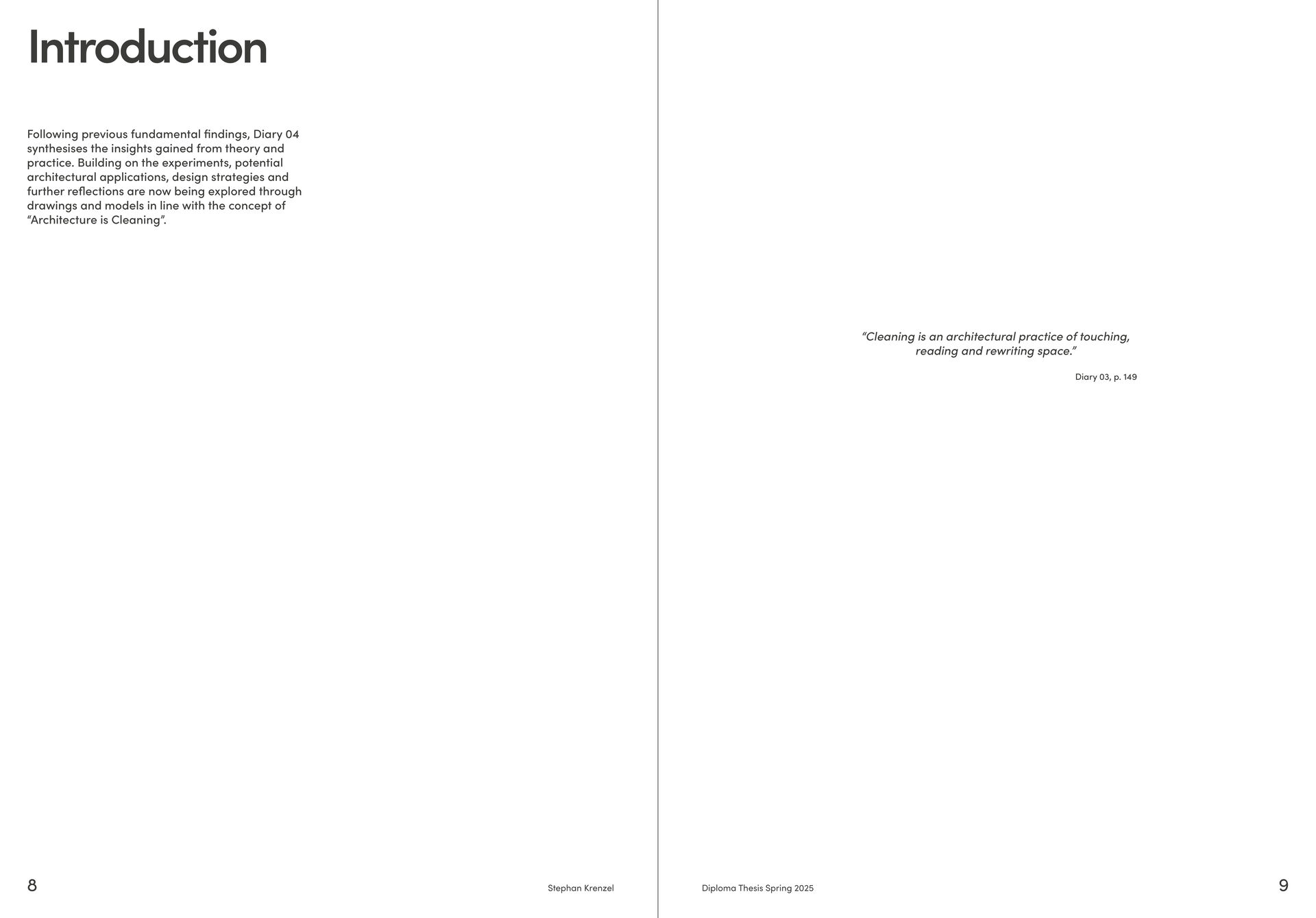
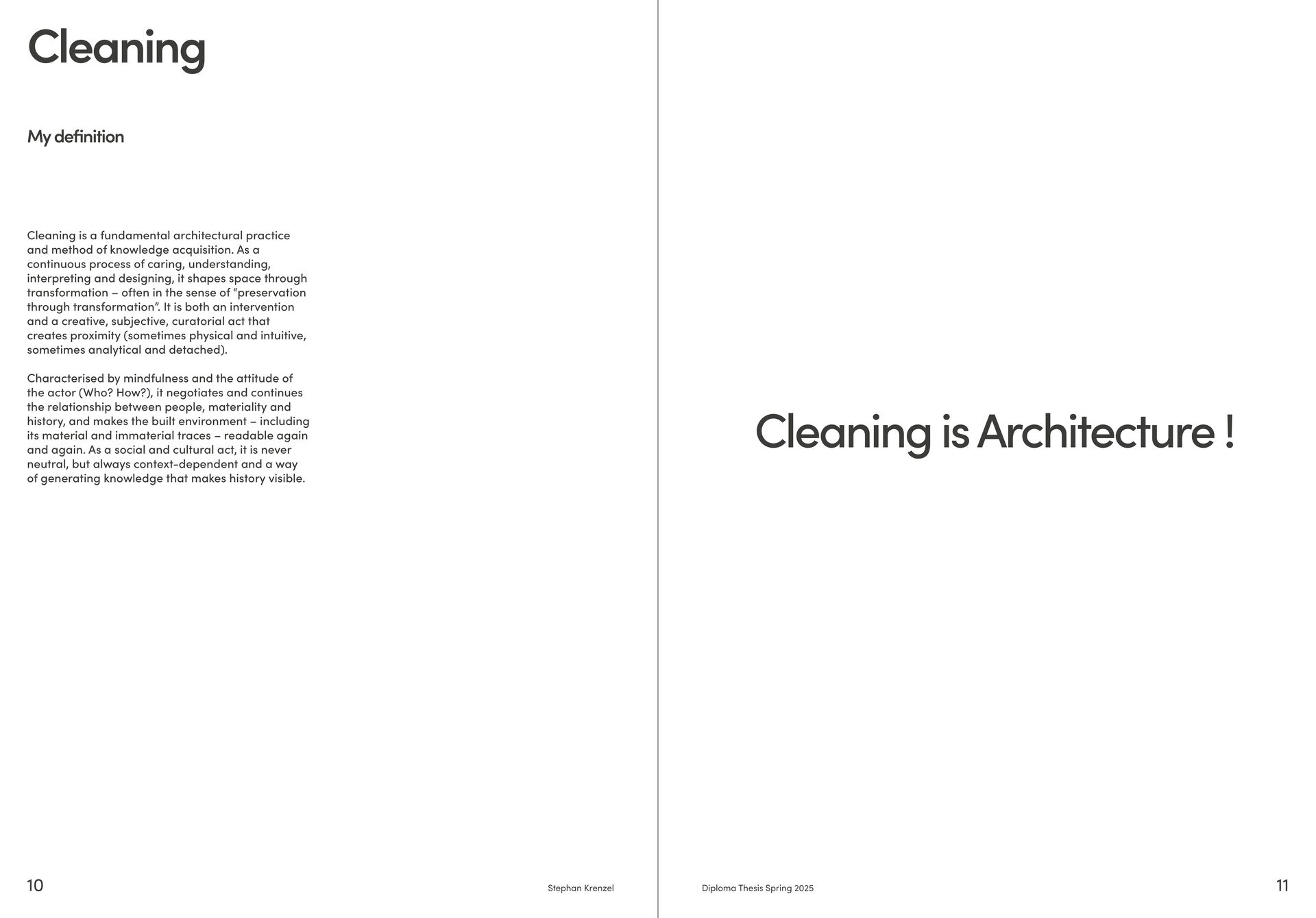
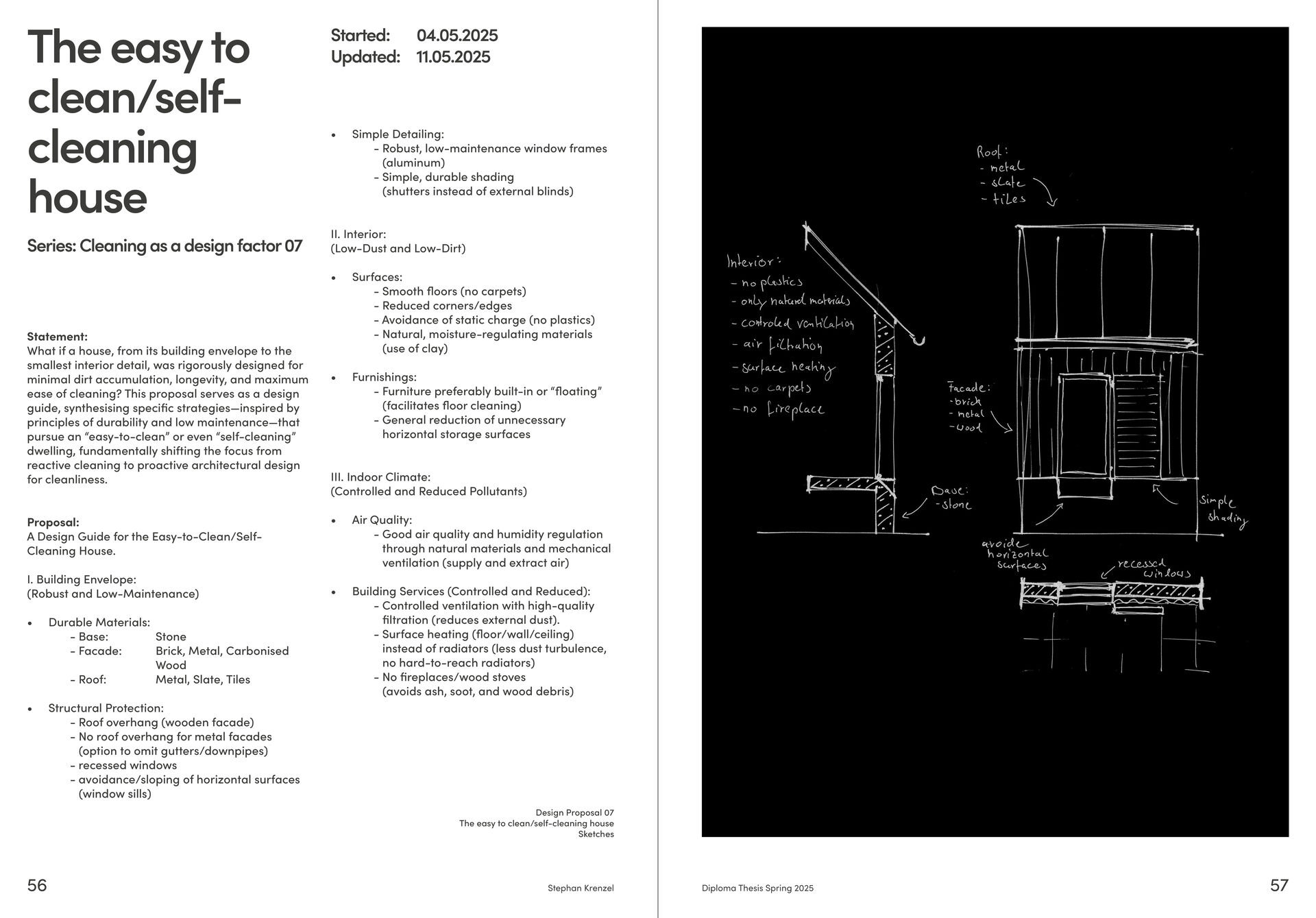
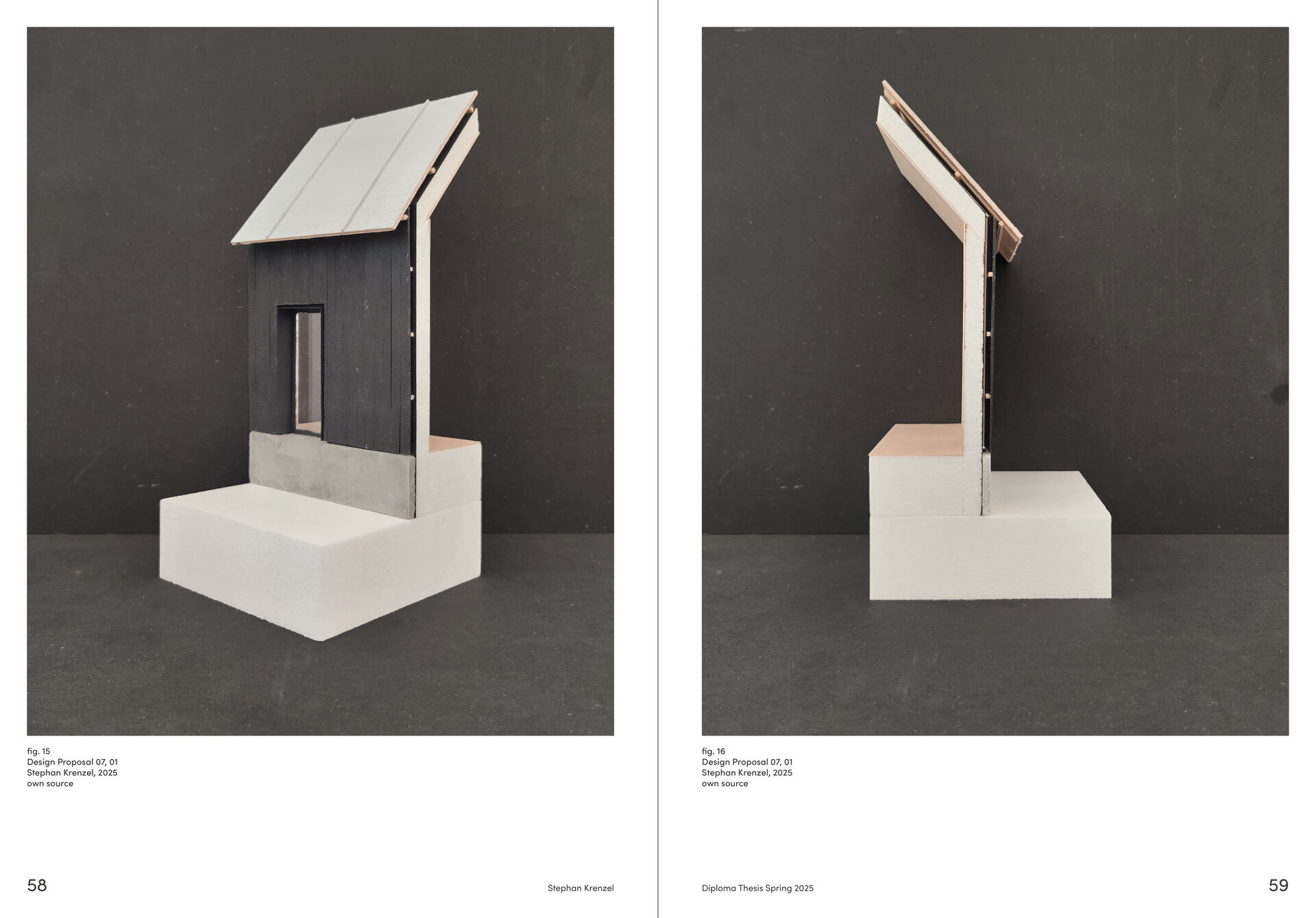
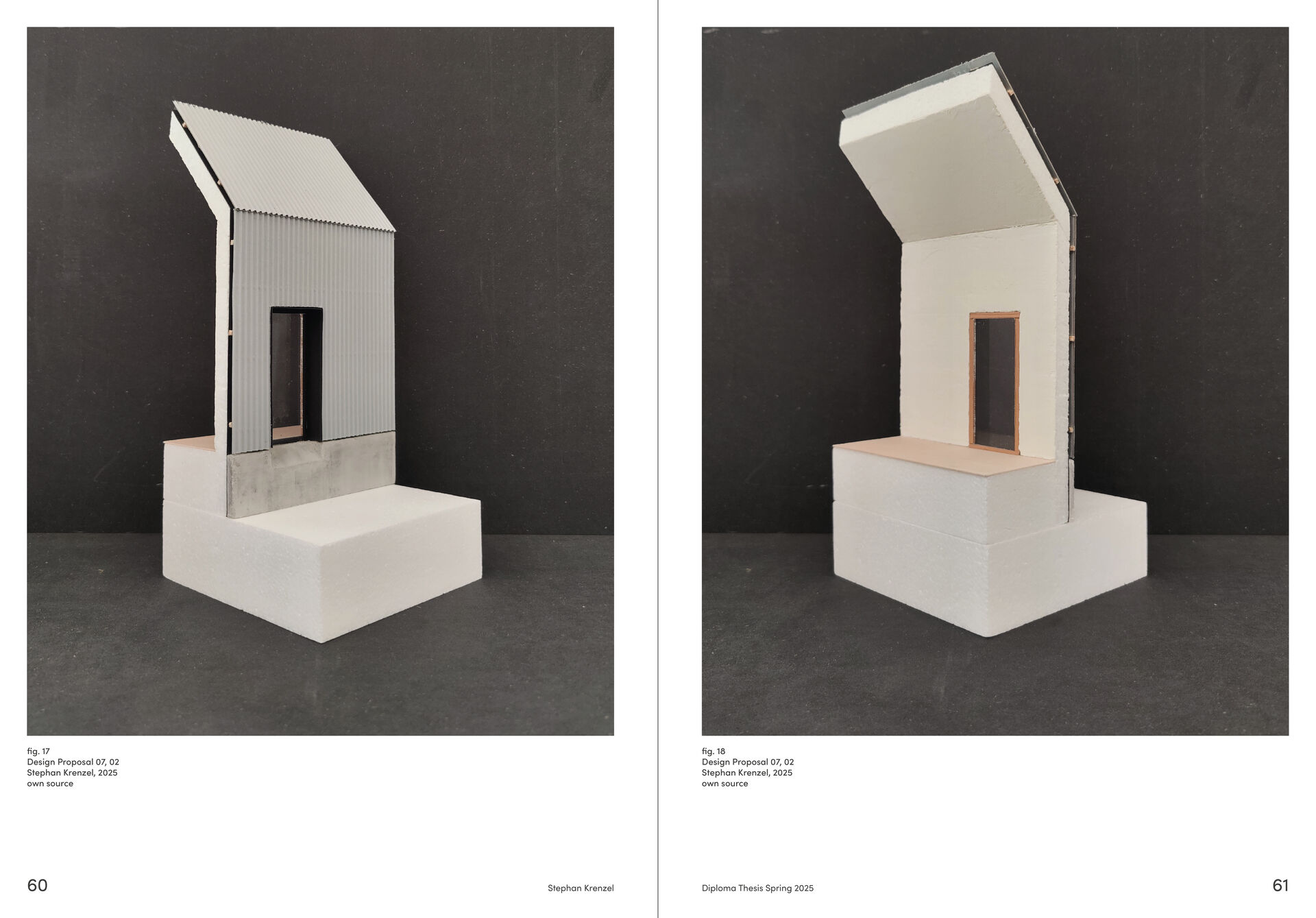
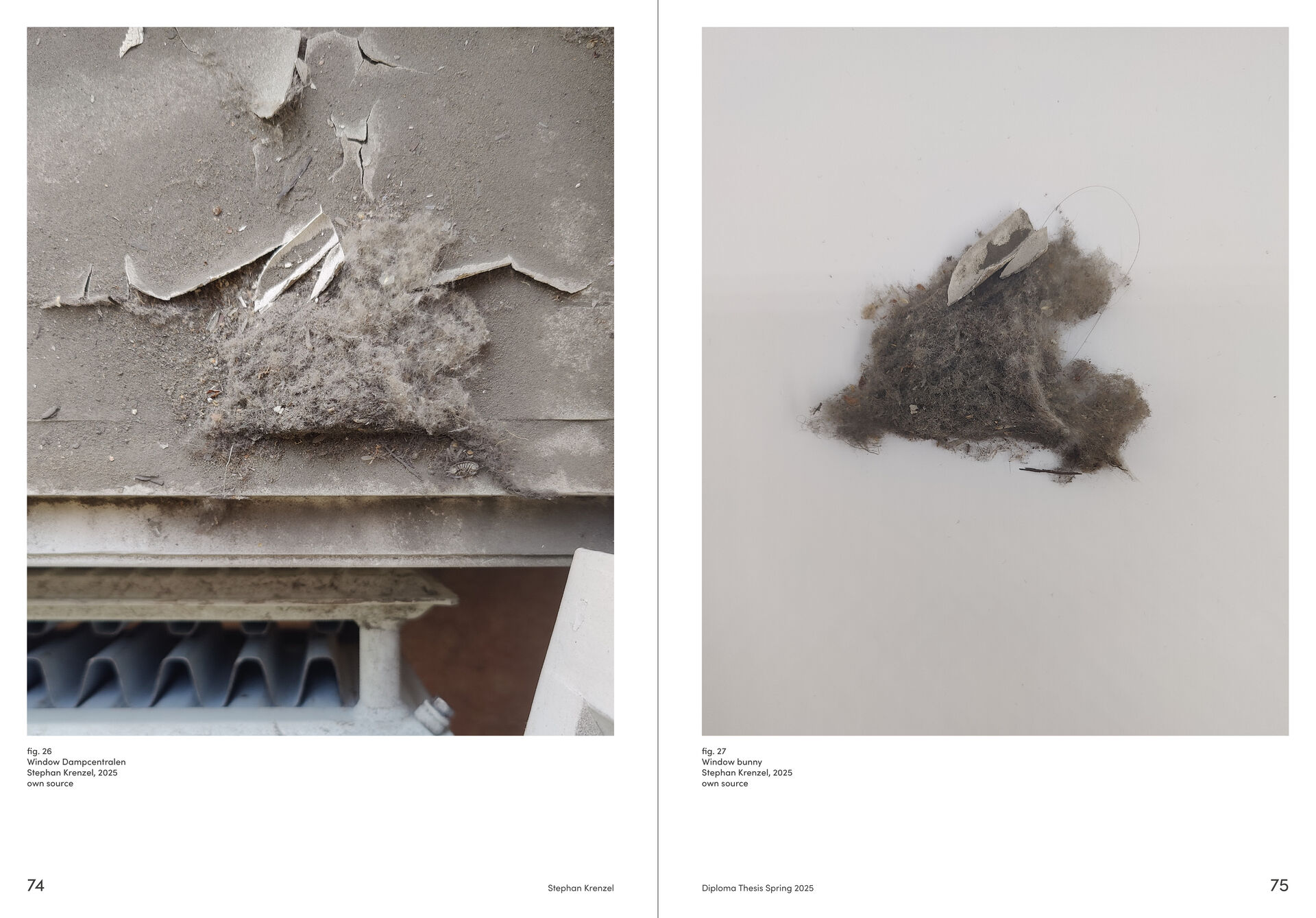
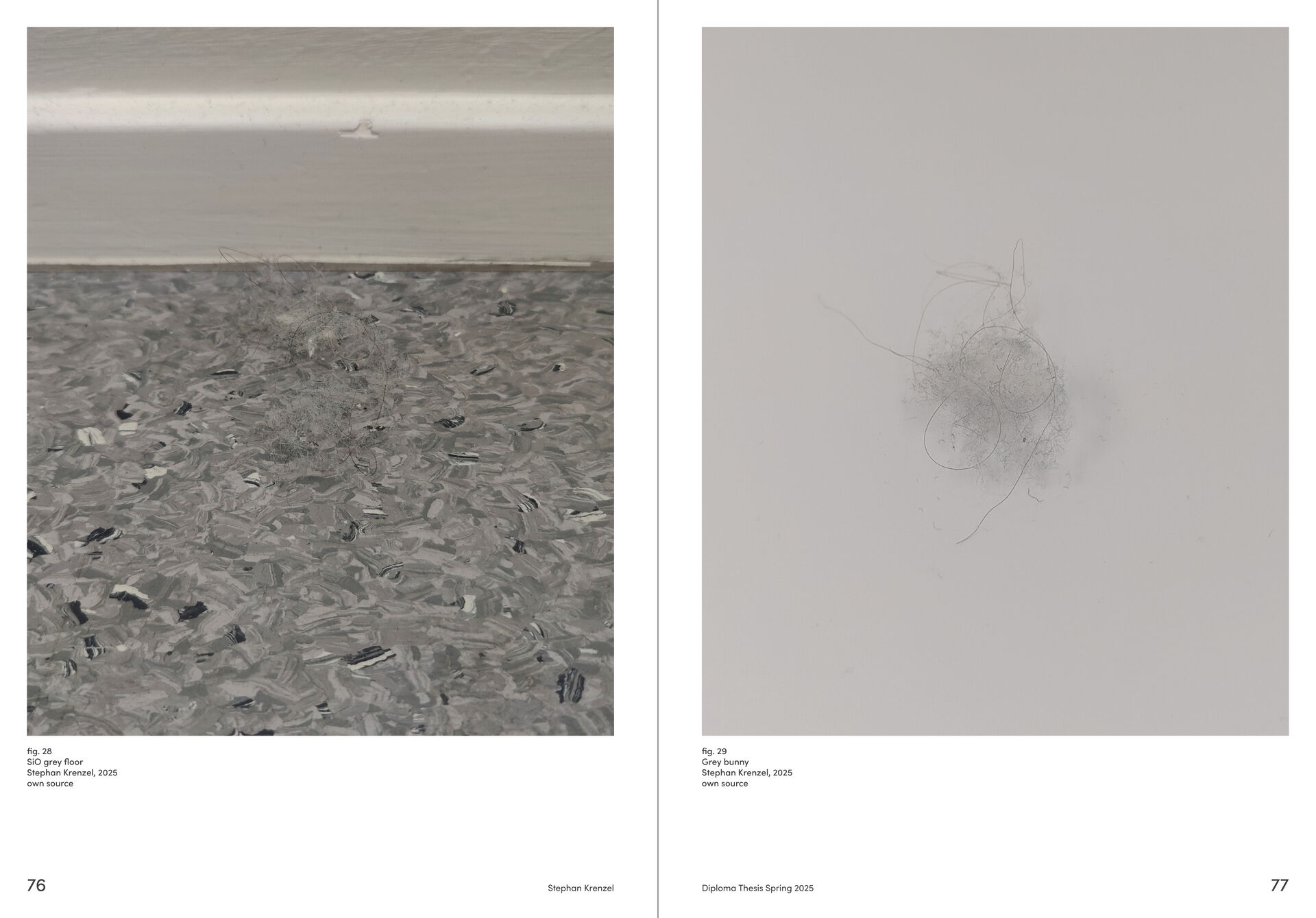
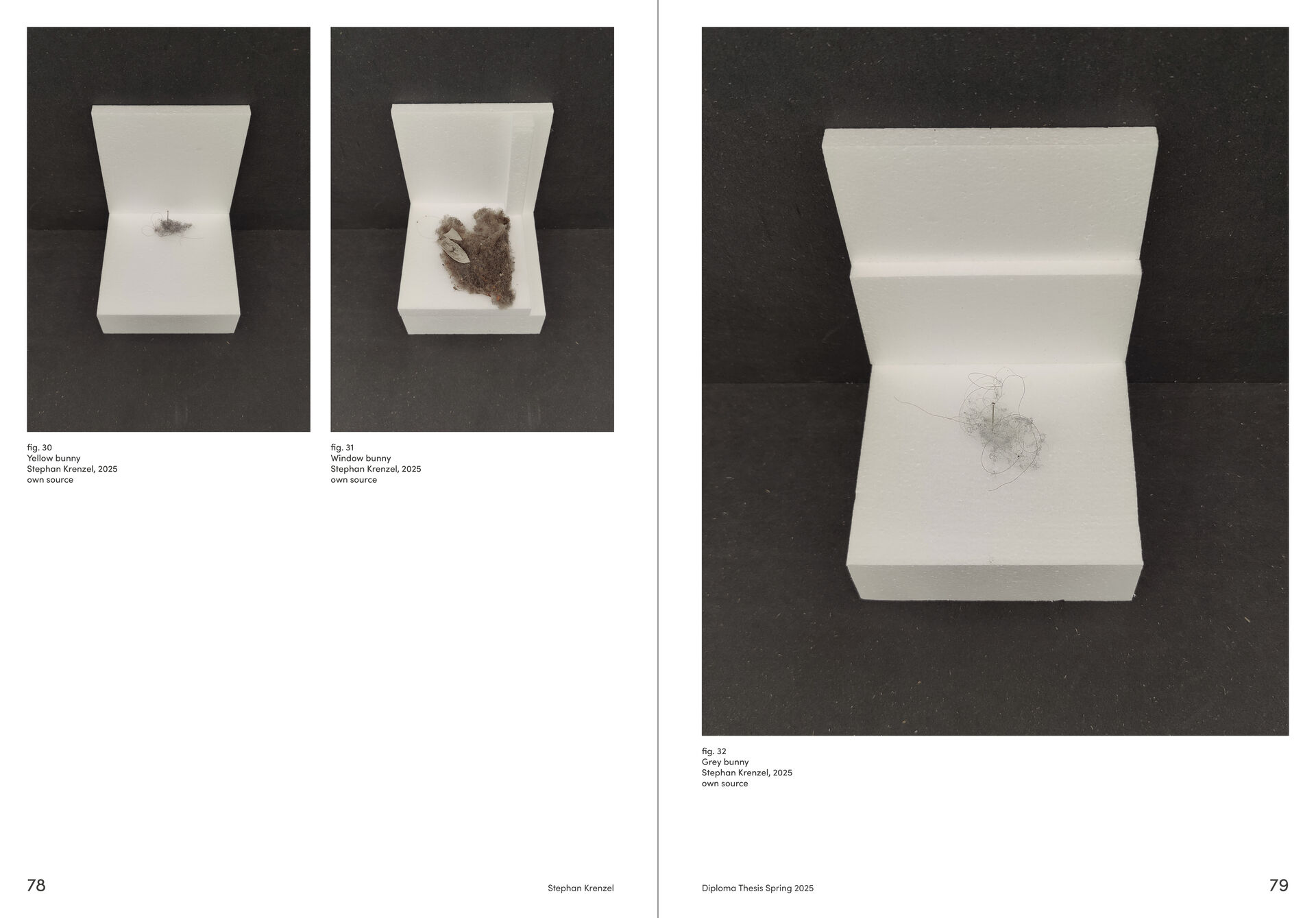
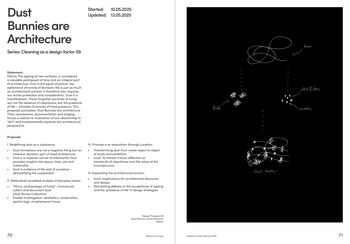
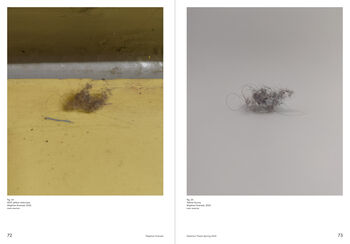
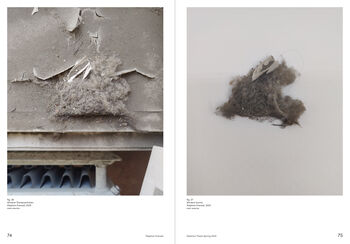
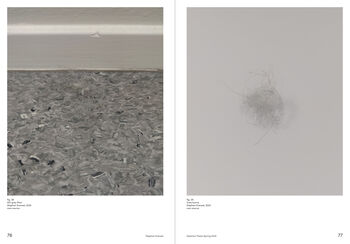
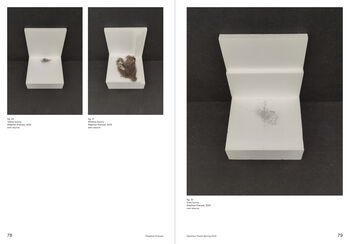
The central findings show that cleaning increases the legibility of history and materiality, creates different forms of proximity to space, and must be understood as a conscious act of design. The work argues for a re-evaluation and integration of cleaning into architectural thinking and design in order to promote a more sustainable and conscious approach to our built environment.
Contact
Stephan Krenzel / stephan@krenzel.de
+47 986 24 690 / +49 1578 0378203