Supervisor:
Tine Hegli, Cathrine Vigander
Listening to materials, allowing them to be what they are, offers a path toward more responsible ways of building. Meeting our climate goals will require a shift, but not only a shift in the materials we choose. It calls for a shift in how we think. Sustainability is not a matter of ticking boxes: it’s an attitude of respect. It’s about understanding the material, learning its capacities, and letting those guide the outcome rather than imposing a fixed design.
This approach also means looking back and learning from what has been done before. Architectural practice has always been shaped by the dialogue between people and the ground they build upon. Perhaps the way forward lies in rediscovering these possibilities. By working with what we already have, engaging with materials that carry both history and intelligence. Allowing them to guide us toward more grounded and thoughtful forms of construction.
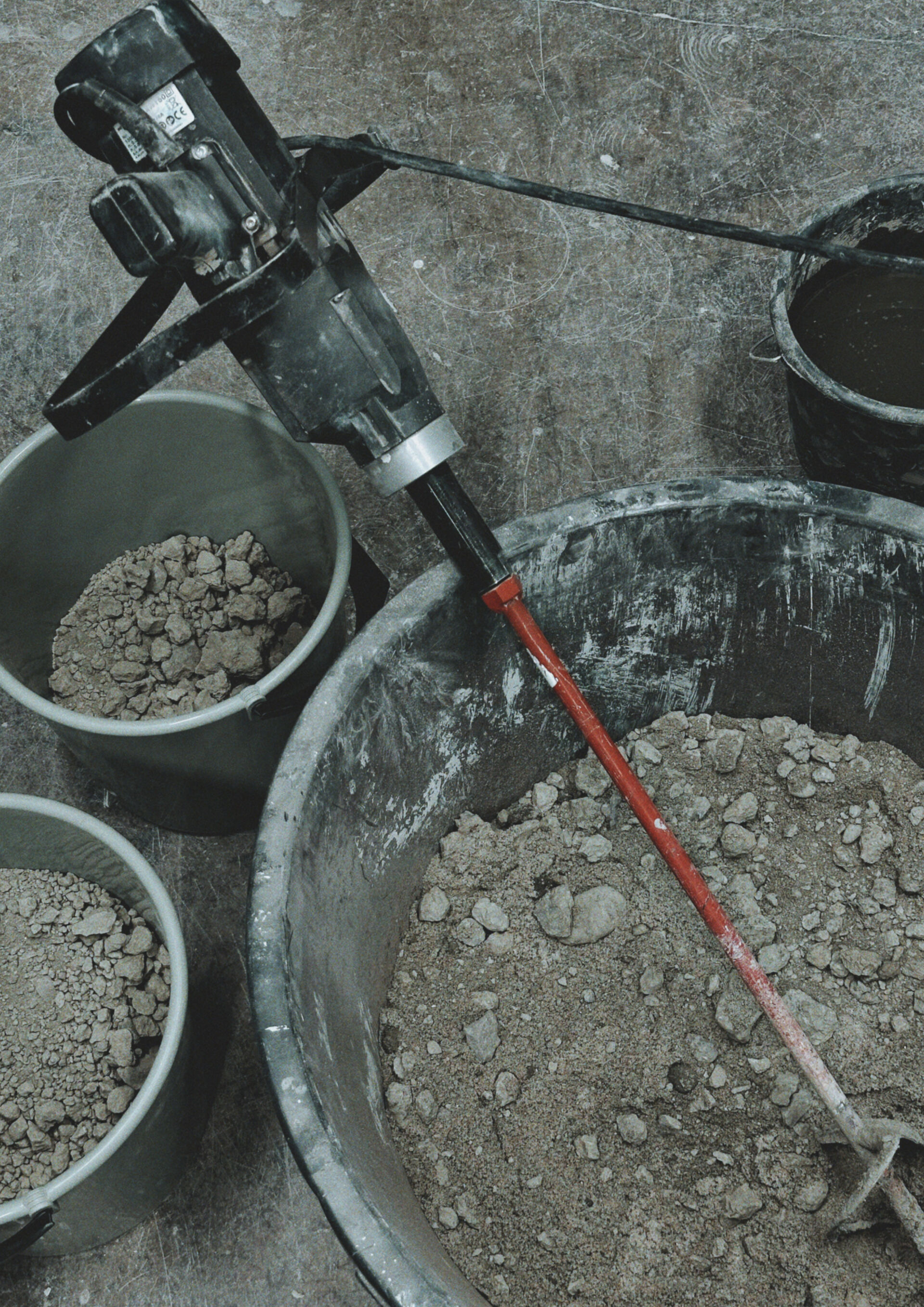
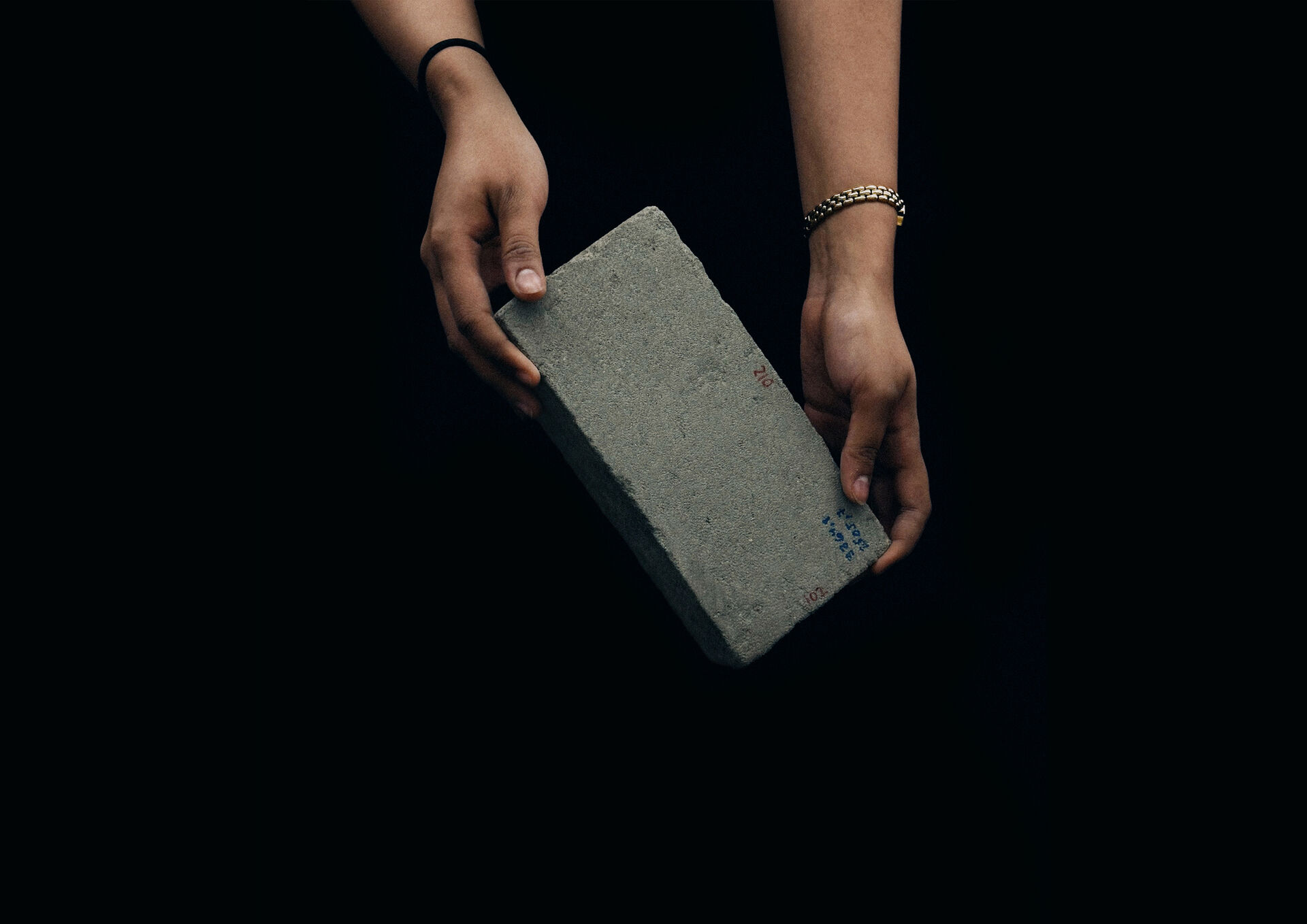
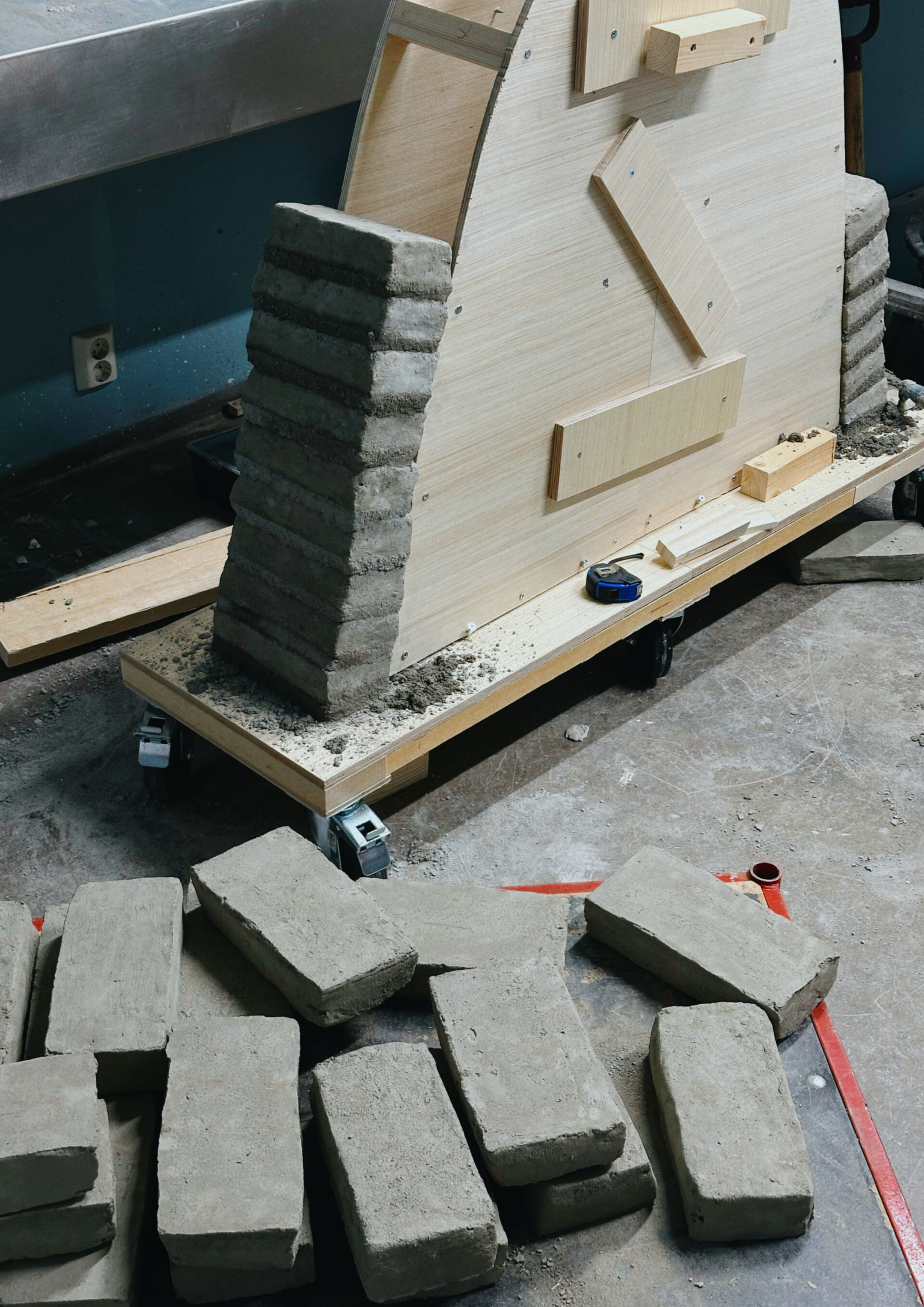
The diploma explores the use of adobe brick as an alternative building material to fired brick and other carbon-intensive materials. Adobe, used for thousands of years, is made from clay-based earth shaped into bricks and dried naturally. Importantly, producing adobe doesn’t require new extraction, as large quantities of surplus masses are already available. Materials that have significant potential but often treated as waste and sent to landfill. These masses could be used to produce adobe, turning what is currently seen as a burden into a resource.
This approach raises a broader question: what new forms of architecture could emerge if we allowed the material to speak for itself, exploring both the structural logic inherent in the material and the aesthetic value that arise from it. In this context, the catenary arch illustrates a principle in which the shape emerges directly from the material’s behavior and logic, making it possible to explore new spatial possibilities driven by the material itself.
Asking questions like:
- To what extent can adobe bricks, understood through their constructive logic, replace carbon-intensive building materials?
- What architectural forms and design possibilities arise when buildings are shaped according to the materials logic?
Ultimately, this catalog serves as a starting point for understanding the material. This understanding is developed through a series of studies, including exploration of the material itself, hands-on investigations, testing, and analysis. Together, these studies examine the material’s structural capacities and limitations, with particular attention to maximum achievable spans and heights. The results are presented as guidance and recommendations, forming a foundation for further examination and development of the material in future architectural work.

Contact

Sidrah Javaid / siddo.jav@gmail.com / +4798636216