Supervisor:
Mari Lending (AHO)
Co-supervisor:
Timothy Hyde (MIT)
Buildings are glued, screwed, bolted, cemented, and regulated, but buildings are not permanent, nor resolved upon construction. Often considered as fixed and site-specific, completed works of architecture resist modularity. However, this perspective might limit our understanding of architectural history and its potential. Space and place are still relevant in architectural thinking, but this study seeks to simultaneously zoom further in, to the provenience of developing sites, and further out, to the provenance of materials over time.
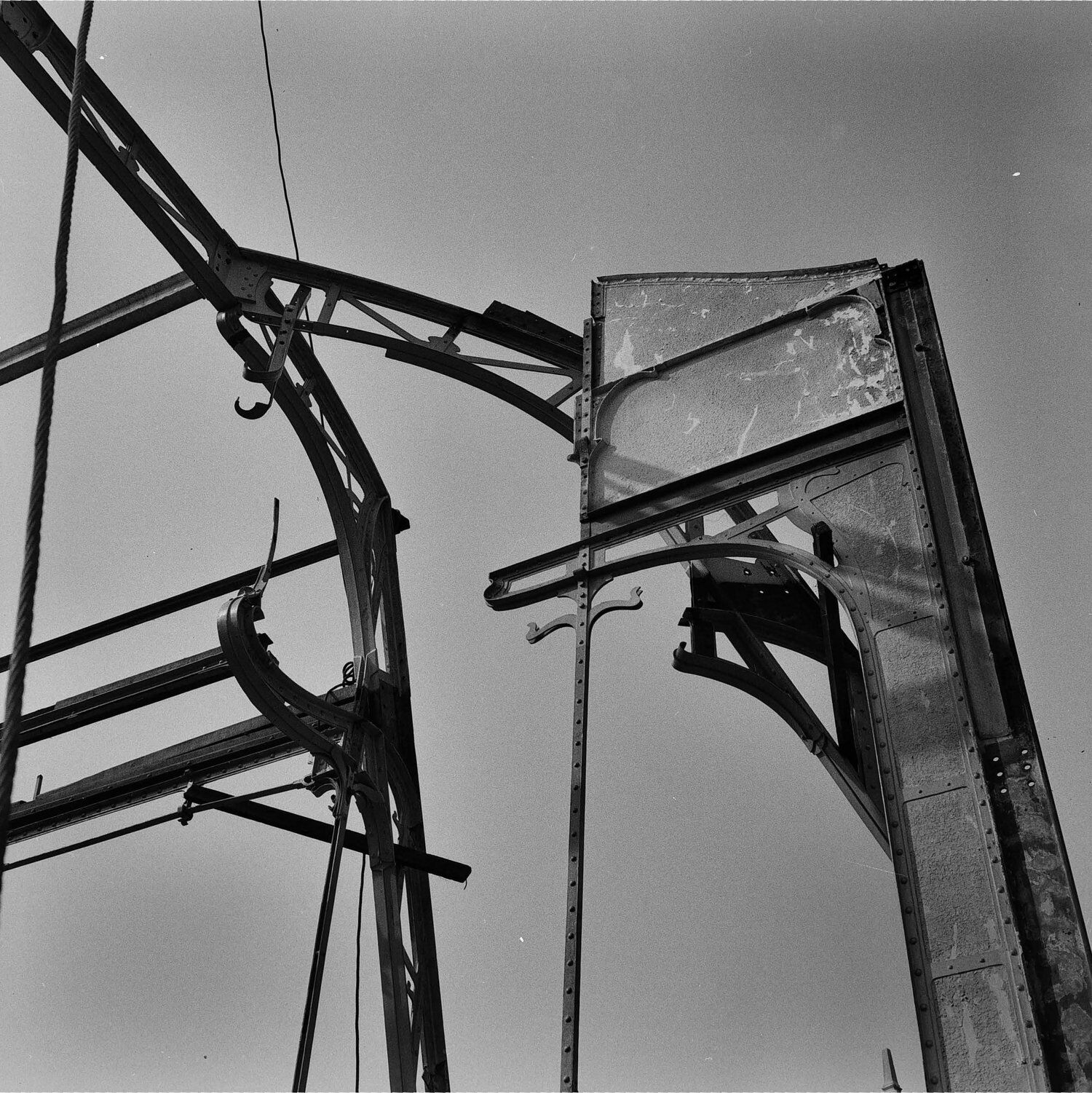
The destructions of Maison du Peuple (Brussels, Belgium) and Militærhospitalet (Oslo, Norway) were a means to an end for 1960s progress. Development plans once assumed their disposal, but international dissent turned the quick demolitions into systematic deconstructions. Hard-fought battles between those wishing to demolish and those hoping to preserve lead to the partial deconstruction, decades-long storage, and ex-situ spoliation of the buildings. This material disappearance catalyzed the accumulation of documentation; archives related to Maison du Peuple and Militærhospitalet are preoccupied with their interludes.
This study covers a thirty-year interlude when the two buildings were demolished, disappeared, and brought back as archival documents accumulated, the buildings were recorded and debated, potential expanded, and reputations solidified. If existing literature has focused on where the buildings came from (architectural authors) and where they would end up (reuse), then this research looks at a period of transition marked by failures and good fortune—and a whole new cast of characters. Even though temporary and unplanned, it was during this period that the buildings were catapulted into the public eye. By parsing the operations, people, and definitions at play, this study brings us closer to understanding not just what happened to the buildings, or why—but exactly how.
Demolition is already integral to architecture and implicit in its affairs, but scholars have repeatedly noted the near-absence of demolition in architectural history. If architectural history tends to recount the motivation and conception of buildings, then this thesis aims to detail their afterlives. By asking how rather than why these buildings were demolished and circulated, this thesis shifts focus from conception to reception, from beginning to end, and from author to owners.
The PhD is supervised by Mari Lending and co-supervised by Timothy Hyde. It is part of the larger OCCAS project Provenance Projected: Architecture Past and Future in the Era of Circularity, funded by the Norwegian Research Council.
Contact
